

Maddy summaryHB 1105 requires Pennsylvania state agencies to undergo regular zero-based budget reviews, mandating that every program be justified from scratch at least once every five years. Starting in 2026, the Secretary of the Budget must review approximately one-fifth of the state budget annually, with agencies required to submit detailed plans explaining each program's legal basis, estimated impacts if discontinued, and itemized costs for maintaining services at both minimum and current levels. This directly affects all state agencies and the Budget Secretary, shifting budget decisions away from incremental adjustments to past spending. The bill aims to eliminate outdated programs by requiring agencies to prove the necessity and cost-effectiveness of each activity through specific documentation, not just historical spending patterns. It takes effect 60 days after enactment.
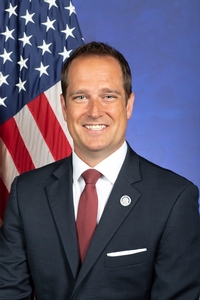
Rep. Ryan Warner
Sponsored bills
Maddy summaryHB 1112 allows Pennsylvania electric utility customers to request traditional electromechanical analog meters instead of smart meters. Customers can elect this option by notifying their utility company, and if the utility has already installed smart meters, they may charge the customer for the switch - amortized over 12 months - but cannot impose additional fees. The bill directly affects residential and commercial electricity customers who prefer analog meters for privacy or cost reasons. It defines "electromechanical analog meters" as devices with no wireless capabilities, no power line transmission/reception, and specific safety features, while ensuring costs are recovered through approved utility rates.
Maddy summaryHB 1061 requires Pennsylvania voter registration applicants to provide documentary proof of U.S. citizenship when applying to register. This applies to all registration methods - online, in-person, by mail, or with a driver's license application. Acceptable proof includes passports, birth certificates, military IDs, naturalization documents, or other government-issued IDs showing U.S. birthplace. The bill mandates that election officials verify citizenship during registration and adds penalties for officials who fail to comply. It directly affects anyone seeking to register to vote in Pennsylvania.
Maddy summaryThis bill proposes a constitutional amendment to Pennsylvania that would ban all taxes on real property, including land and buildings owned by individuals or businesses. The change would take effect on July 1, 2030, and would apply to taxes imposed by the state government, local municipalities, school districts, or any other political subdivision within the Commonwealth. To become law, the amendment must pass both houses of the General Assembly and then be approved by voters in a statewide election. The bill argues that taxing property violates the inherent right to own and protect property, a principle recognized since Pennsylvania's founding in 1776.
Maddy summaryHB 1044 allows authorized entities like schools, childcare centers, or sports organizations to stock and use epinephrine delivery systems (e.g., auto-injectors) without requiring individual prescriptions for each person. It permits these entities to acquire devices under a single prescription from a healthcare provider, store them accessibly per FDA guidelines, and train designated staff to recognize anaphylaxis and administer the devices. Staff who complete approved training can use the devices in good faith for anyone showing signs of a severe allergic reaction, regardless of prior diagnosis or prescription. The bill also includes protections for individuals acting in good faith during emergencies.
Maddy summaryHB 962 allows eligible organizations, such as charities and non-profits, to conduct virtual raffles and drawings using electronic payments like credit cards or mobile apps. The bill requires organizations to verify that participants are physically in Pennsylvania, are at least 18 years old, and provide accurate identity information through methods like government ID checks. It also restricts how winners are announced - only simple internet-based conferencing (e.g., Zoom) without animations, images, or slot machine technology can be used. These rules aim to modernize virtual game operations while ensuring compliance with state and federal gambling laws.
Maddy summaryHB 942 amends Pennsylvania's Game Commission law to change how full-time enforcement officers are paid. It requires that all full-time officers whose duty is to enforce game laws be classified for compensation "in the same manner as members of the Pennsylvania State Police." This change directly affects Game Commission enforcement officers by aligning their pay structure with State Police standards. The bill applies to compensation earned on or after its effective date, 60 days after enactment. (1-2 sentences as it's a procedural pay classification change.)
Maddy summaryThis bill designates English as the official language of Pennsylvania and requires state and local government official documents and actions to be in English. It prohibits government policies that favor non-English languages or diminish English's role, while explicitly exempting public safety, health, and justice situations where other languages are necessary. The legislation also restricts the use of state funds to promote or demonstrate preference for languages other than English, with exceptions for foreign language instruction, Native American language preservation, and international commerce. Private businesses and individuals retain the right to use any language they choose, and the law does not apply when federal law requires otherwise.
Maddy summaryHB 897 requires Pennsylvania state agencies to prioritize purchasing "American-made" supplies, defined as goods assembled within the United States. The bill adds this definition to procurement rules and mandates agencies to incorporate prioritization into their buying policies. If an agency determines a supply isn’t American-made or unavailable in sufficient quantities, it must publish the decision in the Pennsylvania Bulletin, allowing 30 days for objections with evidence. Affirmed determinations exempt specific supplies from the prioritization requirement.
Maddy summaryHB 857 amends Pennsylvania's Human Services Code to update reimbursement rates for emergency ambulance services under Medicaid programs. It requires the state to pay ambulance providers the higher of either Medicare's 2023 rates or current Medicaid ambulance fees (as updated in 2023) for services provided to Medicaid enrollees starting January 1, 2024. For services where patients declined transport, new rates based on 2025 Medicare data or updated Medicaid fees will apply beginning July 1, 2025. This directly affects licensed emergency medical services agencies that provide ambulance transport to Medicaid beneficiaries.