

Maddy summaryHB 1939 amends the Human Services Code to establish new fee schedule rates for public assistance programs. It directly affects healthcare and social service providers who deliver services through state-funded public assistance programs. The bill's key provision sets standardized payment rates that these providers will receive for specific services. This change aims to update reimbursement structures within the existing public assistance framework. The bill was recently referred to the Human Services committee for further review.
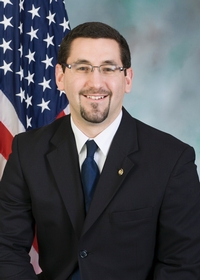
Rep. Jason Ortitay
Sponsored bills
Maddy summaryHR 281 is a procedural resolution that forces the House Committee on Education to stop considering Senate Bill 9. It discharges the committee after 15 legislative days (since May 7, 2025) passed without the committee reporting the bill to the full House. This resolution does not change the content of Senate Bill 9; it only allows the full House to vote on the bill directly. The resolution itself is purely procedural and does not affect any policy or specific group of people.
Maddy summaryHB 1774 modifies Pennsylvania's Tax Reform Code to allow the Department of Revenue to review refund requests for overpaid taxes submitted more than three years after payment. It directly affects taxpayers who paid excess taxes years ago and seek refunds beyond the standard three-year window. The key provision grants the Department discretion to approve refunds for "the number of years of overpayment as the department deems necessary." This changes the process by giving the Department authority to grant refunds for older overpayments, rather than automatically denying them after three years. The bill takes effect 60 days after enactment.
Maddy summaryHB 1660 would amend Pennsylvania's Safe Drinking Water Act to ban the addition of fluoride to public drinking water systems. This bill directly affects all public water suppliers across the state, requiring them to cease fluoridation practices in their water treatment processes. The key provision establishes a statewide prohibition on water fluoridation, overriding current local policies that allow it. The bill is currently referred to the Local Government committee for further consideration.
Maddy summaryThis resolution urges Pennsylvania school districts to consider later start times for secondary schools (high schools), citing studies showing teens need 8-10 hours of sleep but 98% of PA schools begin before 8:30 a.m. It references CDC and AAP research linking later start times to improved academic performance, reduced absenteeism, and better mental health outcomes. The bill encourages districts to collaborate with health professionals and educators to develop schedules that maintain educational activities while adopting later start times, and asks state agencies to provide resources and public education on adolescent sleep needs. As a non-binding resolution, it does not require policy changes but recommends action based on existing evidence.
Maddy summaryHB 1625 would create the Keystone Artificial Intelligence Authority within the Department of Community and Economic Development to develop and oversee AI policy. It establishes an AI Permitting System Pilot Program under the Department of Environmental Protection for reviewing AI projects and creates the Keystone AI Development Fund to support AI innovation. These provisions would directly affect state agencies implementing the Authority, the pilot program, and the fund, primarily impacting businesses and developers engaging with AI systems requiring permits. The bill focuses on structural changes for AI governance rather than regulating specific AI uses.
Maddy summaryHB 1597 creates a mandatory after-school reading program for kindergarten through second-grade students in Pennsylvania public schools starting in the 2026-2027 school year. The program requires schools to employ trained teen leaders (grades 9-12) to provide one-on-one tutoring using research-backed phonics-based methods, with sessions structured as 45 minutes of individual instruction followed by 45 minutes of group reading activities. Schools must report student progress, teen leader numbers, and program partnerships annually, and state funds prioritized for schools with high numbers of students not meeting reading benchmarks. This directly affects K-2 students, teen tutors, and school districts implementing the program.
Maddy summaryThis Pennsylvania state resolution designates May 14, 2025, as "Apraxia Awareness Day" to promote recognition of apraxia, a speech disorder affecting communication. It serves as a symbolic gesture to increase public awareness for individuals and families impacted by apraxia but does not create new laws or allocate funding. The bill was referred to the Health Committee and later laid on the table in the House, indicating it is currently inactive.
Maddy summaryHB 1519 amends Pennsylvania's 1921 Insurance Company Law to require casualty insurance policies to cover mental illness treatments. This directly affects insurance companies writing casualty policies and policyholders seeking mental health services. The key provision mandates that insurers include mental health coverage in standard casualty policies, aligning it with other health coverage requirements. The bill focuses on expanding access to mental health care by ensuring it is covered under these specific insurance policies.
Maddy summaryHB 1499 updates Pennsylvania's child custody laws under Title 23. It clarifies definitions, establishes clearer rules for awarding primary physical custody, and requires courts to consider criminal convictions when making custody decisions. The bill also mandates parenting plans and specifies factors judges must evaluate, directly affecting parents, judges, and child welfare agencies involved in custody cases. The legislation was recently referred to the Judiciary Committee on May 28, 2025.