

Maddy summaryThis bill establishes the Domestic Violence Home Security Grant Program within the Pennsylvania Commission on Crime and Delinquency to provide financial assistance to victims of domestic violence. The program allows eligible individuals to purchase residential security measures such as reinforced locks, security cameras, alarm systems, and motion-detection lighting to enhance their home safety. Applicants must submit documentation proving they are victims of abuse, and the commission may prioritize funding for those facing elevated risks, such as recent separation from an abuser or the presence of children. All personal information provided by applicants will remain confidential, and the commission is responsible for reviewing applications, determining grant amounts, and notifying applicants of decisions.
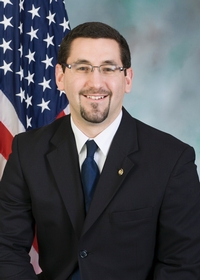
Rep. Jason Ortitay
Sponsored bills
Maddy summaryThis bill expands Pennsylvania's protection from abuse laws by allowing courts to establish specific geographic 'exclusion zones' that defendants cannot enter. It authorizes the use of GPS electronic monitoring devices for defendants in protection orders or sentencing, which would automatically alert law enforcement and, with the victim's consent, the victim if the defendant enters a prohibited area. The bill also clarifies that the defendant is responsible for paying all costs related to the monitoring equipment and services.
Maddy summaryThis bill amends Pennsylvania laws to restrict financial support and asset division in divorce cases involving domestic violence. Specifically, it prevents a spouse convicted of a personal injury crime against their partner from receiving alimony or a share of marital property, unless the court determines that denying these benefits would cause a significant injustice. The legislation also clarifies that marital misconduct occurring after the final separation is generally not a factor in alimony decisions, with the notable exception of abuse. These changes take effect 60 days after the bill is enacted.
Maddy summaryThis bill amends Pennsylvania's Medicare Supplement Insurance Act to allow individuals to switch insurance companies without being denied coverage or facing higher prices due to their health status or medical history. It specifically applies to people aged 65 or older who are already enrolled in Medicare and wish to change their current supplement plan within 60 days of their birthday while keeping the same type of coverage. Under the new rules, a new policy issued under these conditions must take effect on the first day of the month that is at least 30 days after the application is signed, and the changes will become effective on January 1, 2027.
Maddy summaryThis bill creates the PA WORKS Scholarship Grant Program and a trade career-incentive tax credit for Pennsylvania residents pursuing specific skilled trade careers in higher education. The scholarship provides up to $5,000 per academic year to students enrolled in approved courses such as carpentry, welding, plumbing, or electrical work, provided they maintain satisfactory academic progress and have not yet earned a bachelor's degree. Recipients must agree to live and work in Pennsylvania for 36 months in an in-demand occupation after completing their degree, with the scholarship amount prorated based on years of service and requiring repayment if they fail to meet these requirements. Additionally, the bill establishes a tax credit for business firms that hire graduates from these trade programs, though specific credit amounts and eligibility details are not fully detailed in the provided text.
Maddy summaryHB 289 requires all Pennsylvania public, charter, and private schools to test for radon gas in existing buildings starting with the 2026-2027 school year. If radon levels reach 4 picocuries per liter or higher, schools must install mitigation systems and retest until levels fall below that threshold, with new schools required to use radon-resistant construction. Testing must be done by certified professionals using specific protocols, and results must be shared with school boards, parents, teachers, and health officials. Schools with low radon levels must retest every five years, while those needing mitigation must retest every two years. This law directly affects all Pennsylvania school entities and aims to reduce exposure to radon, a radioactive gas linked to lung cancer.
Maddy summaryHR 362 is a procedural resolution that directs the House to discharge the Committee on Education from further consideration of House Bill 158, allowing HB 158 to move directly to the full House floor for a vote. This action bypasses the committee's review process, which typically requires committee approval before a bill can be debated on the floor. The resolution was placed on the calendar under Rule 53 on October 29, 2025, signaling it will now proceed to a floor vote. This change affects the legislative workflow for HB 158 but does not alter the content or policy of HB 158 itself.
Maddy summaryHB 2196 requires electric and natural gas suppliers in Pennsylvania to provide consolidated billing, replacing separate bills from utilities and suppliers with a single bill showing all charges. This directly affects residential and commercial customers who choose alternative energy suppliers (currently only 23% of residential electric and 11.3% of natural gas customers). The key mechanism mandates that suppliers must consolidate all electric and natural gas charges onto one bill, using smart meter data to enable more tailored pricing options like time-of-use rates. The bill also includes penalties for non-compliance with these billing requirements.
Maddy summaryHB 2152 amends Pennsylvania's Public School Code to allow school districts to use state grant funds for shifting secondary school start times to no earlier than 8:30 a.m., requiring the new time to be at least 15 minutes later than current start times. School entities must adopt a policy for the later start time and inform communities about the health and academic benefits of adequate sleep for students before implementation. The Department of Education must provide guidance and support to schools planning this change, including public awareness campaigns. This applies to all Pennsylvania school districts and charter schools serving grades 7-12.
Maddy summaryHB 384 adds a new requirement for Pennsylvania courts: when someone is convicted of criminal trespass at a licensed gambling facility (like a casino) or video gaming area while on a self-exclusion list, the court may order an evaluation to assess if they have a gambling disorder and need treatment. This applies specifically to individuals who violated self-exclusion rules at gambling venues, as defined by Pennsylvania law. The evaluation, conducted by a court-appointed clinician, must determine the need for counseling or treatment as part of sentencing or pretrial diversion. The bill does not change the trespass offense itself but adds this assessment step for a specific subset of cases involving gambling venues.