

Maddy summaryHB 1189 amends Pennsylvania's Fiscal Code to raise the threshold for automatic property payments under unclaimed property laws. It increases the value limit from $500 to $10,000, allowing the State Treasurer to pay or deliver property (or its proceeds) directly to claimants without requiring a formal claim if the property value is below this new amount and the State Treasurer confirms sole ownership. This primarily affects individuals seeking small-value unclaimed assets, such as forgotten bank accounts or insurance payments. The bill also repeals a separate provision about environmental funding, but this does not impact the core unclaimed property change.
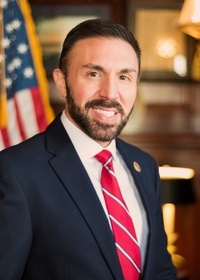
Rep. Ryan Bizzarro
Sponsored bills
Maddy summaryHB 1510 amends Pennsylvania's transportation laws to establish a structured framework for sustainable mobility programs, directly affecting state transportation agencies and organizations receiving state funds for projects like bike lanes, pedestrian infrastructure, or electric vehicle charging networks. Key provisions define sustainable mobility, streamline funding applications and approvals, clarify federal funding coordination, and create separate programs for asset improvements, new initiatives, and statewide projects. The bill also sets a small purchase threshold for simpler project approvals and removes outdated rules about evaluating private investment opportunities. These changes aim to standardize how the state manages and funds non-traditional transportation infrastructure.
Maddy summaryHB 818 creates a program allowing first-time homebuyers in the Commonwealth to open state-backed savings accounts for down payments and closing costs. It establishes a dedicated First-time Homebuyer Savings Account Fund and requires the Treasury Department to manage the program and allocate funds. The bill directly affects eligible first-time homebuyers by providing a new savings mechanism for housing costs. Key provisions include the fund's creation, Treasury's administrative duties, and the structure for account access.
Maddy summaryHB 500 repeals existing tax credit provisions for local resource manufacturing (petrochemicals/fertilizers) and Pennsylvania milk processing, while creating new tax credits for clean energy and advanced manufacturing sectors. It establishes tax credits for reliable energy investments, regional clean hydrogen hubs, semiconductor manufacturing, biomedical research, geothermal energy, and sustainable aviation fuel. Eligible businesses must meet specific criteria for capital investment, job creation, and project location to apply for these credits through the Department of Revenue. The bill also updates definitions and application processes for these new credits, with annual funding limits and rules for credit usage.
Maddy summaryHB 1484 increases Pennsylvania jury compensation to a flat $40 per day for all days jurors serve, replacing the previous tiered rate ($9 for first three days, $25 after). It also sets a travel allowance of 17¢ per mile circular (with no allowance in the first judicial district) and allows county commissioners to choose how jurors receive payments (e.g., check, debit card), without changing the compensation amount. The bill directly affects all Pennsylvanians summoned to serve on juries statewide. It makes no changes to eligibility or jury service requirements, only to payment structure and methods.
Maddy summaryHB 1310 amends the Human Services Code to modify how medical assistance payments are determined for institutional care in nursing facilities. The bill specifically adjusts the application of a "revenue adjustment neutrality factor" to payment rates for county and nonpublic nursing facilities. Beginning July 1, 2025, the factor for nonpublic facilities must be equal to or greater than 0.90, while for county facilities, it will be 1.00 plus the percentage rate of change applied to nonpublic facilities. This change directly affects these nursing facilities and the eligible individuals receiving care within them.
Maddy summaryHB 472 amends Pennsylvania's vehicle code to support minors experiencing homelessness (defined as individuals under 18 meeting federal homelessness criteria under 42 U.S.C. § 11434A). It allows these minors to use temporary addresses (like schools or shelters) for license applications, substitute school/social worker signatures for parental/guardian signatures, and waive initial license/ID fees. The bill directly affects homeless youth under 18 seeking driver's licenses or learner's permits in Pennsylvania. Key provisions include updated definitions in Section 102, revised application requirements in Sections 1505(g), 1506(c), and 1507(a), and fee waivers in Sections 1510(k) and 1951(e).
Maddy summaryThis bill is a ceremonial resolution designating April 18, 2025, as "Erie Day" in Pennsylvania. It commemorates historical milestones in Erie's founding, including the 1795 land survey that established the city and its 1805 incorporation as a borough. The resolution has no legal effect or policy changes - it is purely symbolic recognition. It does not impact any individuals, groups, or government programs. The designation applies statewide for ceremonial purposes only.
Maddy summaryHB 1097 creates a new minor criminal offense in Pennsylvania for organizing or operating events where live pigeons are used as targets for shooting contests, either for amusement or skill testing. This applies to anyone who willfully runs such events at a designated location, including using mechanical aids to present pigeons to shooters. The bill explicitly excludes legal hunting under state game laws, dog training activities, or permitted special events. It takes effect 60 days after enactment.
Maddy summaryHB 849 creates a new felony offense for child abuse offenders who fail to comply with registration requirements under Pennsylvania law. It makes it a felony of the second degree (or first degree for repeat violations) to miss registration deadlines, provide inaccurate information, fail to verify address or employment, or skip required counseling. The bill requires offenders to register with the Pennsylvania State Police, update details regularly, and provide complete personal information, with police authorized to arrest without a warrant for violations. This directly affects individuals convicted of child abuse offenses who are subject to registration under existing law.