

Maddy summaryHB 494 amends Pennsylvania's Human Services Code to create new rules for small personal care homes that provide daily assistance (like bathing, medication help, or meal prep) to 3 or fewer non-relatives who don’t need full long-term care. It directly affects operators and staff of these homes by requiring annual unannounced inspections, mandatory criminal background checks for all staff, and registration with the state for administrators. Key provisions include creating a state registry for homes, setting minimum care standards through new regulations, and allowing penalties for non-compliance. The bill aims to strengthen oversight while focusing on homes that serve vulnerable adults with basic care needs.
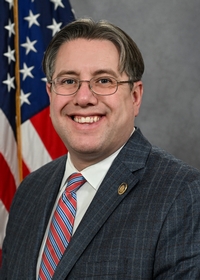
Rep. Tim Brennan
Sponsored bills
Maddy summaryThis resolution recognizes January 27, 2025, as "International Holocaust Remembrance Day" in Pennsylvania. It symbolically aligns Pennsylvania with the United Nations' 2005 designation of January 27 as a day to honor Holocaust victims, educate about genocide prevention, and condemn hate based on ethnicity or religion. The resolution has no binding effect or policy changes - it is a formal statement of recognition. It directly affects Pennsylvania by designating this date for state-level commemoration.
Maddy summaryHB 508 establishes the Wildlife Rehabilitation Grant Program, providing financial support to nonprofit wildlife rehabilitators in Pennsylvania based on their previous year's animal intake. The Pennsylvania Game Commission administers the program, awarding grants ranging from $2,500 (for 1-100 animals) up to $75,000 (for over 2,500 animals) to cover rehabilitation services, facility improvements, or related activities. Grants are distributed on a first-come basis until the Wildlife Rehabilitation Grant Fund is exhausted, with each rehabilitator limited to one grant per office location annually. This program directly supports organizations that care for and release injured, sick, orphaned, or displaced wildlife back into natural habitats.
Maddy summaryHR 12 is a ceremonial resolution recognizing February 2025 as "Black History Month" in Pennsylvania. It does not create new laws or policies but formally acknowledges the month through the House of Representatives. The resolution highlights the historical origins of Black History Month, including Dr. Carter Godwin Woodson's founding of the Association for the Study of African American Life and History, and notes the 2025 theme focused on African Americans and labor. This resolution directly affects Pennsylvania residents by designating the month for commemoration, without altering any legal rights or obligations.
Maddy summaryThis Pennsylvania House Resolution (HR 39) is a symbolic tribute honoring former President Jimmy Carter following his death on December 29, 2024, at age 100. It commemorates his life, presidency, and humanitarian work - including the Camp David Accords, founding The Carter Center, and efforts to eradicate Guinea worm disease - through a series of historical "whereas" statements. As a commemorative resolution, it does not create new laws, allocate funds, or directly affect any individuals or policies. The resolution serves only to formally extend the Pennsylvania General Assembly's condolences and recognize Carter's legacy. It is purely ceremonial, with no legislative or policy impact.
Maddy summaryHB 459 designates a 2.5-mile segment of Pennsylvania Route 352 (Middletown Road) between Gradyville Road in Edgmont Township and North Pennell Road in Middletown Township, Delaware County, as the "Chief Joseph J. Montgomery, Jr. Memorial Highway." The bill commemorates Joseph J. Montgomery, Jr., a local firefighter, paramedic, community leader, and business owner who died in 2023. The legislation requires the Pennsylvania Department of Transportation to install and maintain directional signs along the designated highway. This is a ceremonial naming bill with no policy or funding changes, solely honoring Montgomery's community service.
Maddy summaryHB 291, also known as "Susan's and Emily's Law," updates Pennsylvania's parking rules to better protect pedestrians and cyclists. It requires vehicles parked next to pedestrian plazas or bike lanes to position their wheels within 12 inches of the buffer zone between the lane and curb, aligned with traffic flow. The bill also clarifies disability parking rules, allowing local governments to restrict access to specific vehicles or license plates and charge reasonable fees while complying with federal disability law. Violations of the new pedestrian/bike lane parking rules carry a $15 fine, while disability parking violations can result in fines of $50-$300.
Maddy summaryThis bill is a symbolic resolution (not a law) designating February 27, 2025, as "Dominican Republic Independence Day" within Pennsylvania. It directly affects Pennsylvania residents by formally recognizing this date to honor the Dominican Republic's independence from Haiti in 1844 and the cultural contributions of the state's Dominican-American community. The resolution includes historical context about the Dominican Republic's founding and highlights the community's economic and cultural ties to Pennsylvania. It has no financial, regulatory, or policy impact - it is purely commemorative.
Maddy summaryHB 423 establishes Pennsylvania's Future Voter Program, allowing high school students aged 16-17 to preregister to vote before turning 18. The bill requires schools to hold voter registration events during Constitution and Citizenship Day (September 17), providing applications and online registration opportunities for eligible students. Students who preregister will not be added to the voter registry until they reach age 18. The program mandates school entities to coordinate these events, with the Secretary of Education and Secretary of the Commonwealth overseeing implementation. This directly affects all high school students in Pennsylvania who are 16 or 17 years old.
Maddy summaryHB 432 establishes Pennsylvania's Maternal Care Access Program under the Department of Health to address gaps in maternal healthcare. The bill identifies counties as "maternal care access zones" using the Maternal Vulnerability Index (based on social factors like poverty, education, and healthcare access) and the Social Vulnerability Index. It requires the Department to develop regulations for improving access to obstetric care, birth centers, and providers in areas classified as "maternity care deserts" (regions lacking hospitals, birth centers, or specialized providers within 25 miles). The program directly affects underserved communities and the Department of Health, focusing on concrete policy changes to expand maternal health resources.