

Maddy summaryHB 636 amends Pennsylvania's disabled veterans' real estate tax exemption law by extending the review period for exemption eligibility from every five years to every ten years. The bill requires the Pennsylvania Veterans' Commission to reassess applicants' economic status at least once every decade to determine if they still qualify for the exemption. This change directly affects disabled veterans currently receiving the tax exemption, as it delays the periodic review of their eligibility. The key provision modifies Section 8904(3) of Title 51 of the Pennsylvania Consolidated Statutes, shifting the review cycle without altering the exemption's eligibility criteria or benefits. The bill takes effect 60 days after enactment.
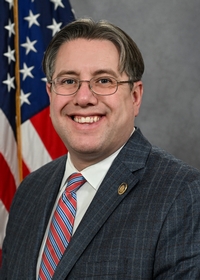
Rep. Tim Brennan
Sponsored bills
Maddy summaryThis bill requires Pennsylvania health clubs with swimming pools of 1,500 square feet or larger to have at least one certified lifeguard on duty during all hours the pool is open for swimming by members and guests. A "certified lifeguard" must hold a current certification from a lifeguard training program approved by the Pennsylvania Department of Health. This rule directly affects health clubs operating such pools, mandating a minimum safety standard during pool hours. The law takes effect 60 days after enactment.
Maddy summaryHB 619 requires Pennsylvania employers to provide employees with up to two hours of paid time off to vote in elections, affecting all public and private sector workers in the state. The bill mandates that employees give employers at least two working days' notice before an election and prohibits employers from asking about voting preferences or party affiliation. Employers must post a uniform notice about this policy (available from the Secretary of the Commonwealth) at least 10 days before an election and face fines of $100-$500 for violations. The law aims to ensure voting access without penalty, with employees required to verify voting attendance to retain paid time off.
Maddy summaryHB 675 bans the sale or distribution of firefighting personal protective equipment (PPE) containing intentionally added PFAS chemicals in Pennsylvania starting January 1, 2028, directly affecting manufacturers, sellers, and distributors of such gear. The law includes an exception if the State Fire Commissioner determines PFAS use is unavoidable and issues official guidance. Violations carry civil penalties of up to $5,000 for first offenses and $10,000 for repeat offenses, with fines split equally between the Fire Company Grant Program and Emergency Medical Services Grant Program. This bill aims to reduce exposure to harmful PFAS chemicals while maintaining safety standards for firefighters.
Maddy summaryHB 680 amends Pennsylvania's Clean Streams Law to clarify enforcement procedures for pollution cases. It specifies that cases involving sewage, industrial waste, or pollution can be filed either by the Attorney General or directly before district justices in the county where the offense occurred or the public was affected. This change simplifies the court process for environmental enforcement by streamlining jurisdiction and clarifying who represents the Commonwealth in appeals. The bill affects how pollution violations are handled in Pennsylvania courts, with no new environmental requirements.
Maddy summaryHB 656 amends Pennsylvania's Public School Code to allow trained school staff to administer emergency anti-seizure medication during seizures when a nurse is unavailable. It directly affects students with epilepsy in public schools who have been prescribed such medication, requiring parental request and adherence to approved training guidelines. The bill establishes that non-nurse staff may provide emergency assistance only after completing designated training and following protocols approved by the Department of Education. It specifies that nasal spray or similar FDA-approved treatments may be used, while ensuring students' rights under disability laws like IDEA and the Rehabilitation Act are upheld. The policy change is voluntary for staff and requires schools to notify parents about potential accommodations under 504 plans or IEPs.
Maddy summaryHB 663 requires bodywork facilities in Pennsylvania - including massage studios, spas, and similar businesses offering bodywork services like massage therapy or acupressure - to obtain a license from the Department of State. The bill establishes a licensing process involving background checks, application reviews, and regular inspections to ensure facilities meet health and safety standards, while prohibiting on-site dormitories. It excludes medical offices, solo practitioners who display their license in advertisements, and businesses offering only non-manipulative services (like topical skin treatments). Violations, such as operating without a license, could result in penalties, and the Department of State will oversee enforcement.
Maddy summaryHB 594 amends Pennsylvania's Human Relations Act to regulate the use of AI-driven hiring tools. It requires employers using automated employment decision tools (like AI resume screeners) to notify job applicants 10 days before interviews, explain how the tool works, and obtain explicit consent. Employers must also conduct annual bias audits to check for unfair discrimination against protected groups and publicly post audit summaries online. Violations could result in civil penalties of up to $1,500 for repeat offenses. This directly affects all Pennsylvania employers and employment agencies using such technology in hiring, promotion, or compensation decisions.
Maddy summaryHB 568 establishes county-level "gun violence task forces" in Pennsylvania communities with high and increasing gun violence rates. These task forces, created upon a district attorney's written request to the Attorney General, investigate violations of firearm laws (sections 6105 and 6111 of Title 18) and recommend prosecutions. The task forces include local law enforcement, community stakeholders, faith leaders, and neighborhood representatives, operating under the Attorney General’s authority. The Attorney General gains authority to prosecute certain firearm offenses in these counties, considering factors like the severity of the offense and the offender’s criminal history, while local prosecutors may request prosecution for specific cases involving murder or violent crimes.
Maddy summaryThis Pennsylvania House Resolution (HR 65) establishes a task force to study social media platforms and websites that encourage suicide. The task force, chaired by the Attorney General and including health officials, legislative committee leaders, and appointed experts in psychology, cyberbullying, and suicide prevention, will examine how to address such content. It must issue a report within two years with recommendations for legislative or executive actions to prevent suicides linked to these online spaces. The resolution focuses on gathering evidence and advice to inform future policy, without creating new laws or regulations.