

Maddy summaryThis bill amends Pennsylvania's Liquor Code to update definitions and regulations related to alcohol and malt and brewed beverages, while also introducing provisions for hemp-derived cannabinoid beverages. It establishes new categories for "alcohol service personnel" and "cannabinoid service personnel" to clarify the roles of employees in licensed establishments, and creates a Local Hemp Sharing Fund to support local communities. The legislation also modifies licensing rules for malt and brewed beverages, outlines requirements for responsible alcohol management, and sets penalties for unlawful acts involving these products.
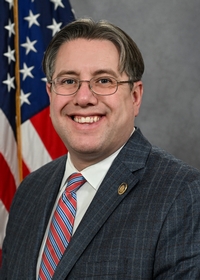
Rep. Tim Brennan
Sponsored bills
Maddy summaryThis bill establishes a new regulatory framework for short-term rentals in Pennsylvania by creating a statewide system that categorizes operators, requires registration, and sets safety and insurance standards. It distinguishes between small individual hosts operating fewer than 10 properties and larger corporate operators managing 10 or more units, with stricter requirements applying to the latter. The legislation mandates that all short-term rentals be registered with the county, ensures a responsible person is available at each property within an hour of contact, and allows municipalities to maintain their existing zoning restrictions while requiring them to notify the county of any bans. Penalties are imposed for non-compliance, and the bill includes a transitional period for existing operators to meet new requirements.
Maddy summaryHB 1311 amends Pennsylvania's criminal code by revising the definition of "serious provocation" in cases involving danger to the person. The amendment explicitly states that this term does not include the discovery, knowledge, or potential disclosure of a victim's gender identity, expression, or sexual orientation, nor does it cover unwanted nonforcible romantic or sexual advances by the victim or a prior romantic relationship between the victim and defendant. This change affects criminal cases where defendants might otherwise claim "serious provocation" as a defense, particularly in incidents involving LGBTQ+ individuals or relationship dynamics. The bill takes effect 60 days after enactment.
Maddy summaryHR 348 is a resolution designating November 2025 as "Native American Heritage Month" in Pennsylvania. It formally recognizes and honors the history, culture, and contributions of Native American communities within the state. The resolution does not create new laws or funding but serves as a symbolic acknowledgment by the Pennsylvania legislature. It directly affects Pennsylvania residents through this official state-level observance.
Maddy summaryThis bill designates a specific stretch of Pennsylvania Route 405 in Northumberland County as the PFC Richard F. "Ricky" Ritter Memorial Highway in honor of a local Marine who died in Vietnam. The legislation requires the Department of Transportation to install and maintain signs displaying the memorial name along the designated roadway. The act also includes background information about Ritter, noting his birth in Williamsport, his service in the Marine Corps, and the Purple Heart he received posthumously. This is a commemorative measure that does not alter traffic laws or funding but serves to recognize a fallen service member.
Maddy summaryThis bill amends Pennsylvania's tax code to establish a new licensing requirement for tobacco retailers, mandating that applicants meet specific criteria to obtain or renew their retail licenses. The law introduces a distance restriction effective January 1, 2027, prohibiting tobacco retailers from operating within 1,000 feet of any school property line, while also requiring applicants to demonstrate adequate premises for revenue protection, maintain accurate tax reporting, and have no history of tax violations. The measure directly affects tobacco retailers and applicants seeking to sell tobacco products in Pennsylvania, adding compliance steps to the existing licensing process.
Maddy summaryHB 554 would authorize Pennsylvania to join the Social Work Licensure Compact, a multi-state agreement that allows social workers licensed in one member state to practice in others without additional exams. The bill provides Pennsylvania with the legal framework to adopt the compact's standard terms, directly affecting licensed social workers seeking to practice across state lines. Key provisions include aligning Pennsylvania's licensing requirements with the compact's uniform standards, simplifying the process for social workers to obtain reciprocal licenses in participating states. This change would streamline professional mobility for social workers while maintaining consistent regulatory oversight.
Maddy summaryThis bill designates the week of April 12 through 18, 2026, as "National Public Safety Telecommunicators Week" in Pennsylvania. It directly honors 911 dispatchers and public safety telecommunicators who coordinate emergency responses for medical, fire, and police services. The resolution acknowledges the critical role these professionals play as the first point of contact for residents during emergencies. This is a commemorative measure that recognizes the diligence and professionalism of these workers without changing any laws or policies.
Maddy summaryThis House Resolution formally recognizes June 2026 as LGBTQ+ Pride Month in Pennsylvania to honor the state's LGBTQ+ history and community contributions. The bill does not create new laws or change government operations, but instead serves as a symbolic acknowledgment of Pride Month within the Commonwealth. Sponsored by multiple representatives, the resolution highlights Pennsylvania's historical role in LGBTQ+ civil rights, including early Pride demonstrations and legislative actions. This measure is a commemorative gesture that affirms support for LGBTQ+ inclusion without altering any existing policies or programs.
Maddy summaryHB 2255 amends Pennsylvania's Telemarketer Registration Act to regulate the use of artificial intelligence in telemarketing. The bill defines key terms like "artificial intelligence" and "synthetic content," then prohibits telemarketers from using AI to make calls, mimic human voices, select phone numbers, disguise call origins, or interact with consumers during calls. Violations carry civil penalties of up to $100,000 per offense, with escalating fines for repeat violations. Individuals who receive a prohibited call may also sue the telemarketer in court. This bill directly affects telemarketing companies operating in Pennsylvania that use AI for solicitation calls.