

Maddy summaryHR 150 is a Pennsylvania House resolution designating April 11-17, 2025, as "Black Maternal Health Week" to highlight the disproportionate maternal health disparities affecting Black women and birthing persons in the state. It references Pennsylvania data showing Black women face maternal mortality rates twice as high as White women (148 vs. 74 deaths per 100,000 live births in 2020) and higher morbidity rates. The resolution does not create new laws or funding but aims to raise public awareness about preventable maternal health outcomes. It specifically targets state-level attention to this crisis, citing local statistics from Philadelphia and Allegheny Counties. As a symbolic resolution, it has no binding effect but seeks to spur broader discussion and action.
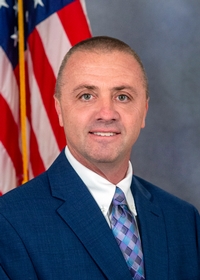
Rep. Dan Deasy
Sponsored bills
Maddy summaryThis bill establishes a grant program to provide free menstrual products (such as pads and tampons) in Pennsylvania public schools. Schools with 25% or more students eligible for free or reduced-price lunch programs can apply for grants to purchase these products and install dispensers or disposal units. Recipients must report annual spending on products and dispenser maintenance to the state. The program is funded by a state appropriation for the 2025-2026 fiscal year.
Maddy summaryHB 1068 creates a licensing program allowing family members (such as parents, grandparents, or adult siblings) to provide Medicaid-covered skilled care to children with medical needs. To qualify, applicants must complete training, pass background checks, and meet state nursing standards. The bill requires Medicaid agencies to cover the cost of training and licensure renewal, and it mandates that licensed family caregivers receive compensation for services like skilled monitoring. This directly affects Medicaid recipients (children under 21 with diagnosed conditions) and their eligible family caregivers, with oversight by the State Board of Nursing.
Maddy summaryHB 1065 creates a new felony offense for selling unmarked firearm components in Pennsylvania. It specifically targets the sale of firearm frames/receivers, silencer frames, split/modular frames, or partially complete frames without serial numbers registered to a federal firearms licensee. The bill defines "privately made firearm" as one assembled by non-licensed individuals without federal serial markings. This law directly affects sellers of homemade or unlicensed firearm parts, making such sales a third-degree felony. It does not change laws regarding firearm ownership or purchase, only penalizing the sale of unmarked components.
Maddy summaryThis House Resolution designates March 2025 as "Problem Gambling Awareness Month" in Pennsylvania and recognizes it as "National Problem Gambling Awareness Month." It symbolically urges state agencies (including the Gaming Control Board, Drug and Alcohol Programs, and Lottery) to collaborate on public awareness campaigns and treatment promotion. The resolution highlights that 6.5-10 million Americans experience problem gambling annually and emphasizes the need for accessible treatment resources. It has no binding effect but aims to increase public understanding of gambling-related issues.
Maddy summaryThis bill establishes the Constable William Davidson Reward Fund to provide rewards of up to $50,000 for information leading to the arrest and conviction of individuals who kill or cause the death of a law enforcement officer in Pennsylvania. It amends the Pennsylvania Commission on Crime and Delinquency Law to authorize the commission to administer the fund and offer these rewards for crimes covered under state murder and criminal homicide statutes targeting officers. The fund, which will be non-lapsing and funded by state appropriations, is intended to encourage public cooperation in solving violent crimes against law enforcement personnel.
Maddy summaryHB 1055 creates a new criminal offense in Pennsylvania for threatening healthcare workers, specifically targeting threats intended to interfere with their duties. It defines the crime as knowingly making oral/written threats against healthcare practitioners, technicians, or hospital security officers, with penalties escalating from a minor violation for a first offense to a third-degree misdemeanor for repeat offenses. The law requires healthcare facilities to post clear notices about this offense at all public entrances, and a person cannot be convicted if the notice wasn’t displayed (unless they knew about the offense). This bill directly affects anyone making threats against covered healthcare workers in Pennsylvania, aiming to protect them from intimidation during work.
Maddy summaryThis bill amends Pennsylvania's 1929 Administrative Code to clarify the maximum size of the Pennsylvania State Police (4,310 total officers and enlisted members) and specifies that personnel assigned to the Pennsylvania Turnpike Commission, Delaware River Bridge Commission, and gaming enforcement do not count toward this limit. It also repeals an outdated reference in the Fiscal Code (Section 1733-E(3)) to align with this clarification. The change directly affects the State Police's staffing structure and reporting requirements. The bill makes a technical correction to existing law without creating new policies or changing operational responsibilities.
Maddy summaryThis resolution designates March 2025 as "Women's History Month" in Pennsylvania. It is a ceremonial measure with no binding policy changes, funding, or new programs. The resolution invites all Pennsylvanians to reflect on women's contributions to the state's and nation's economic, cultural, and social development. It does not affect specific groups or create legal obligations, as it is purely symbolic recognition.
Maddy summaryHB 535 bans Pennsylvania health insurers from setting annual or lifetime dollar limits on core health benefits for enrollees, whether services are provided by in-network or out-of-network providers. It applies to all individual and group health insurance policies (excluding specific types like Medicare supplements or dental/vision-only plans) and prohibits limits on benefits that were already covered without such caps in 2025 policies. The Insurance Department can enforce this through fines up to $5,000 per violation (or $10,000 for willful violations), with annual caps of $500,000 for insurers. The law does not require coverage of specific benefits but eliminates existing dollar limit practices for covered services.