

Maddy summaryHB 405 would require businesses with 200+ Pennsylvania employees to meet specific standards to receive state contracts, funding, or grants. Corporations would be ineligible if they violated federal labor laws (within 5 years), committed unfair labor practices (within 5 years), broke Pennsylvania's prevailing wage law (within 5 years), or failed to submit bylaws ensuring at least 20% of their governing board consists of employee-elected members. The bill applies only to new or renewed state contracts, funding, or grants approved after its effective date (60 days after enactment). This directly affects large corporations seeking state business by linking eligibility to labor compliance and employee representation requirements.
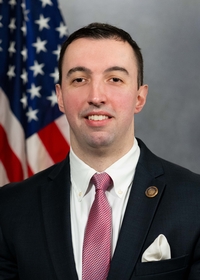
Rep. Brandon Markosek
Sponsored bills
Maddy summaryThis bill establishes a new chapter within Pennsylvania's emergency management laws to formalize counterterrorism planning, preparedness, and response efforts. It creates structures for regional and statewide teams, including specialized medical and mortuary units, to handle potential terrorist incidents or disasters. The legislation defines specific agreements that allow local governments and private entities to contribute personnel and resources while receiving compensation and access to state communication centers. Additionally, the bill incorporates federal standards for incident management and authorizes the construction of necessary facilities to support these new emergency response capabilities.
Maddy summaryThis law gives Pennsylvania licensing boards temporary power to create short-term rules specifically for professional licensing compacts that the state has joined. These temporary regulations must be published in the Pennsylvania Bulletin and will automatically expire on that publication date, while the rules themselves must end no later than three years after being issued. Once these temporary rules expire, any future regulations for these compacts must follow the standard rulemaking process required by existing law. The bill affects state agencies responsible for overseeing licensed professions and ensures that any new compact-related rules are time-limited.
Maddy summaryThis bill requires health insurance companies and managed care plans in Pennsylvania to cover speech therapy for both childhood and neurological stuttering. It mandates that these plans provide unlimited coverage for both habilitative and rehabilitative treatments without restrictions on the number of visits, prior authorization, or specific disease types. The law also ensures that coverage includes both in-person sessions and telehealth services, while excluding school-based therapy solely based on an individualized education program.
Maddy summaryThis bill amends the Pennsylvania Human Relations Act to update the list of protected characteristics, explicitly adding sex, sexual orientation, gender identity or expression, familial status, handicap, disability, and the use of support animals to existing categories like race and age. The legislation directly affects employers, employment agencies, labor organizations, and providers of housing and public accommodations by clarifying that discrimination based on these new and existing traits is unlawful. It reinforces the state's policy of ensuring equal opportunity and mandates that the Pennsylvania Human Relations Commission enforce these protections through established procedures and penalties. Additionally, the bill includes provisions to protect religious exercise while maintaining the commission's powers and duties to prevent prejudice and handle complaints.
Maddy summaryThis bill expands Pennsylvania's existing rules on firearm possession by clarifying the responsibilities of individuals who are legally prohibited from owning guns. It mandates that people facing certain disabilities must surrender their firearms, ammunition, and licenses to law enforcement or transfer them to eligible buyers within a specific timeframe, with stricter requirements for those subject to abuse protection orders. The legislation also introduces new penalties for failing to comply with these surrender orders and for knowingly accepting or returning weapons to prohibited individuals before a court order allows it. Additionally, the bill outlines duties for the Office of Attorney General and establishes procedures for handling firearms in community and municipal courts.
Maddy summaryThis bill amends the Underground Utility Line Protection Law by adding specific definitions and clarifying the responsibilities of facility owners, designers, excavators, and project owners. It also establishes duties for damage prevention committees, outlines procedures for issuing compliance orders, and sets administrative penalties for violations. Additionally, the legislation provides a legal mechanism for recovering penalties or forfeitures and includes provisions for the act's expiration.
Maddy summaryThis bill amends Pennsylvania's motorcycle laws to require a small nominal fee for motorcycle safety education courses. Any money collected from this fee that is not refunded will be placed into a specific state account designated for motorcycle safety programs. The change directly affects individuals taking these courses and the state's funding for the education initiative.
Maddy summaryThis bill amends a Pennsylvania resolution to remove specific names from the list of famous people associated with National Stuttering Awareness Week. By striking out references to President Joseph Biden, Jimmy Stewart, and Wilt Chamberlain, the text no longer cites these individuals as examples within the resolution. The change is a minor textual edit that does not alter the core purpose of recognizing the week as a time for stuttering awareness.
Maddy summaryThis bill establishes new eligibility rules for Pennsylvania business corporations seeking state contracts, funding, or grants. It directly affects domestic and foreign corporations with 200 or more employees in the Commonwealth by disqualifying them if they have violated federal fair labor standards, committed unfair labor practices, or broken the state's prevailing wage law within the last five years. Additionally, the bill requires these large corporations to submit bylaws ensuring that at least 20% of their governing board consists of current employees elected by the workforce. The restrictions only apply to agreements approved on or after the law's effective date, which is set to occur 60 days after enactment.