

Maddy summaryThis bill requires Pennsylvania hospitals to publish their standard prices for medical items and services on their websites and provide these lists to the public upon request. The law mandates that hospitals display both a comprehensive list of all charges and a simplified, consumer-friendly version for specific services that patients can schedule in advance. Additionally, the bill prohibits hospitals from taking debt collection actions against patients if the hospital fails to comply with these price transparency requirements. By enforcing these rules, the legislation aims to increase clarity on healthcare costs for patients while holding hospitals accountable for maintaining accurate pricing information.
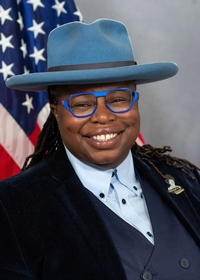
Rep. La'Tasha Mayes
Sponsored bills
Maddy summaryThis Pennsylvania bill creates a new Alzheimer's, Dementia and Related Disorders Office within the Department of Aging to coordinate state efforts for people affected by these conditions. The office will oversee existing programs, identify service gaps, manage grants, and update the state's strategic plan every five years based on expert advice. To support this work, the law also establishes a large advisory committee made up of government officials, healthcare providers, researchers, and individuals with personal experience caring for those with dementia. This committee will guide the office's activities, review progress, and ensure that the state's approach remains current and effective.
Maddy summaryThis bill creates the Keystone Fresh Program to increase the amount of locally grown food served in Pennsylvania school meals. It establishes a grant system administered by the Departments of Education and Agriculture to reimburse school districts for purchasing local fruits, vegetables, grains, and other minimally processed foods. The program prioritizes funding for schools that source from veteran farmers, socially disadvantaged groups, new farmers, or those using sustainable agriculture techniques. A separate fund is also created to support the administration of these initiatives, aiming to improve child nutrition and provide economic benefits to local producers.
Maddy summaryThis bill establishes an independent Office of Child Advocate within Pennsylvania's Human Services Code to protect the interests of children. The Governor will appoint a Child Advocate who must have at least six years of relevant experience and a bachelor's degree, and the office will operate independently of the department regarding decision-making. The Advocate and their staff are required to complete specific trainings on topics like trauma-informed care and crisis intervention, and they are designated as mandated reporters for suspected child abuse. Additionally, the bill defines the scope of child health, safety, and well-being programs, which include preventing abuse, providing foster care, and offering early intervention services.
Maddy summaryThis bill requires all Pennsylvania public and private schools to have automated external defibrillators (AEDs) available at every interscholastic athletic event, including practices. It mandates that schools create a written emergency action plan for sudden cardiac events, which must include a list of trained staff and detailed steps for responding to a medical emergency. The legislation also updates teacher certification requirements to include CPR and AED training, replacing previous rules that focused on CPR instruction alone.
Maddy summaryThis bill designates the month of July 2024 as "Parks and Recreation Month" throughout Pennsylvania to highlight the importance of public parks and recreational programs. It serves as a commemorative resolution that recognizes the benefits of outdoor spaces for community health, economic growth, and environmental resilience. The measure does not create new laws, allocate funding, or change existing regulations, but rather formally acknowledges the value of these resources in the state.
Maddy summaryThis bill establishes the Pennsylvania Artist Fellowship Grant Program to provide financial support to artists living in the state. To qualify, applicants must be at least 18 years old, reside in Pennsylvania, actively practice in visual, media, film, or performing arts, and not be currently enrolled in school. The program awards up to 25 grants of $100,000 each annually, which recipients can use for a wide range of expenses including housing, studio rentals, materials, travel, and student loans, provided the funds are not used for political campaigns or regular employment. The Pennsylvania Council on the Arts is responsible for managing the application process and administering the program, which is funded by a $2.5 million appropriation for grants and an additional $250,000 for administrative costs.
Maddy summaryThis bill directs Pennsylvania's Human Services department to apply for a federal waiver that would allow SNAP and WIC benefit recipients to use their funds to buy diapers or menstrual hygiene products. The legislation authorizes the department to adopt necessary rules once the USDA approves the waiver, ensuring the state can participate in this potential program change. It does not immediately change how benefits are used but establishes the legal framework to implement such a waiver if federal approval is granted.
Maddy summaryThis bill is a non-binding resolution that formally recognizes June 2024 as "LGBTQ+ Pride Month" within the Commonwealth of Pennsylvania. It directly affects state government agencies and officers by encouraging them to acknowledge the historical significance of LGBTQ+ contributions and the ongoing struggle for equality. The text cites specific local milestones, such as the 1965 sit-in at Dewey's lunch counter in Philadelphia and the establishment of early support organizations, to highlight the state's role in LGBTQ+ history. Ultimately, the measure serves as a symbolic gesture of solidarity and does not create new laws, funding, or enforceable policies.
Maddy summaryThis bill, known as the Victims of Violence Safe Employment Act, creates a new right for Pennsylvania employees and their family members to take unpaid leave after experiencing violence, sexual violence, stalking, or abuse of a vulnerable adult. The law allows victims to take this leave to seek medical care, attend court proceedings, or recover from the trauma of the incident, with employers prohibited from retaliating against them for using the leave. Employers are required to provide this leave without requiring the employee to prove the incident resulted in a criminal conviction, relying instead on documentation from law enforcement, healthcare providers, or victim advocates. Additionally, the bill establishes penalties for employers who violate these protections and creates a legal cause of action for employees to sue for damages if they face retaliation.