

Maddy summaryHB 192 repeals outdated language requiring psychological services to be provided on school premises for nonpublic school students. It updates the definition of "professional employees" to explicitly include school social workers, counselors, psychologists, and nurses in Pennsylvania schools. The bill mandates that school social workers must hold a new educational specialist certificate issued by the Department of Education, which must be created within 60 days. Additionally, it adds rules requiring schools to share student health records when students transfer and to retain those records for at least two years after a student leaves.
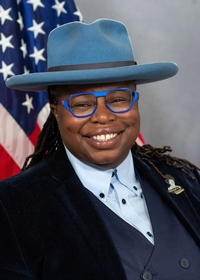
Rep. La'Tasha Mayes
Sponsored bills
Maddy summaryHB 104 amends Pennsylvania's protection from abuse law to define "electronic monitoring device" and allow courts to mandate its use for high-risk defendants. The bill defines a GPS-enabled device worn on the wrist or ankle that continuously tracks location within 100 miles, with data retained indefinitely by police. Courts may require this device for defendants found to pose a substantial risk of violating protection orders or committing crimes against victims, setting specific distance limits and restricted locations. The device must stay in place for the full duration of the protection order unless removed for "good cause" with notification to the victim. This directly affects individuals subject to abuse protection orders who are deemed high-risk by courts.
Maddy summaryHB 66 creates a Pennsylvania program providing $5,000 semester stipends to residents enrolled in accredited Master of Social Work (MSW) programs with a 3.0+ GPA. It directly affects students pursuing social work careers by funding their education through paid internships. The program requires internships at state-approved facilities to meet clinical training and licensing requirements, with stipends adjusted annually for inflation. Funding is contingent on available state budget resources, administered by the Department of Human Services.
Maddy summaryThis bill authorizes Pennsylvania to join the National Popular Vote Interstate Compact, an agreement among states to award all their electoral votes to the presidential candidate who wins the most popular votes nationwide. The law takes effect only when enough participating states collectively hold a majority of the Electoral College votes, ensuring the current system remains in place until the compact is fully active. If the agreement is triggered, Pennsylvania's chief election official would count statewide popular votes to determine the national winner and certify the corresponding slate of electors. The legislation also includes provisions for state withdrawal, definitions of key terms, and requirements for public transparency in vote counting.
Maddy summaryThis Pennsylvania House resolution designates the week of November 11 through 15, 2024, as "Pennsylvania Education for Students Experiencing Homelessness Awareness Week" and November 15, 2024, as "Red Shirt Day." The measure aims to raise public awareness about the growing number of students without adequate housing and to highlight the barriers they face in accessing education and support services. By encouraging residents to wear red on the designated day, the resolution seeks to show solidarity with unaccompanied minors and their educators while promoting community involvement in assistance programs.
Maddy summaryThis bill updates Pennsylvania's tax code to provide specific definitions for volunteer firefighter retirement plans and to clarify how their contributions are treated for tax purposes. It directly affects volunteer firefighters and the fire companies or municipalities that sponsor their benefit programs by distinguishing these contributions from regular taxable compensation. The legislation establishes clear rules for two types of plans: defined benefit plans, which offer a guaranteed payout, and defined contribution plans, which rely on specific deposits. By explicitly stating that these contributions are not considered compensation, the bill aims to prevent them from being taxed as income for the firefighters. These changes apply to taxable years starting on or after January 1, 2024.
Maddy summaryThis bill establishes a new chapter within Pennsylvania's emergency management laws to formalize counterterrorism planning, preparedness, and response efforts. It creates structures for regional and statewide teams, including specialized medical and mortuary units, to handle potential terrorist incidents or disasters. The legislation defines specific agreements that allow local governments and private entities to contribute personnel and resources while receiving compensation and access to state communication centers. Additionally, the bill incorporates federal standards for incident management and authorizes the construction of necessary facilities to support these new emergency response capabilities.
Maddy summaryThis bill expands medical assistance coverage to include doula services for eligible recipients during pregnancy, labor, delivery, and for up to one year after childbirth. To oversee this expansion, the legislation requires the creation of a Doula Advisory Board composed of government officials, doula representatives, and community members to advise on best practices and address disparities in maternal health. The state must also seek federal approval or a waiver to implement these changes, with the new coverage provisions taking effect once approved. Additionally, the bill includes provisions for third-party liability and data matching to help prevent fraud and abuse within the program.
Maddy summaryThis bill updates Pennsylvania's Public School Code to require schools to notify parents when a student is diagnosed with type 1 diabetes. It mandates that schools provide education about the condition and ensures parents are informed of any medical treatments or care plans involving their child. The legislation also clarifies that these requirements apply to both public and nonpublic schools, including those that operate health units. By making these changes, the law aims to improve communication between schools and families regarding diabetes management.
Maddy summaryThis bill requires the Pennsylvania Department of General Services to provide free menstrual hygiene products in at least 50% of bathrooms across all state buildings. The department must install dispensing machines and disposal receptacles while posting signs to inform the public that these items are available at no cost. The law defines menstrual hygiene products as tampons, sanitary napkins, or pads, and excludes unused or non-public buildings from this requirement. It takes effect 60 days after passage.