

Maddy summaryHB 1055 creates a new criminal offense in Pennsylvania for threatening healthcare workers, specifically targeting threats intended to interfere with their duties. It defines the crime as knowingly making oral/written threats against healthcare practitioners, technicians, or hospital security officers, with penalties escalating from a minor violation for a first offense to a third-degree misdemeanor for repeat offenses. The law requires healthcare facilities to post clear notices about this offense at all public entrances, and a person cannot be convicted if the notice wasn’t displayed (unless they knew about the offense). This bill directly affects anyone making threats against covered healthcare workers in Pennsylvania, aiming to protect them from intimidation during work.
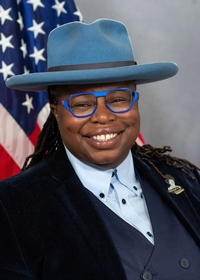
Rep. La'Tasha Mayes
Sponsored bills
Maddy summaryThis bill establishes a three-year pilot program (starting 2026-2027) within Pennsylvania public schools to teach students about the political, economic, and social contributions of LGBTQ+ individuals. School districts, charter schools, and nonpublic schools may apply to participate by submitting proposals to the Department of Education by May 15, 2026. The Department must develop guidelines by March 15, 2026 in consultation with LGBTQ+ organizations and prioritize curricula from groups with at least 50% LGBTQ+ leadership. Participating schools must submit annual reports on implementation, and the Department will contract an independent evaluation to assess the program's effectiveness, with results published online.
Maddy summaryThis resolution designates March 2025 as "Women's History Month" in Pennsylvania. It is a ceremonial measure with no binding policy changes, funding, or new programs. The resolution invites all Pennsylvanians to reflect on women's contributions to the state's and nation's economic, cultural, and social development. It does not affect specific groups or create legal obligations, as it is purely symbolic recognition.
Maddy summaryHB 1051 amends Pennsylvania's firearm sale laws to address electronic system failures during background checks. It requires gun dealers to use a specific one-page form for buyers when the instant check system is unavailable, including basic personal details (name, address, birthdate) but not firearm type, and send the original copy to the Pennsylvania State Police within 14 days. The bill also increases the firearm sales surcharge from $3 to $10 per transaction, with funds going to a dedicated "Firearm Instant Records Check Fund." These changes directly affect gun dealers, buyers, and the Pennsylvania State Police during background check system outages.
Maddy summaryThis is a ceremonial resolution (not a bill with policy changes) passed by the Pennsylvania House of Representatives. It formally recognizes the observance of Ramadan (March 1-30, 2025) and Eid al-Fitr, a significant religious period for Muslims involving fasting, reflection, and community celebration. The resolution has no legal effect or impact on laws, policies, or individuals - it simply acknowledges the Muslim community’s religious observance. As a symbolic gesture, it does not impose requirements or alter rights.
Maddy summaryHB 535 bans Pennsylvania health insurers from setting annual or lifetime dollar limits on core health benefits for enrollees, whether services are provided by in-network or out-of-network providers. It applies to all individual and group health insurance policies (excluding specific types like Medicare supplements or dental/vision-only plans) and prohibits limits on benefits that were already covered without such caps in 2025 policies. The Insurance Department can enforce this through fines up to $5,000 per violation (or $10,000 for willful violations), with annual caps of $500,000 for insurers. The law does not require coverage of specific benefits but eliminates existing dollar limit practices for covered services.
Maddy summaryHB 618, the Health Insurance Access Protection Act, prohibits health insurers from denying coverage or charging higher premiums based on a person's health condition, including preexisting conditions. This law applies to both individual and group health insurance policies, protecting enrollees and their dependents from discrimination in enrollment or pricing. The Insurance Department and Commissioner are tasked with enforcing these rules, and the bill includes penalties for insurers that violate the prohibitions.
Maddy summaryHB 404 amends Pennsylvania's Insurance Company Law to extend health insurance coverage for children under family policies. It requires policies to cover dependent children up to age 26 (previously 19) and prohibits insurers from denying or restricting coverage based on a child's financial dependency, residency, marital status, school enrollment, or employment. The bill also allows group health plans to extend coverage for adult children up to age 29 if they meet specific conditions, such as not being married, having no dependents, and residing in Pennsylvania or attending school full-time. This affects all health insurance policies sold in Pennsylvania that provide dependent child coverage.
Maddy summaryHB 989 extends a 3-day "cooling-off period" for consumers who purchase goods or services priced at $25 or more through door-to-door sales, phone calls, or online platforms. It requires sellers to provide a bilingual receipt and a detachable cancellation form at the time of sale, clearly stating the right to cancel within three business days. Consumers must return merchandise in its original condition and notify sellers in writing to cancel, with sellers required to refund payments within 10 business days. This bill directly affects buyers in these specific sales scenarios and mandates new disclosure requirements for sellers under Pennsylvania's consumer protection law.
Maddy summaryHB 1029 amends Pennsylvania's 1937 Labor Relations Act to clarify worker protections and union election processes. It defines "employe" more broadly (excluding independent contractors) and bans agreements that prevent workers from joining class or collective lawsuits. Employers must post notices about labor rights and provide detailed voter lists for union elections within two business days of a board order. The bill also adds new unfair labor practices, including coercing workers to sign agreements that limit their right to pursue collective claims. These changes directly affect Pennsylvania workers, employers, and labor organizations involved in union representation efforts.