

Maddy summaryThis resolution (HR 241) urges Congress to adopt three specific bills: H.R. 1876 (keeping field offices open), H.R. 1877 (protecting Social Security data), and S. 770 (expanding Social Security). It does not create new laws or affect individuals directly; instead, it is a non-binding request addressed to Congress. The resolution was referred to the Aging & Older Adult Services committee on May 29, 2025, for consideration.
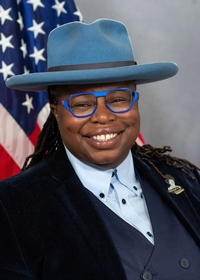
Rep. La'Tasha Mayes
Sponsored bills
Maddy summaryHB 1518 amends Pennsylvania's driver licensing laws under Title 75 of the Consolidated Statutes. It focuses on updating procedures for applying for driver's licenses or learner's permits, as well as modifying the content, expiration, and renewal processes for licenses. The bill directly affects Pennsylvania drivers who apply for or renew their licenses. The provided context does not include specific provisions or mechanisms of the bill, only its title and referral to the Transportation committee.
Maddy summaryThis bill updates Pennsylvania's pilot program for non-narcotic medication-assisted treatment (MAT) in prisons and parole settings. It removes outdated rules about the program's establishment, clarifies requirements for county participation, and specifies how grant funds can be used for treatment services. The Pennsylvania Commission on Crime and Delinquency gains new duties to oversee the program, and the bill includes administrative updates to the state statutes governing it. The changes directly affect counties administering the pilot program and individuals in prison or parole under the MAT initiative.
Maddy summaryThis bill increases monthly pension payments for two groups of Pennsylvania veterans: 1) Blind veterans (defined as those with 3/60 or 10/200 vision or worse from service-connected injuries) now receive $200/month (up from $150). 2) Amputee/paralyzed veterans (with two limbs at ≥40% disability rating per VA standards) now receive $200/month (up from $150). Eligibility requires Pennsylvania residency at enlistment or current residence, honorable military service, and VA-certified disability. The change takes effect 60 days after enactment.
Maddy summaryHB 926 requires healthcare facilities to establish violence prevention committees to address workplace violence. These committees must develop safety plans, and facilities must report violent incidents to the Department of Labor and Industry. The Department gains authority to enforce compliance, impose fines, and issue administrative penalties for violations. This bill directly affects hospitals, clinics, and all healthcare workplaces covered under state labor regulations.
Maddy summaryHB 140 amends Pennsylvania's Unfair Trade Practices and Consumer Protection Law to add specific definitions related to algorithmic rent-setting software. The bill defines "unfair methods of competition" to include using software that analyzes rental data (like historical prices or occupancy rates) to recommend rent amounts, lease terms, or occupancy levels for residential or commercial properties. Landlords using such software would be directly affected, as its use could now be considered an unfair practice under the law. The definition explicitly excludes aggregated rental reports published monthly and tools used for affordable housing program compliance.
Maddy summaryHB 433 requires health insurance plans to cover mammograms and breast imaging services without cost-sharing (like copays or deductibles) for policyholders. It directly affects women needing preventive breast cancer screenings and the insurance companies providing health coverage. The bill amends Pennsylvania’s 1921 Insurance Company Law to mandate this coverage for mammographic examinations and breast imaging under casualty insurance policies. This policy change ensures these essential preventive services are fully covered at no additional cost to patients.
Maddy summaryHB 1493 requires Pennsylvania's Administrative Office of Pennsylvania Courts to collect and publicly publish data on the race and ethnicity of defendants in criminal cases. This data must be posted in an accessible online format and reported annually to the Pennsylvania Commission on Crime and Delinquency. The bill directly affects all individuals involved in criminal cases across Pennsylvania's court system by mandating standardized demographic data collection. It establishes a concrete mechanism for tracking racial and ethnic disparities in criminal proceedings without altering sentencing or legal procedures. The law takes effect 60 days after enactment.
Maddy summaryHB 1484 increases Pennsylvania jury compensation to a flat $40 per day for all days jurors serve, replacing the previous tiered rate ($9 for first three days, $25 after). It also sets a travel allowance of 17¢ per mile circular (with no allowance in the first judicial district) and allows county commissioners to choose how jurors receive payments (e.g., check, debit card), without changing the compensation amount. The bill directly affects all Pennsylvanians summoned to serve on juries statewide. It makes no changes to eligibility or jury service requirements, only to payment structure and methods.
Maddy summaryHB 630 amends Pennsylvania's Equal Pay Law to strengthen protections against wage discrimination based on sex, race, or ethnicity. It adds definitions for "comparable work" (requiring similar skill, effort, responsibility, and working conditions) and clarifies that "wages" include all compensation like fringe benefits. The bill explicitly bans employers from requiring employees to refrain from discussing wages, using salary history to set pay, or asking about prior wages during hiring. It also establishes an Equal Pay Enforcement Fund to support enforcement efforts and clarifies that job titles alone cannot determine if jobs are comparable.