

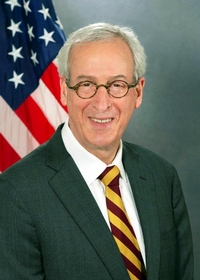
Photo of Dan Frankel
D Pennsylvania House · District 23 On the 2026 ballot

Rep. Dan Frankel

Compare
Total votes
8,804
all sessions
Attendance
99%
63 missed
Near the chamber average
With party
98%
of cast votes
Higher than 85% of chamber peers
Bipartisan score
1%
crosses aisle rarely
Lower than 84% of chamber peers
Sponsored
1,768
bills & resolutions
Near the chamber average
Committees
2
assignments
1,768 bills and resolutions

Sponsored bills

Total
1,768
Primary
81
Co-sponsor
1,687
This page
1,768
matching current filters
Co-sponsor HB 79
Passed · Pennsylvania House · Co-sponsor
An Act establishing requirements for hospital-based financial assistance; providing for hospital-based financial assistance forms, for information about hospital-based financial assistance programs and for reporting of hospital-based financial assistance policies; and imposing duties on the Department of Health.

Maddy summaryHB 79 requires hospitals to establish clear financial assistance programs for patients who cannot afford care, including standardized forms and easily accessible information about eligibility and coverage. It mandates that hospitals publicly share details about their financial aid policies and report their program rules to the Department of Health. These requirements directly affect hospitals operating in the state and patients seeking financial help with medical bills. The bill aims to standardize and increase transparency in hospital financial aid offerings.

Passed May 22, 2025 1 co-sponsor
Co-sponsor HB 359
Passed · Pennsylvania House · Co-sponsor
An Act amending the act of July 11, 1990 (P.L.465, No.113), known as the Tax Increment Financing Act, further providing for definitions, for powers of authorities, for creation of tax increment districts and approval of project plans and for financing of project costs.

Maddy summaryHB 359 amends Pennsylvania's Tax Increment Financing (TIF) Act to update definitions, clarify authority powers, and streamline the process for creating tax increment districts and approving project plans. It directly affects local development authorities and project developers seeking TIF funding for community redevelopment projects. Key changes include modifying how districts are established, requiring specific project plan approvals, and detailing how project costs are financed using future tax revenue growth within the district. The bill aims to modernize the TIF framework to support economic development initiatives.

Passed May 22, 2025 1 co-sponsor
Co-sponsor HB 504
Passed · Pennsylvania House · Co-sponsor
An Act providing for community energy facilities; imposing duties on the Pennsylvania Public Utility Commission, electric distribution companies and subscriber organizations; and providing for prevailing wage and labor requirements.

Maddy summaryHB 504, the Community Energy Act, establishes a framework for third-party-owned community energy projects (like solar gardens) in Pennsylvania. It requires electric distribution companies to connect these facilities, provides bill credits to subscribers (homeowners, renters, and businesses) for energy generated, and ensures guaranteed savings by linking subscription payments to bill reductions. Key provisions include setting size limits (max 5,000 kW for most facilities), mandating that at least 50% of subscriptions come from small users or farms, and requiring fair wages for construction workers. The bill directly affects electric companies (with new connection duties), community energy organizations (as owners/operators), and subscribers (who gain access to shared renewable energy).

Passed May 22, 2025 1 co-sponsor
Co-sponsor HB 500
Passed · Pennsylvania House · Co-sponsor
An Act amending the act of March 4, 1971 (P.L.6, No.2), known as the Tax Reform Code of 1971, in Pennsylvania Economic Development for a Growing Economy (PA EDGE) Tax Credits, repealing provisions relating to local resource manufacturing, providing for Reliable Energy Investment Tax Credit, repealing provisions relating to Pennsylvania milk processing and providing for Pennsylvania milk processing; in regional clean hydrogen hubs, further providing for definitions, for eligibility, for application and approval of tax credit, for use of tax credits and for applicability; in semiconductor manufacturing and biomedical manufacturing and research, further providing for definitions and for application and approval of tax credit and providing for geothermal energy and for sustainable aviation fuel; and, in application of Prevailing Wage Act, further providing for definitions.

Maddy summaryHB 500 repeals existing tax credit provisions for local resource manufacturing (petrochemicals/fertilizers) and Pennsylvania milk processing, while creating new tax credits for clean energy and advanced manufacturing sectors. It establishes tax credits for reliable energy investments, regional clean hydrogen hubs, semiconductor manufacturing, biomedical research, geothermal energy, and sustainable aviation fuel. Eligible businesses must meet specific criteria for capital investment, job creation, and project location to apply for these credits through the Department of Revenue. The bill also updates definitions and application processes for these new credits, with annual funding limits and rules for credit usage.

Passed May 22, 2025 1 co-sponsor
Co-sponsor HR 101
Passed · Pennsylvania House · Co-sponsor
A Resolution recognizing the week of May 11 through 17, 2025, as "National Hospital Week" in Pennsylvania.

Maddy summaryHR 101 designates the week of May 11-17, 2025, as "National Hospital Week" in Pennsylvania through a symbolic resolution. It honors hospitals and health care workers for providing critical services (including 56 trauma centers and 120,000+ births annually), supporting over 273,000 direct jobs, and contributing $186.5 billion to Pennsylvania's economy. The resolution does not create new laws, funding, or obligations - only a formal recognition and call for public appreciation. It highlights hospitals' role in community health without specifying policy changes or outcomes.

Passed May 14, 2025 1 co-sponsor
Co-sponsor HB 280
In committee · Pennsylvania House · Co-sponsor
An Act amending the act of June 3, 1937 (P.L.1333, No.320), known as the Pennsylvania Election Code, in preliminary provisions, further providing for definitions; in qualifications of electors, further providing for qualifications of electors at primaries; in party organization, further providing for only enrolled electors to vote at primaries or hold party offices; in nomination of candidates, further providing for candidates to be nominated and party officers to be elected at primaries and providing for procedure for unenrolled electors to cast primary ballots; in preparation for and conduct of primaries and elections, further providing for manner of applying to vote, persons entitled to vote, voter's certificates, entries to be made in district register, numbered lists of voters and challenges; in voting by qualified absentee electors, further providing for applications for official absentee ballots; in voting by qualified mail-in electors, further providing for applications for official mail-in ballots; in returns of primaries and elections, further providing for computation of returns by county board, certification and issuance of certificates of election; and, in penalties, further providing for election officers refusing to permit elector to vote in proper party at primaries and repealing provisions relating to elector voting ballot of wrong party at primary.

Maddy summaryHB 280 amends Pennsylvania's Election Code to clarify primary voting rules for unaffiliated voters. It defines "unenrolled electors" as voters who registered without party affiliation (selecting "none," "no affiliation," or "other" with a clear independent preference). The bill allows these voters to participate in primary elections for candidate nominations by following specific procedures, while maintaining that only enrolled party members can vote in party primaries or hold party office. It also repeals provisions about voters accidentally casting ballots for the wrong party at primary elections.

In committee May 13, 2025 1 co-sponsor
Co-sponsor HB 1443
In committee · Pennsylvania House · Co-sponsor
An Act amending Title 18 (Crimes and Offenses) of the Pennsylvania Consolidated Statutes, in general provisions, further providing for definitions; in inchoate crimes, further providing for prohibited offensive weapons; in assault, further providing for discharge of a firearm into an occupied structure; in theft and related offenses, further providing for definitions; in riot, disorderly conduct and related offenses, further providing for prohibiting of paramilitary training; in firearms and other dangerous articles, further providing for definitions, for persons not to possess, use, manufacture, control, sell or transfer firearms, for firearms not to be carried without a license and for prohibited conduct during emergency, providing for 3-D printed firearms and further providing for sale or transfer of firearms, for firearm sales surcharge, for registration of firearms and for licensing of dealers.

Maddy summaryHB 1443 amends Pennsylvania’s criminal code to explicitly include "3-D printed firearms" in key definitions across multiple sections. It defines "3-D printed firearm" as a digital file intended to create a gun via 3-D printer, and clarifies that "firearm" encompasses any weapon - whether traditional or 3-D printed - that expels projectiles using explosives. The bill updates prohibitions on possessing, selling, or transferring firearms (including 3-D printed versions) and requires licensing for dealers and registration of firearms. This affects all Pennsylvanians who manufacture, sell, or possess firearms, including those using 3-D printing technology.

In committee May 13, 2025 1 co-sponsor
Co-sponsor HB 1200
Failed · Pennsylvania House · Co-sponsor
An Act providing for the regulation and treatment of cannabis, for exemption from criminal or civil penalties, for effect on cannabis convictions and expungements and for membership and duties of the Liquor Control Board; establishing Pennsylvania Cannabis Stores; providing for social and economic equity, for license, permit or other authorization, for packaging, labeling, advertising and testing, for recordkeeping and inspection, for prohibitions and penalties and for tax and tax administration; establishing the Cannabis Revenue Fund, the Communities Reimagined and Reinvestment Restricted Account and the Substance Use Disorder Prevention, Treatment and Education Restricted Account; providing for the issuance of bonds; imposing duties on the Department of Agriculture and the Department of Revenue; and making repeals.

Maddy summaryHB 1200 establishes a comprehensive framework for the regulation and treatment of cannabis in Pennsylvania. It creates state-run Pennsylvania Cannabis Stores for sales and a licensing system for private cannabis businesses, including cultivators, processors, and transporters. The bill also provides for the expungement of certain past cannabis convictions and includes provisions for social and economic equity initiatives. It establishes a cannabis excise tax, dedicating revenue to funds for community reinvestment and substance use disorder prevention, and assigns oversight duties to state agencies like the Liquor Control Board.

Failed May 13, 2025 1 co-sponsor
Co-sponsor HB 813
In committee · Pennsylvania House · Co-sponsor
An Act amending the act of March 4, 1971 (P.L.6, No.2), known as the Tax Reform Code of 1971, in personal income tax, further providing for classes of income.

Maddy summaryHB 813 amends Pennsylvania's Tax Reform Code of 1971 to exempt certain student loan discharges and employer educational assistance from personal income tax. Specifically, it excludes from taxation: (1) the discharge of eligible student loans under qualified federal forgiveness programs, and (2) employer-paid educational assistance that meets federal exclusion rules under Section 127 of the Internal Revenue Code. These exemptions apply to taxable years beginning after December 31, 2025. The bill directly affects Pennsylvania taxpayers who qualify for these specific student loan forgiveness or employer education benefits under federal programs.

In committee May 12, 2025 1 co-sponsor
Co-sponsor HB 492
In committee · Pennsylvania House · Co-sponsor
An Act amending the act of April 9, 1929 (P.L.343, No.176), known as The Fiscal Code, in fiscal supplements to statutory programs, repealing provisions relating to regulation of rodeos or rodeo-related events.

Maddy summaryHB 492 repeals Section 8041 of Pennsylvania's Fiscal Code, which previously regulated rodeo events. This removes specific municipal restrictions on rodeo operations, including a 12-day annual limit for ticketed rodeos and definitions for "rodeo hosting entities." The bill directly affects municipalities (counties, cities, townships) and rodeo operators by eliminating these regulatory requirements. The repeal takes effect immediately upon enactment, streamlining the Fiscal Code by removing outdated provisions unrelated to fiscal management.

In committee May 7, 2025 1 co-sponsor
Showing 181 to 190 of 1,768 bills
Previous 1 … 18 19 20 … 177 Next