

Maddy summaryHB 1542 amends Pennsylvania's Liquor Code to clarify and expand rules about minors working in licensed alcohol-serving establishments. It directly affects hotels, restaurants, clubs, and retail liquor licensees by restricting when minors can work near alcohol. Key provisions allow minors aged 16-18 to serve food or clear tables (but not alcohol), permit 14-15-year-olds at ski resorts/golf courses in non-alcohol areas, and let specific nonprofits serving juvenile offenders employ 15-18-year-olds for food service. The bill also requires written notice for student art performances involving minors.
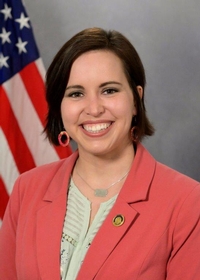
Rep. Emily Kinkead
Sponsored bills
Maddy summaryHB 1548 authorizes Pennsylvania's State Workers' Insurance Board to sell health insurance policies directly to the general public, not just state workers. The program must include minimum coverage for inpatient/outpatient hospital care, emergency services, preventive care, and basic medical services like doctor visits, physical therapy, and lab tests. The Board may borrow up to 40% of the State Workers' Insurance Fund’s annual balance to cover claims and administrative costs, with premiums partially funding loan repayments. This program will begin on January 1, 2026, offering a new public option for health insurance in Pennsylvania.
Maddy summaryHB 282 amends Pennsylvania's Human Services Code (1967) to clarify eligibility rules for individuals receiving medical assistance under public assistance programs. The bill directly affects current and prospective recipients of medical assistance, ensuring consistent application of qualification standards. Key provisions update how eligibility is determined for medical assistance, though specific changes are not detailed in the provided context. The bill passed the House on June 3, 2025, and was referred to the Health & Human Services committee for further review.
Maddy summaryHB 1096 creates the Pennsylvania Food Bucks Program, which provides financial assistance to low-income residents for purchasing fresh fruits and vegetables at participating retailers. The bill establishes a dedicated "Pennsylvania Food Bucks Program Account" within the state treasury to fund the program and requires the state to conduct research on the program's effectiveness. It directly affects eligible low-income Pennsylvanians and participating farmers and retailers by expanding access to healthy food options. The law, which passed on June 3, 2025, focuses on concrete policy changes: creating the program structure, securing funding through the new account, and mandating program evaluation.
Maddy summaryHB 1140 requires health insurers and Medicaid/CHIP managed care plans in Pennsylvania to cover all FDA-approved contraceptives - including prescription drugs, devices, emergency contraception (like levonorgestrel), and oral contraceptives - without any out-of-pocket costs for enrollees. It specifically prohibits prior authorization or step therapy for emergency and oral contraceptives, and mandates coverage for sterilization procedures and related services like counseling. The bill directly affects health insurers, managed care plans, and their enrollees by expanding contraceptive coverage under state insurance regulations. It exempts male condoms from coverage requirements but ensures no cost-sharing for covered contraceptive methods.
Maddy summaryHB 180 replaces Pennsylvania’s existing school lunch and breakfast reimbursement system with a new Universal School Meal Program, ensuring all public school students in the state can receive free meals regardless of family income or unpaid meal debt. The bill requires school districts to provide meals to any student who requests one (unless parents specifically withhold consent in writing) and prohibits schools from stigmatizing students with meal debt through wristbands, public identification, or denying activities like sports or graduation. It bans collecting fees, interest, or using collections agencies for unpaid meal costs, and mandates schools help families apply for assistance instead of pursuing debt. This directly affects over 1.5 million Pennsylvania public school students and their school districts, shifting from a means-tested system to universal access.
Maddy summaryHB 1518 amends Pennsylvania's driver licensing laws under Title 75 of the Consolidated Statutes. It focuses on updating procedures for applying for driver's licenses or learner's permits, as well as modifying the content, expiration, and renewal processes for licenses. The bill directly affects Pennsylvania drivers who apply for or renew their licenses. The provided context does not include specific provisions or mechanisms of the bill, only its title and referral to the Transportation committee.
Maddy summaryHB 1383 amends Pennsylvania's juvenile justice laws to clarify definitions, expand access to court records for certain parties, and adjust rules for transferring youth from juvenile to criminal court. It specifically removes outdated provisions about transferring cases to criminal proceedings and updates procedures for detention locations and court hearings. The bill directly affects juvenile courts, youth involved in juvenile cases, and legal representatives navigating these proceedings. These changes aim to modernize court processes while maintaining procedural safeguards for minors.
Maddy summaryThis bill updates Pennsylvania's pilot program for non-narcotic medication-assisted treatment (MAT) in prisons and parole settings. It removes outdated rules about the program's establishment, clarifies requirements for county participation, and specifies how grant funds can be used for treatment services. The Pennsylvania Commission on Crime and Delinquency gains new duties to oversee the program, and the bill includes administrative updates to the state statutes governing it. The changes directly affect counties administering the pilot program and individuals in prison or parole under the MAT initiative.
Maddy summaryHB 1062 creates a statewide system for tracking neighborhood blight by requiring municipalities to collect data on property maintenance violations. It establishes a Property Maintenance Code Serious Violations Registry to list properties with repeated severe maintenance issues and a dedicated funding account to support blight remediation efforts. The bill directly affects Pennsylvania municipalities, property owners, and landlords in areas designated as blighted, providing local governments with standardized data to target enforcement. Key provisions include mandatory data collection by cities/towns, a centralized registry for serious violations, and dedicated funding through the new account to aid property rehabilitation. If enacted, this would standardize blight reporting and funding across Pennsylvania communities.