

Maddy summaryHB 1246 requires Pennsylvania public and charter schools to maintain indoor temperatures between 68°F and 79°F in occupied areas to support learning. If temperatures fall below 63°F or exceed 89°F, schools must relocate students/staff within two hours and report the incident to the Department of Environmental Protection within 24 hours. Schools with more than four such relocations in a year will face inspections to ensure compliance with indoor air quality standards. The bill also mandates reviewing short-term fixes (like portable heaters) and long-term solutions (like upgraded heating systems) for extreme temperatures. This applies to all school districts, charter schools, and career technical schools operating in Pennsylvania.
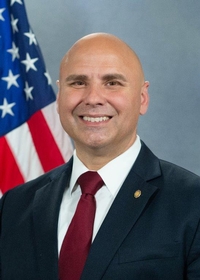
Rep. Bob Merski
Sponsored bills
Maddy summaryHB 1253 amends Pennsylvania's Public School Code to strengthen school safety and student support systems. It updates definitions to include charter schools and nonpublic schools in reporting requirements, mandating standardized forms for schools to report incidents of violence and weapons on school property (including school-sponsored activities and transportation). The bill requires the School Safety and Security Committee to verify school compliance with reporting rules, publish an annual safety report by November 1, and develop a model agreement between schools and law enforcement that must be reviewed every three years. These changes directly affect public and nonpublic schools, their administrators, and local law enforcement agencies.
Maddy summaryHB 1259 would amend Pennsylvania's procurement laws to require contractors and subcontractors working on public work projects costing $300,000 or more to certify compliance with specific qualifications. These qualifications include maintaining required registrations and insurance, being in good standing with government agencies, and having no recent debarments, license revocations, or project defaults. The bill creates a new certification form that must be submitted with bids, and gives purchasing agencies authority to review compliance and disqualify non-compliant contractors. The Office of State Inspector General would have enforcement duties, with penalties for violations of these requirements.
Maddy summaryThis resolution designates May 6, 2025, as "AKA Day at the Capitol" in Pennsylvania to recognize Alpha Kappa Alpha Sorority, Inc. (AKA), the nation's oldest Greek-letter sorority founded by African-American women in 1908. It honors AKA's 117-year history of service, its 360,000 global members, and its community initiatives focused on social justice, education, and economic empowerment. The resolution is purely commemorative and does not create new laws or policies; it simply designates a day for the sorority to engage with Pennsylvania legislators.
Maddy summaryHB 1235 updates Pennsylvania's Election Code to strengthen oversight of electronic voting systems. It adds definitions for "ballot set" (different ballot types like mail-in or in-person) and "ballot style" (specific candidate arrangements per district), and requires county election boards to conduct mandatory pre-election logic and accuracy testing. This testing ensures voting machines are properly programmed, ballot layouts match official designs, and equipment accurately counts votes before each election. The bill directly affects county election boards, which must complete these tests and document results for all voting equipment used in upcoming elections.
Maddy summaryHB 31 proposes a constitutional amendment to replace Pennsylvania's current Legislative Reapportionment Commission - which includes legislative leaders - with an Independent Redistricting Commission. The new commission would draw state legislative and congressional district boundaries after each federal census, following specific redistricting criteria outlined in the amendment. This change aims to reduce partisan influence by removing direct legislative control over redistricting. The bill does not detail the exact criteria but requires the commission to adhere to them when creating district maps.
Maddy summaryHB 764 establishes the Pennsylvania Fresh Food Financing Initiative, a program that provides grants to support the construction, renovation, or expansion of grocery stores, farmers' markets, and retail food businesses in underserved low-income and moderate-income communities across Pennsylvania. The initiative prioritizes projects located in, owned by, or primarily serving Black, Indigenous, and people of color (BIPOC) communities, as defined by population data from the Center for Rural Pennsylvania. The Pennsylvania Department of Agriculture will administer the program, develop eligibility guidelines, and ensure grants promote local food systems, job creation, and the use of Pennsylvania agricultural products. The bill also creates a dedicated "Fresh Food Financing Initiative Restricted Account" to hold program funds.
Maddy summaryHB 1169 requires Pennsylvania legislators to hold public meetings in their districts for residents to comment on proposed constitutional amendments or other statewide ballot questions. For constitutional amendments, meetings must occur within eight months after the General Assembly first passes the amendment; for other statewide questions, meetings must happen after a plain-English summary is prepared but before the question goes to voters. All meetings must follow Pennsylvania's open meetings law (65 Pa.C.S. Ch. 7), ensuring transparency and public input before ballot questions are submitted to voters. The bill directly affects legislators, voters, and the ballot initiative process by adding a mandatory public engagement step.
Maddy summaryThis bill is a ceremonial resolution designating April 18, 2025, as "Erie Day" in Pennsylvania. It commemorates historical milestones in Erie's founding, including the 1795 land survey that established the city and its 1805 incorporation as a borough. The resolution has no legal effect or policy changes - it is purely symbolic recognition. It does not impact any individuals, groups, or government programs. The designation applies statewide for ceremonial purposes only.
Maddy summaryThis House Resolution (HR 144) symbolically recognizes April 14-20, 2025, as "National Osteopathic Medicine Week" in Pennsylvania. It directly affects Pennsylvanians by designating a week for public awareness about osteopathic physicians (DOs), who provide patient-centered care focusing on the whole person. The resolution urges Pennsylvanians to learn about and promote DOs, who make up over 11% of U.S. physicians and are prominent in primary care and Pennsylvania’s medical community. It has no binding effect or policy changes - it is purely a ceremonial observance.