

Maddy summaryHB 813 amends Pennsylvania's Tax Reform Code of 1971 to exempt certain student loan discharges and employer educational assistance from personal income tax. Specifically, it excludes from taxation: (1) the discharge of eligible student loans under qualified federal forgiveness programs, and (2) employer-paid educational assistance that meets federal exclusion rules under Section 127 of the Internal Revenue Code. These exemptions apply to taxable years beginning after December 31, 2025. The bill directly affects Pennsylvania taxpayers who qualify for these specific student loan forgiveness or employer education benefits under federal programs.
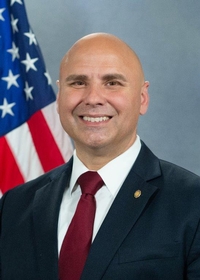
Rep. Bob Merski
Sponsored bills
Maddy summaryThis resolution (HR 48) formally recognizes May 11-17, 2025, as "National Police Week" and May 15, 2025, as "Peace Officers Memorial Day" in Pennsylvania. It does not create new laws, policies, or funding; it is a ceremonial acknowledgment of existing national observances. The resolution cites historical context, including a 1962 congressional resolution designating May 15 as "Peace Officers Memorial Day" and the surrounding week as "Police Week." It serves only to express the Pennsylvania House of Representatives' symbolic support for honoring law enforcement officers who have died in the line of duty.
Maddy summaryHouse Bill 1401 amends the Public School Code of 1949 by establishing new admission requirements for educator preparation programs. It mandates that applicants for initial preparation programs leading to a bachelor's degree must have completed at least 48 college credit hours with a minimum 2.8 GPA. Applicants for alternative programs must hold a bachelor's degree with a 2.8 GPA, and advanced program applicants need a 2.8 GPA along with professional recommendations. Preparing institutions may admit up to 10% of initial preparation applicants who do not meet the GPA requirement, provided other eligibility criteria are met. These provisions directly affect individuals aspiring to become teachers and the institutions that train them.
Maddy summaryThis resolution (HR 187) is a ceremonial recognition, not a policy change. It formally designates May 10, 2025, as "National Train Day" in Pennsylvania to honor the historical significance of rail travel. The resolution encourages Pennsylvania residents to learn about train history and the benefits of rail transportation, such as reducing road congestion and supporting environmental goals. It does not create new laws, impose requirements, or directly affect specific groups.
Maddy summaryThis resolution directs Pennsylvania's Joint State Government Commission to study the feasibility of developing offshore wind, solar, and hydropower projects on Pennsylvania's portion of Lake Erie. The study will examine potential job creation (including construction, maintenance, and manufacturing roles), economic impacts, environmental benefits like reduced emissions, and the projected electricity generation capacity. It requires the Commission to consult with energy experts, environmental groups, labor leaders, and surrounding states before submitting a report to relevant legislative committees within 12 months. The resolution does not authorize actual projects but aims to inform future policy decisions about renewable energy development in the region.
Maddy summaryHB 1289 establishes a 2026 adjustment for retired municipal police officers and firefighters who retired before January 1, 2016, and have been retired for at least 10, 15, or 20 years as of January 1, 2026. Eligible retirees will receive monthly payments of $250, $375, or $500 based on their retirement duration, with reductions for prior benefits received and caps if multiple retirement systems apply. Municipalities must certify these payments and will receive full reimbursement from the Commonwealth for the 2026 costs. This extends a similar state reimbursement program previously used for 2002 adjustments.
Maddy summaryThis resolution designates May 2025 as "Asian-American and Pacific Islander Heritage Month" in Pennsylvania. It symbolically recognizes the contributions of Asian-American and Pacific Islander communities to Pennsylvania and the nation, citing historical milestones like the arrival of the first Japanese immigrant in 1843 and Chinese railroad workers in 1869. The resolution encourages all Pennsylvania residents to learn about this heritage but does not create new laws, funding, or obligations. It directly affects the entire Commonwealth by formally designating a month for commemoration. As a non-binding resolution, it has no legal or financial impact beyond raising awareness.
Maddy summaryHouse Resolution 40 designates October 2025 as "Dyslexia Awareness Month" in Pennsylvania to promote public understanding of dyslexia, a neurological learning disability affecting word recognition and spelling that impacts approximately one in five people. The resolution emphasizes the need for early diagnosis, support resources, and advocacy for individuals with dyslexia, educators, and families. As a non-binding symbolic resolution, it does not create new laws but serves to raise awareness and encourage community efforts around dyslexia support.
Maddy summaryThis resolution directs Pennsylvania's Legislative Budget and Finance Committee to study the financial and workforce impacts of allowing early retirement for state and public school employees (specifically those aged 55+ or with 30+ years of service) under the State Employees' Retirement System (SERS) and Public School Employees' Retirement System (PSERS). The study must analyze potential cost savings over 1-10 years, effects on workforce composition, and historical data from past early retirement programs (like the 1992-93 initiative). The committee must submit a report to the legislature within one year, detailing findings on budget impacts and staffing alternatives. This is a procedural study resolution - not a policy change - and will inform future decisions about retirement options.
Maddy summaryHB 1373 requires Pennsylvania high schools to administer the United States Citizenship and Immigration Services Test as a civic knowledge assessment to students in grades 7-12 starting in the 2026-2027 school year. Students must score at least 60% on this test to meet a high school graduation requirement. Schools must report compliance data, including participation and passing rates, to the state education department every other year. The bill specifically exempts students with individualized education programs (IEPs) if their IEPs indicate they are not required to take the test.