

Maddy summaryThis bill amends Pennsylvania's Unfair Trade Practices and Consumer Protection Law to explicitly define "dynamic pricing" as a potential unfair practice. It specifically targets the use of artificial intelligence to vary prices for essential goods or services within a 24-hour period based on demand. The legislation includes detailed definitions for artificial intelligence, generative AI, and bona fide pricing to clarify what constitutes deceptive behavior versus legitimate pricing strategies. By adding these specific terms to the law, the bill aims to provide clearer guidance for regulators and businesses regarding AI-driven price fluctuations.
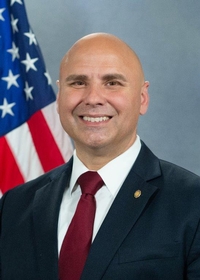
Rep. Bob Merski
Sponsored bills
Maddy summaryHR 390 is a ceremonial resolution recognizing March 2026 as "Women's History Month" in Pennsylvania. It does not create new laws or policies but formally acknowledges women's historical contributions to Pennsylvania and the nation through symbolic recognition. The resolution invites all Pennsylvanians to reflect on women's economic, cultural, and social roles, as detailed in the preamble's historical context. This is a non-binding gesture with no direct impact on specific groups or funding.
Maddy summaryThis bill updates Pennsylvania's Capital Facilities Debt Enabling Act to clarify what counts as a redevelopment assistance capital project and removes a spending cap on housing construction. It defines these projects as those that generate economic activity, have regional impact, and include at least 50% non-state funding, while explicitly excluding highways, bridges, and waste or water facilities. Additionally, the legislation repeals a specific provision that previously limited the use of funds for building housing units to $50 million. These changes aim to provide clearer guidelines for borrowing money to fund large-scale community and economic development initiatives.
Maddy summaryThis bill prohibits law enforcement officers from detaining or arresting individuals for civil immigration violations on the property of houses of worship. The only exception allows for arrests if the officer is acting in an official capacity and holds a valid judicial warrant. Additionally, the legislation bars state and local agencies from using taxpayer funds to conduct immigration enforcement and imposes a $10,000 civil penalty for any violations of these rules.
Maddy summaryThis bill updates Pennsylvania election laws to streamline how votes are counted and how disputes are handled in primaries and general elections. It requires the Secretary of the Commonwealth to immediately tabulate and certify election results, while also mandating that courts resolve election appeals within seven days. Additionally, the legislation allows for a rapid appeal to the Supreme Court within one day of a lower court's decision, ensuring a final ruling is issued before the meeting of presidential electors. These changes aim to accelerate the certification of election outcomes and provide a faster legal process for challenging election results.
Maddy summaryThis bill updates Pennsylvania's Physical Therapy Practice Act to formally define "dry needling" and expand the scope of services available to licensed physical therapists. It mandates that only physical therapists who complete a board-approved certification program may perform dry needling, while explicitly excluding this practice from the duties of physical therapist assistants. The legislation also clarifies the definitions of physical therapy to include a broader range of interventions such as mechanical stimulation and wellness promotion. These changes aim to standardize training requirements and delineate the specific responsibilities of different therapy professionals within the state.
Maddy summaryThis bill would create a state-funded paid family and medical leave program for eligible workers needing time off for health issues, childbirth, or family care. It establishes a dedicated state fund to cover leave costs, creates an advisory board to guide implementation, and assigns oversight to the Department of Labor. The program would directly affect employees in the state who qualify for these leave types, requiring employers to provide the benefits. The bill also specifies penalties for businesses failing to comply with the new requirements.
Maddy summaryThis bill creates a tax credit for Pennsylvania educators who purchase instructional materials or supplies for classroom use. Professional employees in public, charter, cyber, and nonpublic schools can claim a credit equal to the amount they spent on qualifying expenses, up to a maximum of $500 per year. The Department of Revenue will establish rules to determine which expenses qualify and must publish guidelines online while submitting annual reports on program usage. The credit applies to tax years beginning on or after January 1, 2025, and cannot be carried forward, carried back, sold, or assigned.
Maddy summaryThis bill is a House Resolution that designates May 8, 2026, as Child Care Provider Appreciation Day in Pennsylvania to honor the work of child care providers. The resolution does not create new laws or change any policies; it is a symbolic gesture to recognize and thank caregivers, teachers, nannies, and daycare workers who support children and families. The bill is sponsored by multiple representatives and referred to the Committee on Children and Youth for consideration. It aligns with a national tradition of celebrating child care workers annually in May.
Maddy summaryThis Pennsylvania bill requires the Department of Labor and Industry to investigate warehouse distribution centers that report an annual employee injury rate 30% or higher than the state average. The law defines warehouse distribution centers using specific industry classification codes and gives the department authority to enter facilities, review records, interview workers, and consolidate complaints during investigations. Employers found with injury rates at or above the threshold face escalating civil penalties, starting at $6,250 for the first violation and increasing to $25,000 for subsequent violations. The bill also mandates that employers notify their employees when an investigation is underway and allows the Attorney General's office to pursue civil or criminal actions for violations.