

Maddy summaryHB 777 requires Pennsylvania public school districts to pay education support professionals (like aides and clerical staff) a minimum hourly wage of $20 or a living wage based on cost-of-living adjustments, starting in the 2025-2026 school year. School districts must make supplemental payments to cover wage gaps for existing contracts below this rate through 2029-2030, with the Department of Labor setting and annually adjusting the living wage using the Consumer Price Index. The Department of Education will reimburse districts for these supplemental payments, adding the reconciled amount to their annual funding allocation. This applies directly to over 500 school districts and their education support staff, ensuring wage standards align with inflation.
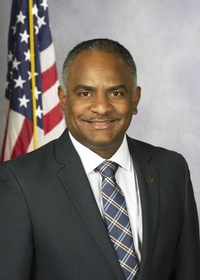
Rep. Danilo Burgos
Sponsored bills
Maddy summaryThis bill allows Pennsylvania courts to end long-term parole supervision for eligible individuals who have been under supervision for at least five consecutive years and are at least 40 years old. The process requires a formal petition filed by either the Department of Corrections or the parolee, which must be reviewed by the sentencing court. Courts must evaluate multiple factors including community safety risks, the individual's conduct history, financial hardship, and efficient use of department resources before deciding whether to terminate supervision. The law applies to all parole cases regardless of when the sentence was originally imposed and ensures victims, prosecutors, and relevant parties receive notice and an opportunity to be heard during the review process.
Maddy summaryThis bill updates Pennsylvania's driver's license requirements by allowing the inclusion of personal medical data and other emergency-use information on licenses. It also permits the use of substitute addresses for participants in the state's Address Confidentiality Program, which protects victims of domestic and sexual violence. The legislation maintains that Social Security numbers will be required on applications but will not appear on the actual license, while keeping other standard identification details like name, date of birth, and photograph. The changes would take effect 60 days after the bill is enacted.
Maddy summaryHB 890 amends Pennsylvania's Veterans' Trust Fund rules to restrict how funds can be spent. It prohibits using the fund for administrative staff salaries (defined as non-clinical personnel at veterans' organizations) and limits single-entity grants to $250,000 over three consecutive years. These changes directly affect the State Veterans' Commission and the Department managing the Trust Fund, ensuring funds are used for direct veteran services rather than administrative costs or large single grants. The bill takes effect immediately upon passage.
Maddy summaryHB 891 creates the Keystone State Apprenticeship Tax Credit Program, providing tax incentives to Pennsylvania businesses that hire apprentices. It directly affects employers participating in approved apprenticeship programs, with preference given to those training disadvantaged youth (low-income individuals aged 16-24) and businesses in key sectors like clean energy, healthcare, and technology. The program allocates up to $10 million annually in tax credits from 2025 to 2030, administered by the Department of Labor and Industry, which will determine eligibility and prioritize employers based on specific criteria like apprentice graduation rates and program novelty. Businesses must register apprenticeship agreements with the department to qualify for the credit.
Maddy summaryHB 894 establishes the Veterans Entering the Sustainability Sector Program (VETSS) to help veterans enter jobs in renewable energy and environmental sectors. The bill creates a Veterans Entering the Sustainability Sector Fund to provide grants to eligible employers - businesses focused on renewable energy (like solar, wind, or bioenergy) that hire veterans who completed approved apprenticeship training in fields such as electrician work, solar installation, or environmental maintenance. The Department of Community and Economic Development will administer the program, overseeing training development and grant applications. This directly affects veterans seeking sustainability-sector careers and employers in renewable energy who hire them, with the goal of addressing environmental concerns like climate change through workforce development.
Maddy summaryHB 860 amends Pennsylvania's Public School Code to prohibit public schools from removing library books or instructional materials based on specific reasons, such as an author's race, gender identity, political views, or content about sexuality. It directly affects public school entities (including districts, charter schools, and libraries) by banning "soft censorship" - removing materials outside formal review processes - and requires schools to publicly report such removals. The bill mandates that materials can only be removed following a defined procedure, ensuring decisions are based on educational appropriateness, not personal views. It also requires schools to provide online complaint forms for students or parents who experience unauthorized removals, referencing data showing 457 book challenges in Pennsylvania from 2021-2022. The law aims to protect students' access to diverse learning resources while aligning with First Amendment principles.
Maddy summaryThis resolution designates March 2025 as "Colorectal Cancer Awareness Month" in Pennsylvania. It is a symbolic designation with no new policies, funding, or regulatory changes. The resolution acknowledges colorectal cancer statistics and the importance of screening, but does not alter health programs or requirements. It serves solely to recognize the disease through an official state observance.
Maddy summaryHB 801 creates new rules for default judgments in consumer debt collection cases in Pennsylvania. It requires creditors to include specific details in their complaints before a court can issue a default judgment, such as the consumer’s name/address, creditor’s name, last payment date, and exact debt amount. The law applies to unsecured debts (like credit cards) and secured debts where only a money judgment is sought, but excludes government debt collections and cases seeking property possession. This aims to increase transparency and prevent creditors from using vague or incomplete claims to win default judgments against consumers.
Maddy summaryThis House Resolution designates February 28, 2025, as "HIV is Not a Crime Awareness Day" in Pennsylvania. It does not create new laws but formally recognizes the issue of HIV criminalization - where individuals with HIV face criminal charges for non-disclosure or conduct that would not be prosecuted if they did not have HIV. The resolution highlights how such laws increase stigma, disproportionately impact marginalized groups (including people of color, women, and LGBTQ+ individuals), and contradict current public health knowledge that undetectable HIV cannot be transmitted. The designation aims to raise awareness and encourage education about HIV treatment, prevention, and the need to address outdated criminal laws.