

Maddy summaryHB 1385 amends Pennsylvania's juvenile justice laws to clarify definitions and update how courts handle cases involving young people who commit offenses. It directly affects juvenile offenders, courts, and child welfare agencies by standardizing terms like "delinquent child" and specifying court procedures for dispositions. Key provisions include revising legal definitions to reduce ambiguity and establishing clearer guidelines for court decisions on supervision, treatment, or other outcomes for minors. The bill aims to create more consistent and transparent processes within the juvenile justice system. (Note: The bill is currently "laid on the table" and not actively moving forward in the legislative process.)
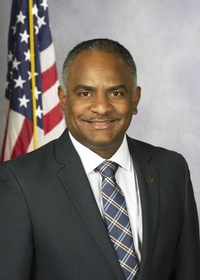
Rep. Danilo Burgos
Sponsored bills
Maddy summaryHB 2009 would amend Pennsylvania law to establish rules for utility reconnection fees charged by municipal authorities. The bill requires that fees for reconnecting electricity, water, or gas services after disconnection be reasonable and prohibits excessive or unfair charges. It directly affects residents and businesses that have had utility services disconnected, as well as municipal authorities managing those services. The key provision creates a clear standard to prevent municipalities from imposing unreasonable fees during reconnection.
Maddy summaryHB 2007 mandates a specific $62 million transfer from Pennsylvania's Budget Stabilization Reserve Fund by November 1, 2025, to address the loss of federal SNAP benefits. The funds are allocated as follows: $50 million to the Department of Agriculture for food bank grants under existing state food programs, $10 million to the Department of Human Services for senior meal assistance, and $2 million for administration and outreach. This bill directly affects food banks, senior assistance organizations, and state agencies managing these programs. It requires the transfer to occur regardless of the usual emergency funding process outlined in Section 1703-A(b), which typically requires a two-thirds legislative vote for reserve fund appropriations. The bill takes effect immediately upon enactment.
Maddy summaryHB 446 requires hospitals and ambulatory surgical facilities in Pennsylvania to offer patients unused, facility-provided medication at no additional cost upon discharge, if the prescriber determines it's clinically appropriate for continuing treatment. The bill specifies that this applies only to non-controlled, multi-dose medications like eye drops, creams, or inhalers (excluding IV drugs or controlled substances), and mandates clear discharge instructions with usage details and contact information. Providers acting in good faith are protected from liability for patient misuse, and such medication offers are exempt from standard outpatient dispensing rules. This directly affects patients discharged from hospitals or ambulatory facilities and the healthcare facilities providing their care.
Maddy summaryHB 2004 creates a special account to hold emergency funds for SNAP benefits, which provide food assistance to low-income residents. The bill requires the Department of Human Services, the Secretary of the Budget, and the State Treasurer to transfer these funds to pay SNAP recipients. This establishes a dedicated funding mechanism specifically for emergency SNAP benefit payments. The bill directly affects SNAP recipients by ensuring a streamlined process for receiving benefits during emergencies.
Maddy summaryHB 2002 would allow Pennsylvania to join the Interstate Compact for School Psychologists, a multi-state agreement designed to simplify licensing for school psychologists working across state lines. The bill directly affects school psychologists seeking employment in multiple states and requires Pennsylvania’s Governor and Secretary of the Commonwealth to adopt the compact’s terms and implement its provisions. Key mechanisms include standardizing licensing requirements so that psychologists licensed in one compact state can practice in others without additional exams or paperwork. This would streamline mobility for professionals while maintaining consistent practice standards across participating states.
Maddy summaryHB 1924 requires Pennsylvania's Public Utility Commission (PUC) to oversee utilities' electricity demand forecasts (load forecasting) and mandates that utilities provide the PUC with access to confidential contracts and information. It also requires utilities to submit annual reports detailing their forecasting methods and data. The bill directly affects electric and gas utilities operating in Pennsylvania by increasing PUC transparency and oversight of their planning processes. These provisions aim to ensure accurate forecasting and accountability in utility operations without specifying cost impacts or outcomes.
Maddy summaryHB 1900 would amend Pennsylvania's Tax Reform Code of 1971 to create a tax credit for educators. This credit would allow teachers and school staff to reduce their income tax liability. The bill specifies this credit as part of the state's tax code changes, though details on eligibility or credit amount are not provided in the available context.
Maddy summaryHB 1999 would add a Smokey Bear-themed license plate as an option for Pennsylvania vehicle owners during registration. It directly affects residents who choose to display this specialty plate instead of standard license plates. The bill amends vehicle registration rules to include this specific design option under Pennsylvania's license plate program.
Maddy summaryHB 1942 prohibits businesses from charging higher prices to consumers based on their data collection or surveillance practices. It directly affects consumers who might face discriminatory pricing and businesses that use tracking data to set prices. The bill requires companies to stop using surveillance data (like location or browsing history) to determine price differences, imposing fines for violations. This creates a clear policy change to prevent price discrimination tied to consumer data tracking.