

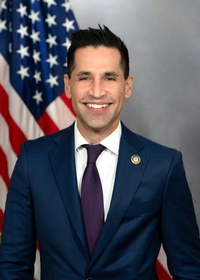
Photo of Tarik Khan
D Pennsylvania House · District 194 On the 2026 ballot

Rep. Tarik Khan

Compare
Total votes
4,016
all sessions
Attendance
100%
of floor votes
Near the chamber average
With party
99%
of cast votes
Near the chamber average
Bipartisan score
0%
crosses aisle rarely
Lower than 78% of chamber peers
Sponsored
2,253
bills & resolutions
Higher than 97% of chamber peers
Committees
5
assignments
2,253 bills and resolutions

Sponsored bills

Total
2,253
Primary
87
Co-sponsor
2,166
This page
2,253
matching current filters
Co-sponsor HB 1004
In committee · Pennsylvania House · Co-sponsor
An Act amending the act of March 4, 1971 (P.L.6, No.2), known as the Tax Reform Code of 1971, in research and development tax credit, further providing for limitation on credits.

Maddy summaryHB 1004 amends Pennsylvania's 1971 Tax Reform Code to increase annual limits on research and development (R&D) tax credits. It raises the total annual credit cap from $60 million to $120 million, with $24 million specifically reserved for small businesses (up from $12 million). Unused allocations for either small businesses or other qualifying businesses can roll over to the other group within the same fiscal year. The changes take effect 60 days after the bill's passage.

In committee Mar 24, 2025 1 co-sponsor
Co-sponsor HB 1023
In committee · Pennsylvania House · Co-sponsor
An Act amending the act of January 17, 1968 (P.L.11, No.5), known as The Minimum Wage Act of 1968, providing for employment in executive capacity, for employment in administrative capacity and for employment in professional capacity.

Maddy summaryThis bill amends Pennsylvania's Minimum Wage Act to establish new salary thresholds for employees classified as exempt in executive, administrative, or professional roles, affecting employers and workers in these positions. It defines "executive capacity" as requiring management duties, directing two or more employees, and having hiring/firing authority, with a minimum weekly salary starting at $844 (effective October 2027), rising to $1,128 by 2029, and then adjusting every three years based on Pennsylvania's 10th percentile wage for exempt workers. Employers may meet up to 10% of the salary requirement through nondiscretionary bonuses, incentives, or commissions paid annually. The bill does not alter minimum wage rates for non-exempt workers but clarifies exemption criteria for specific job classifications.

In committee Mar 24, 2025 1 co-sponsor
Co-sponsor HB 1029
In committee · Pennsylvania House · Co-sponsor
An Act amending the act of June 1, 1937 (P.L.1168, No.294), known as the Pennsylvania Labor Relations Act, further providing for definitions; providing for notice and regulations; further providing for unfair labor practices and for representatives and elections; providing for initial collective bargaining agreement; further providing for prevention of unfair labor practices and for penalties; and imposing penalties.

Maddy summaryHB 1029 amends Pennsylvania's 1937 Labor Relations Act to clarify worker protections and union election processes. It defines "employe" more broadly (excluding independent contractors) and bans agreements that prevent workers from joining class or collective lawsuits. Employers must post notices about labor rights and provide detailed voter lists for union elections within two business days of a board order. The bill also adds new unfair labor practices, including coercing workers to sign agreements that limit their right to pursue collective claims. These changes directly affect Pennsylvania workers, employers, and labor organizations involved in union representation efforts.

In committee Mar 24, 2025 1 co-sponsor
Co-sponsor HB 159
In committee · Pennsylvania House · Co-sponsor
An Act amending Titles 30 (Fish) and 34 (Game) of the Pennsylvania Consolidated Statutes, in protection of property and waters, further providing for restrictions on transport, sale, importation or release of nonnative injurious fish; and, in game or wildlife protection, further providing for unlawful importation of game or wildlife.

Maddy summaryHB 159 amends Pennsylvania law to strengthen penalties for illegally transporting, selling, importing, or releasing nonnative fish and wildlife. It directly affects individuals, businesses, or organizations handling nonnative species, including pet trade sellers, anglers, and conservation groups. The bill increases misdemeanor penalties: violations involving non-native fish become third-degree misdemeanors for negligence or first-degree for intentional acts, while violations with endangered/threatened species escalate to second-degree (negligent/intentional) misdemeanors. It clarifies that each animal, egg, or fish involved in a violation counts as a separate offense, intensifying consequences for repeated or large-scale violations. The changes aim to better protect Pennsylvania's ecosystems and native species from invasive threats.

In committee Mar 24, 2025 1 co-sponsor
Co-sponsor HB 972
In committee · Pennsylvania House · Co-sponsor
An Act providing for an inventory of State-owned assets for the development of fixed broadband services in unserved areas; establishing the Broadband Services Restricted Account; and providing for underserved areas of this Commonwealth.

Maddy summaryHB 972 requires Pennsylvania to catalog state and county-owned assets (like land and buildings) that could support high-speed internet service in areas without reliable access (defined as "unserved" or "underserved"). It establishes a dedicated fund, the Broadband Services Restricted Account, to be filled with lease payments from these assets and used to expand internet infrastructure in those areas. The bill also sets rules for leasing assets to qualified internet providers, directly affecting state agencies, local governments, and companies building broadband networks. This law focuses on making concrete policy changes to leverage public assets for broadband deployment without advocating for specific outcomes.

In committee Mar 19, 2025 1 co-sponsor
Co-sponsor HB 969
In committee · Pennsylvania House · Co-sponsor
An Act providing for management of responsible outdoor night lighting; and imposing duties on the Department of General Services.

Maddy summaryHB 969, the Responsible Outdoor Lighting Control Act, requires Pennsylvania state buildings and properties to adopt outdoor lighting that minimizes light pollution and glare. It mandates new outdoor lighting must be fully shielded (directing light downward to prevent upward scatter), limit color temperature to warmer tones (reducing blue light that disrupts ecosystems), and incorporate features like motion sensors or dimming controls. The Department of General Services must manage and enforce these standards for all state-owned facilities. The bill sets a model for private businesses and residents to follow in adopting responsible lighting practices.

In committee Mar 19, 2025 1 co-sponsor
Co-sponsor HB 438
In committee · Pennsylvania House · Co-sponsor
An Act amending the act of May 25, 1945 (P.L.1050, No.394), known as the Local Tax Collection Law, providing for removal of deceased spouse.

Maddy summaryHB 438 amends Pennsylvania's Local Tax Collection Law to allow taxpayers to remove a deceased spouse's name from real estate tax bills. It directly affects homeowners who are now required to submit a written request and a death certificate to both their tax collector and county assessment office. The key provision, added as Section 6.1, creates a formal process for this removal without requiring court action. The bill takes effect 60 days after enactment.

In committee Mar 19, 2025 1 co-sponsor
Co-sponsor HR 138
In committee · Pennsylvania House · Co-sponsor
A Resolution directing the Joint State Government Commission to conduct a study on the state of civic education in Pennsylvania and develop recommendations on cost-efficient, feasible steps that the Commonwealth can adopt to increase the accessibility and quality of civic education opportunities for students.

Maddy summaryThis resolution (HR 138) orders Pennsylvania’s Joint State Government Commission to study civic education in the state and develop cost-effective recommendations to improve it. It directly affects Pennsylvania students and schools by requiring an analysis of current civics assessments (under Act 35 of 2018), comparisons with high-performing states, and strategies to strengthen civic education across three pillars: knowledge, skills, and action. The study must include evaluations of existing assessment methods, successful models from other states, and approaches to boost student engagement, with a report due within 18 months. The resolution does not change laws but aims to inform future policy based on evidence.

In committee Mar 19, 2025 1 co-sponsor
Co-sponsor HB 974
In committee · Pennsylvania House · Co-sponsor
An Act amending the act of February 14, 2008 (P.L.6, No.3), known as the Right-to-Know Law, in procedure, further providing for written requests.

Maddy summaryHB 974 amends Pennsylvania's Right-to-Know Law to clarify how agencies assess the specificity of written public records requests. It requires agencies to consider three factors when determining if a request is specific enough: the burden on the agency to locate records within time limits, potential privacy or proprietary harm to third parties, and compliance with federal or state disclosure laws. This change directly affects agencies handling public records requests and requesters seeking information under the law. The bill does not alter who can request records or basic submission methods, but refines the process for evaluating request clarity. The amendment takes effect 60 days after enactment.

In committee Mar 19, 2025 1 co-sponsor
Co-sponsor HR 133
In committee · Pennsylvania House · Co-sponsor
A Resolution directing the Joint State Government Commission to conduct a study of problem-solving courts in this Commonwealth.

Maddy summaryHR 133 is a procedural resolution directing Pennsylvania's Joint State Government Commission to study problem-solving courts in the Commonwealth. It does not create new laws or directly affect individuals, but mandates a comprehensive analysis of existing courts (nearly 150 operate statewide). The study will examine court types, accreditation processes, case referrals, defendant demographics, funding comparisons to traditional courts, recidivism outcomes, and alignment with national best practices. The Commission must report findings on these key aspects by a specified deadline.

In committee Mar 19, 2025 1 co-sponsor
Showing 871 to 880 of 2,253 bills
Previous 1 … 87 88 89 … 226 Next