

Maddy summaryHB 1044 allows authorized entities like schools, childcare centers, or sports organizations to stock and use epinephrine delivery systems (e.g., auto-injectors) without requiring individual prescriptions for each person. It permits these entities to acquire devices under a single prescription from a healthcare provider, store them accessibly per FDA guidelines, and train designated staff to recognize anaphylaxis and administer the devices. Staff who complete approved training can use the devices in good faith for anyone showing signs of a severe allergic reaction, regardless of prior diagnosis or prescription. The bill also includes protections for individuals acting in good faith during emergencies.
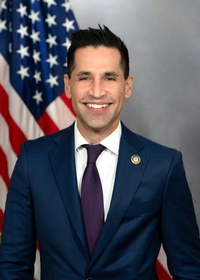
Rep. Tarik Khan
Sponsored bills
Maddy summaryHB 118 amends Pennsylvania's Child Labor Act to increase penalties for employers violating child labor laws. It raises the fine for first-time violations from $500 to $1,000 per violation and increases penalties for repeat offenses to $3,000 per violation or up to 10 days in jail. The bill directly affects employers who hire minors in prohibited work situations. These changes are concrete policy adjustments to enforcement, not new work restrictions. The amendment takes effect 30 days after enactment.
Maddy summaryHB 535 bans Pennsylvania health insurers from setting annual or lifetime dollar limits on core health benefits for enrollees, whether services are provided by in-network or out-of-network providers. It applies to all individual and group health insurance policies (excluding specific types like Medicare supplements or dental/vision-only plans) and prohibits limits on benefits that were already covered without such caps in 2025 policies. The Insurance Department can enforce this through fines up to $5,000 per violation (or $10,000 for willful violations), with annual caps of $500,000 for insurers. The law does not require coverage of specific benefits but eliminates existing dollar limit practices for covered services.
Maddy summaryHB 618, the Health Insurance Access Protection Act, prohibits health insurers from denying coverage or charging higher premiums based on a person's health condition, including preexisting conditions. This law applies to both individual and group health insurance policies, protecting enrollees and their dependents from discrimination in enrollment or pricing. The Insurance Department and Commissioner are tasked with enforcing these rules, and the bill includes penalties for insurers that violate the prohibitions.
Maddy summaryHB 755 requires health insurers in Pennsylvania (excluding grandfathered plans) to cover all preventive health services listed by the Insurance Department without cost-sharing, such as copays or deductibles. This directly affects insurers who must comply with the coverage rules and enrollees who gain access to preventive care like vaccinations and screenings at no extra cost. The bill empowers the Insurance Department to create and update the preventive services list through a public comment process (15+ business days) and enforce compliance with penalties for violations. It aligns with federal preventive care standards but allows Pennsylvania to adjust the list based on public input and evidence-based guidelines.
Maddy summaryHB 404 amends Pennsylvania's Insurance Company Law to extend health insurance coverage for children under family policies. It requires policies to cover dependent children up to age 26 (previously 19) and prohibits insurers from denying or restricting coverage based on a child's financial dependency, residency, marital status, school enrollment, or employment. The bill also allows group health plans to extend coverage for adult children up to age 29 if they meet specific conditions, such as not being married, having no dependents, and residing in Pennsylvania or attending school full-time. This affects all health insurance policies sold in Pennsylvania that provide dependent child coverage.
Maddy summaryHB 410 allows certain Pennsylvanians with disabilities, 100% service-connected veterans, and active-duty military members or their dependents living abroad to renew driver's licenses using their most recent photo and signature on file instead of providing new photos. The bill applies to individuals who qualify under existing disability plate rules (Section 1338), have a 100% service-connected disability certification, or are active military personnel or their dependents. Renewal using existing records is prohibited if no current photo/signature exists, if record changes (like name or eye color) are needed, or if the photo is over 16 years old. The law takes effect 33 months after enactment.
Maddy summaryHB 1009 requires auto insurers to notify Pennsylvania's Department of Transportation within 10 days of issuing new insurance policies specifically used as proof of financial responsibility. This directly affects insurers and drivers who need to meet the state's minimum coverage requirements for vehicle operation. The bill adds a new provision to vehicle law mandating this reporting, effective 60 days after enactment. It focuses on streamlining proof of financial responsibility verification without changing coverage requirements.
Maddy summaryHB 1028 establishes a grant program to help small businesses affected by long-term public utility road construction projects. It provides financial assistance to qualified businesses (for-profit entities with 10 or fewer employees located in designated "construction mitigation zones" impacted by projects lasting over 90 days) to offset revenue declines caused by traffic disruptions, reduced access, or parking issues. Businesses must apply with proof of significant revenue loss, and grants are capped at actual documented losses or $15,000 per year. The Department of Community and Economic Development administers the program, prioritizes applications based on revenue decline severity and project duration, and requires annual public reporting of recipients and project details.
Maddy summaryHB 1003 establishes Pennsylvania's Veterans' Housing Assistance Program to provide rental assistance to homeless or at-risk veterans. It directly affects veterans who served honorably in the U.S. Armed Forces and are identified as homeless or facing imminent homelessness by the Department of Military and Veterans Affairs. The program provides rental vouchers (financial assistance) to cover monthly rent and utilities, while the Pennsylvania Housing Finance Agency coordinates housing ombudsman services to negotiate leases and resolve credit issues, and the Department of Military and Veterans Affairs identifies eligible veterans and sets implementation guidelines. Veterans must apply through the Department or Agency and may be required to participate in supportive services like mental health counseling or job training to receive assistance.