

Maddy summaryHB 1075 amends Pennsylvania's Game Code to change how the Pennsylvania Game Commission pays for land acquisitions used as game lands. The bill removes a previous $400-per-acre payment cap, allowing the Commission to pay based solely on market value without that limit. This directly affects the Game Commission when purchasing land for conservation and landowners selling property for game land use. The key provision eliminates the specific dollar limit, requiring payments to align with local market value instead. The change takes effect immediately upon passage.
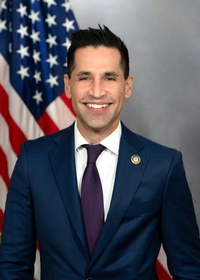
Rep. Tarik Khan
Sponsored bills
Maddy summaryThis bill establishes a grant program to provide free menstrual products (such as pads and tampons) in Pennsylvania public schools. Schools with 25% or more students eligible for free or reduced-price lunch programs can apply for grants to purchase these products and install dispensers or disposal units. Recipients must report annual spending on products and dispenser maintenance to the state. The program is funded by a state appropriation for the 2025-2026 fiscal year.
Maddy summaryHB 1068 creates a licensing program allowing family members (such as parents, grandparents, or adult siblings) to provide Medicaid-covered skilled care to children with medical needs. To qualify, applicants must complete training, pass background checks, and meet state nursing standards. The bill requires Medicaid agencies to cover the cost of training and licensure renewal, and it mandates that licensed family caregivers receive compensation for services like skilled monitoring. This directly affects Medicaid recipients (children under 21 with diagnosed conditions) and their eligible family caregivers, with oversight by the State Board of Nursing.
Maddy summaryHB 1065 creates a new felony offense for selling unmarked firearm components in Pennsylvania. It specifically targets the sale of firearm frames/receivers, silencer frames, split/modular frames, or partially complete frames without serial numbers registered to a federal firearms licensee. The bill defines "privately made firearm" as one assembled by non-licensed individuals without federal serial markings. This law directly affects sellers of homemade or unlicensed firearm parts, making such sales a third-degree felony. It does not change laws regarding firearm ownership or purchase, only penalizing the sale of unmarked components.
Maddy summaryHB 1059 creates a reimbursement program for land trusts that purchase agricultural conservation easements (permanent restrictions on land use to protect farmland). It allows the state to reimburse land trusts up to $2,500 per acre or 50% of the appraised value for easement purchases (capped at $5,000 per easement) and up to $10,000 for transaction costs like appraisals and legal fees. To qualify, land trusts must register with the state, provide matching funds equal to the reimbursement amount, and meet requirements like securing easements on at least 10 acres with 50% cropland/pasture. The program is funded through an existing Agricultural Conservation Easement Purchase Fund, with $200,000 annually reserved for reimbursements, and unused funds revert to the fund by year-end.
Maddy summaryThis House Resolution designates March 2025 as "Problem Gambling Awareness Month" in Pennsylvania and recognizes it as "National Problem Gambling Awareness Month." It symbolically urges state agencies (including the Gaming Control Board, Drug and Alcohol Programs, and Lottery) to collaborate on public awareness campaigns and treatment promotion. The resolution highlights that 6.5-10 million Americans experience problem gambling annually and emphasizes the need for accessible treatment resources. It has no binding effect but aims to increase public understanding of gambling-related issues.
Maddy summaryHB 1060 increases annual maintenance payments for municipalities that received highway transfers under Pennsylvania's State Highway Law. It raises the base payment from $4,000 to $12,500 per mile for these transferred highways. Starting February 1, 2028, payments will automatically adjust every two years based on the Consumer Price Index (inflation rate), with the department calculating and publishing these adjustments. The bill directly affects municipalities managing highways transferred under Chapter 92 of the State Highway Law.
Maddy summaryThis Pennsylvania House Resolution (HR 2) designates March 25, 2025, as "National Medal of Honor Day" within the state. It symbolically recognizes the Medal of Honor - the military's highest award for valor - as first presented on March 25, 1863, and highlights Pennsylvania's 379 Medal of Honor recipients (second-highest in the U.S.). The resolution has no binding effect or new policy requirements; it solely serves to honor recipients and their service through a ceremonial designation. It does not directly affect any individuals or alter existing laws.
Maddy summaryHR 44 is a ceremonial resolution recognizing March 2025 as "National Social Work Month" in Pennsylvania. It does not create new laws or allocate funding but formally acknowledges the social work profession's contributions to public well-being. The resolution highlights social workers' roles in supporting vulnerable populations, crisis response, mental health care, and community development, citing their growing numbers and impact. It urges Pennsylvanians to join the National Association of Social Workers in celebrating the profession during this month. This is a symbolic gesture with no direct policy or financial effect on residents or social workers.
Maddy summaryThis bill establishes the Constable William Davidson Reward Fund to provide rewards of up to $50,000 for information leading to the arrest and conviction of individuals who kill or cause the death of a law enforcement officer in Pennsylvania. It amends the Pennsylvania Commission on Crime and Delinquency Law to authorize the commission to administer the fund and offer these rewards for crimes covered under state murder and criminal homicide statutes targeting officers. The fund, which will be non-lapsing and funded by state appropriations, is intended to encourage public cooperation in solving violent crimes against law enforcement personnel.