

Maddy summaryHB 1109 would establish a legal process for "compassionate aid in dying" in Pennsylvania, allowing terminally ill adults to request medication to end their life under strict safeguards. To qualify, patients must be 18 or older, under the care of a healthcare provider, have a terminal illness confirmed by a consulting provider, and be deemed capable of making an informed decision after counseling. The process requires a written request, a waiting period, and detailed documentation to ensure the decision is voluntary and informed, while protecting healthcare providers from forced participation. Violations of the law would be subject to penalties as outlined in the bill.
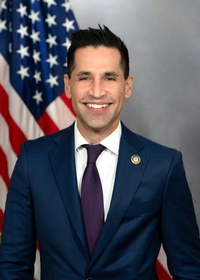
Rep. Tarik Khan
Sponsored bills
Maddy summaryHB 1150 raises Pennsylvania's minimum wage to $15 per hour starting January 1, 2026, with annual increases thereafter. It also establishes a phased timeline for tipped employees: requiring higher base cash wages starting in 2025 (e.g., $5.00/hour after June 2025) and mandating that by July 1, 2029, employers must pay the full minimum wage without relying on tips. The bill ensures all tips received by employees remain their property and cannot be used by employers to meet minimum wage requirements. This directly affects most private-sector employers and tipped workers in Pennsylvania, particularly in hospitality and service industries.
Maddy summaryHB 832 requires hospitals planning to close all or most units (general hospital closure) or critical departments like emergency or maternity units (significant impact closure) to follow specific steps. Hospitals must submit a detailed closure plan for approval by the Department of Health or local health authorities at least 180 days before closing, include a health equity impact assessment, and hold two public hearings in the affected community. The bill mandates public notice, comment periods via phone and website, and ensures hospitals address community health needs before proceeding. This directly affects hospitals seeking to close operations and the communities relying on their services, aiming to prevent abrupt healthcare disruptions.
Maddy summaryHB 1080 requires solar energy facility operators (grantees) in Pennsylvania to plan and fund the removal and land restoration of solar farms after operations end. It mandates that facility owners submit detailed decommissioning plans and proof of financial assurance to county recorders at specific intervals: 10% of estimated costs 30 days before construction begins, then 40% at 10 years, and 60% at 15 years (adjusted for salvage value). The bill ensures funds are available to cover removal costs, with third-party engineers verifying estimates every five years. These requirements apply to all new solar energy facility agreements executed after the law's effective date, directly affecting solar developers and landowners leasing property for solar installations.
Maddy summaryThis bill amends Pennsylvania's Cosmetology Law to clarify definitions and update licensing procedures. It specifically defines "mobile unit" as a self-contained, at least 24-foot-long vehicle that must be licensed and meet health/safety rules, and expands "salon" to include such mobile units. The bill also requires salon owners changing their physical location (excluding mobile units) to obtain a new license, with the fee for this new license to be set by the licensing board. These changes directly affect cosmetology businesses, particularly those operating mobile services or relocating fixed locations.
Maddy summaryHB 1083 updates Pennsylvania's 1931 Barbers' License Law to clarify definitions and modernize regulations. It specifically defines "mobile unit" as a self-contained barber establishment at least 24 feet long that must be licensed by the board and meet health/safety standards. The bill requires the Department of State to maintain public records of licensed barber shops (including addresses of mobile unit owners) and allows a reasonable fee for copies. It also mandates that shops display a visible notice with a consumer complaint phone number and requires inspections to be conducted by authorized agents (not board members), with approved premises displaying a seal or sticker. These changes primarily affect barber shops, mobile barber units, and their operators.
Maddy summaryHB 1071 amends Pennsylvania's Liquor Code to allow limited winery license holders to partner with BYOB restaurants for off-premises wine service under a new permit program. It directly affects licensed wineries and BYOB restaurants (establishments with health permits that allow patrons to bring their own alcohol). Key provisions require wineries to pay a $500 initial fee and $500 annual renewal fee per permit, provide 14 days' notice to police and the Liquor Control Board, operate between noon and 9 PM, and ensure servers are certified. The bill defines "BYOB restaurant" as a dining establishment with a valid health permit that permits patrons aged 21+ to bring alcohol for on-premises consumption. This creates a structured framework for wineries to expand sales at partner venues while maintaining regulatory oversight.
Maddy summaryHB 1070 requires all health insurance policies covering maternity benefits in Pennsylvania to provide 24 additional hours of elective postpartum observation and care beyond the existing 48-96 hours of inpatient coverage, starting January 1, 2026. It also prohibits hospitals from involuntarily discharging postpartum patients or newborns between 10 p.m. and 8 a.m., with billing under "observation status" if discharge is refused. The bill directly affects mothers, newborns, hospitals, and health insurers by extending coverage duration and restricting nighttime discharges. The Department of Human Services must seek a federal waiver to extend government program coverage for this additional 24-hour period.
Maddy summaryHR 150 is a Pennsylvania House resolution designating April 11-17, 2025, as "Black Maternal Health Week" to highlight the disproportionate maternal health disparities affecting Black women and birthing persons in the state. It references Pennsylvania data showing Black women face maternal mortality rates twice as high as White women (148 vs. 74 deaths per 100,000 live births in 2020) and higher morbidity rates. The resolution does not create new laws or funding but aims to raise public awareness about preventable maternal health outcomes. It specifically targets state-level attention to this crisis, citing local statistics from Philadelphia and Allegheny Counties. As a symbolic resolution, it has no binding effect but seeks to spur broader discussion and action.
Maddy summaryThis bill creates a $100 tax credit for Pennsylvania taxpayers who adopt cats or dogs from animal shelters, humane societies, or rescue organizations. The credit applies to state income taxes, with a maximum annual benefit of $300 (covering up to three adopted animals). To claim the credit, taxpayers must submit proof of spaying/neutering and adoption during the tax year. The program directly affects individuals adopting shelter animals, aiming to incentivize pet adoption through tax relief.