

Maddy summaryHB 1117 amends Pennsylvania's 1929 Administrative Code to redefine the Department of Drug and Alcohol Programs' responsibilities for addressing substance use disorders. The department must now develop a comprehensive State plan coordinating prevention, treatment, research, and education across all state agencies and local communities - including health, law enforcement, education, and workforce sectors - to avoid duplication. The plan requires annual review and updates, and mandates the department to provide assistance to local governments while collaborating with medical professionals on drug use guidelines. This change formalizes existing coordination efforts under a unified framework, directly affecting state agencies and local entities managing substance use disorder services.
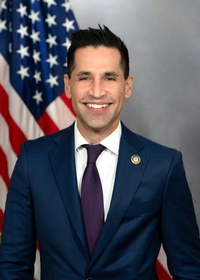
Rep. Tarik Khan
Sponsored bills
Maddy summaryHB 78 establishes rules for businesses handling consumer data, requiring them to be transparent about data collection, secure personal information, and allow consumers to access or delete their data. It directly affects companies that collect personal information (like names, addresses, or online activity) from residents of the state. Key provisions include mandating clear privacy notices, implementing security measures, and giving consumers control over their data. Violations would result in fines imposed by the state's consumer protection agency. The bill passed final passage in October 2025 and is now law.
Maddy summaryThis bill requires insurance companies in Pennsylvania to contract with behavioral health care providers who meet specific criteria, such as being licensed in good standing and offering services within the state. The law mandates that insurers cannot deny network participation to qualified providers who agree to standard contract terms, ensuring patients have access to a wider range of mental health and substance use disorder specialists. Additionally, the legislation establishes rules for claim handling and prohibits discrimination based on the type of behavioral health service provided. By creating these new requirements, the bill aims to remove barriers that might prevent individuals from finding suitable care within their insurance networks.
Maddy summaryThis bill, known as the Digital Afterlife Consent and AI Identity Protection Act, restricts digital platforms from using a user's data to create artificial intelligence simulations of them after death or during long periods of inactivity. It requires platforms to obtain explicit, separate consent from users before deploying such simulations and mandates that this consent be revocable at any time or expire two years after the user passes away. Furthermore, the law grants the user's estate the authority to override prior consent, terminate simulations, and request the deletion of AI-generated content, while also requiring clear labels on any content produced by these systems to indicate it is artificial.
Maddy summaryThis resolution designates the week of August 2 through 8, 2026, as "National Health Center Week" throughout Pennsylvania to honor the work of community health centers. These facilities provide low-cost primary care to uninsured and underinsured residents, particularly in rural areas and health care deserts. The bill serves as a commemorative measure to raise awareness about the essential role these centers play in delivering affordable health services and supporting local economies. It does not alter any laws or funding but aims to celebrate the contributions of health professionals and staff at these clinics.
Maddy summaryThis bill requires employers in Pennsylvania to inform the state labor department if any mass layoffs are caused by the use of artificial intelligence or other technological changes. When an employer submits a standard notice about a plant closing or mass layoff, they must also specify whether automation was the reason for the job losses. The law applies to most businesses but excludes seasonal and temporary workers, and it sets daily fines ranging from $500 to $5,000 depending on company size for failing to provide this information.
Maddy summaryThis Pennsylvania House Resolution designates the week of September 14 through 20, 2026, as "Birth Center Week" to highlight the role of birth centers in maternal healthcare. The measure aims to raise public awareness about these facilities, which offer low-risk, culturally competent care in a home-like setting and are noted for potentially lower costs and reduced cesarean section rates. While the resolution does not alter laws or funding, it formally acknowledges the value of birth centers in addressing maternal health disparities and improving access to care for mothers and newborns.
Maddy summaryThis bill creates a new fee in Pennsylvania courts to help fund support services for children who are victims of specific sexual offenses and crimes against minors. When a person is convicted, pleads guilty, or enters a diversion program for these crimes, they must pay a fee ranging from $250 to $1,000 depending on the severity of the offense. The collected money goes into a state fund that the Pennsylvania Commission on Crime and Delinquency uses to provide grants to children's advocacy centers. Courts are required to allow defendants who cannot afford the fee to pay it in installments, and the bill ensures that any restitution owed to victims is paid before this fee is collected.
Maddy summaryThis bill requires Pennsylvania electric distribution companies to create and implement virtual power plant programs by July 1, 2027, which allow customers with eligible energy technologies like solar panels or batteries to participate in grid services. The Pennsylvania Public Utility Commission will review and approve these proposals within 180 days, requiring companies to set enrollment targets and include mechanisms for existing demand response programs. Participants can receive compensation for providing services such as peak load reduction, voltage support, and emergency grid services, with special provisions for low-income customers and disadvantaged communities to receive enhanced upfront payments. The program will establish operational rules for when and how often grid events can occur, including limits on event duration and advance notice requirements, while allowing customers to disenroll without penalties for nonperformance.
Maddy summaryHB 2226 amends Pennsylvania's Unfair Trade Practices and Consumer Protection Law to explicitly prohibit pyramid schemes and similar deceptive promotional plans. The bill adds a new definition clarifying that schemes where participants pay to join and earn compensation primarily by recruiting others (rather than through product sales) are illegal, including "chain-letter plans," "pyramid clubs," and "pyramid promotional schemes." This change directly affects businesses operating such schemes and protects consumers from being misled by these fraudulent programs. The amendment specifically bans practices like requiring participants to pay for "opportunities" to recruit others, while excluding minimal initial payments of $25 or less.