

Maddy summaryThis bill (HR 162) requires all state agencies in the Commonwealth to implement the use of diacritical marks (accents like é, ñ, or ç) on names in official documents by July 1, 2027. It directly affects individuals with names requiring these accents, such as Spanish-speaking residents or those with French/German names, ensuring their names appear correctly on government-issued documents. The resolution is currently pending in the State Government committee after being referred in April 2025 and reported committed in October 2025. It does not impose new taxes or alter existing laws but mandates a technical update to state systems.
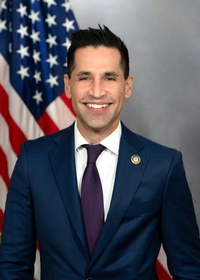
Rep. Tarik Khan
Sponsored bills
Maddy summaryHB 1315 (Pennsylvania House Bill 1315) amends Pennsylvania's name change procedures under Title 54 of the Consolidated Statutes. It requires individuals seeking a name change to file a petition in court detailing their reason, current and past residences, and proof of notice publication (unless exempt). The bill specifically creates two automatic exemptions: courts must waive public notice and seal records if the change relates to gender identity (Section 701(a.1)(3)(iv)) or if notice would endanger the petitioner or their child (Section 701(a.1)(3)(iii)). These sealed records remain confidential unless unsealed by court order for "good cause" or at the petitioner's request. The changes apply to petitions filed after the law's effective date.
Maddy summaryThis Pennsylvania House Resolution designates May 4, 2026, as "Youth Advocacy Day" to recognize the role young people play in advocating for issues affecting their lives. The resolution acknowledges youth involvement in various social movements, including environmental, civil rights, and public safety initiatives, and affirms their right to participate in civic engagement. It does not create new laws or funding but serves as a symbolic designation to highlight youth advocacy efforts within the state.
Maddy summaryThis bill establishes a fee program for certain nonemergency medical services provided to inmates in Pennsylvania prisons, with fees capped at $1 per service when requested by the inmate. It requires the Department of Corrections to create regulations specifying which medical services incur fees, their amounts, and payment procedures while exempting medical emergencies, chronic care, and preexisting conditions from fees. The legislation also mandates that inmates pay for medical services related to injuries they caused to themselves or other inmates. The Department of Corrections must update existing rules to align with these changes within 180 days of the bill's effective date, which is set to occur 60 days after enactment.
Maddy summaryThis bill amends Pennsylvania's Pharmacy Audit Integrity and Transparency Act to update definitions for "specialty drug" and "spread pricing" while establishing a new role for a State pharmacy benefits manager. The updated definitions clarify which prescription medications qualify as specialty drugs based on cost, handling requirements, and patient needs, while defining spread pricing as when a pharmacy benefits manager charges more than it pays pharmacists. The bill requires the Department of Human Services to select a single third-party administrator to manage all pharmacy benefits for Medicaid recipients by July 2026, ensuring all managed care organizations contract with this designated manager. The procurement process mandates competitive selection with strict conflict-of-interest disclosures to prevent conflicts between the manager and other healthcare entities like pharmacies, drug distributors, or managed care organizations.
Maddy summaryHB 554 would authorize Pennsylvania to join the Social Work Licensure Compact, a multi-state agreement that allows social workers licensed in one member state to practice in others without additional exams. The bill provides Pennsylvania with the legal framework to adopt the compact's standard terms, directly affecting licensed social workers seeking to practice across state lines. Key provisions include aligning Pennsylvania's licensing requirements with the compact's uniform standards, simplifying the process for social workers to obtain reciprocal licenses in participating states. This change would streamline professional mobility for social workers while maintaining consistent regulatory oversight.
Maddy summaryHB 80 would authorize Pennsylvania to join the Audiology and Speech-Language Pathology Interstate Compact. This compact allows licensed audiologists and speech-language pathologists to practice in other participating states without obtaining separate licenses for each state. The bill directly affects these healthcare professionals and their patients, streamlining cross-state practice for providers. It creates a standardized process for reciprocity among member states, eliminating redundant licensing requirements.
Maddy summaryThis House Resolution formally recognizes June 2026 as LGBTQ+ Pride Month in Pennsylvania to honor the state's LGBTQ+ history and community contributions. The bill does not create new laws or change government operations, but instead serves as a symbolic acknowledgment of Pride Month within the Commonwealth. Sponsored by multiple representatives, the resolution highlights Pennsylvania's historical role in LGBTQ+ civil rights, including early Pride demonstrations and legislative actions. This measure is a commemorative gesture that affirms support for LGBTQ+ inclusion without altering any existing policies or programs.
Maddy summaryThis bill allows secondary school students in Pennsylvania with cystic fibrosis or pancreatic insufficiency to carry and self-administer prescribed pancreatic enzyme replacement therapy (PERT) at school. To qualify, students must provide a doctor's order, a parent's request, and written acknowledgments from both the school nurse and the student confirming they understand safety precautions. Schools may restrict self-administration if students fail to follow rules or safeguard the medication, but must then ensure the medication is stored in an accessible location with clear access instructions. The law also requires schools to adopt written policies outlining documentation processes, storage locations, and limits on daily supply quantities.
Maddy summaryThis bill establishes a three-year pilot program to train Pennsylvania residents in election administration. It would allow the Department of State to randomly select two counties from each of the eight county classes to participate, where eligible individuals aged 18 or older could work in county election offices from August through December. The program would be funded through state appropriations, with counties able to provide additional compensation to participants. At the end of the pilot, the Department of State must submit a report to state officials evaluating whether to expand the program statewide.