

Maddy summaryHB 336 amends Pennsylvania's 1907 law designating the state flag by adding specific folding instructions for official display. The bill details a five-step procedure to fold the flag, including forming a triangle to display the Commonwealth crest and creating a mirror image fold. It directly affects state officials, the National Guard, and entities handling the flag for ceremonies or display. This procedural update does not change the flag's design or usage rights but standardizes its presentation. The bill was introduced in 2025 and takes immediate effect.
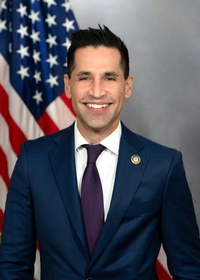
Rep. Tarik Khan
Sponsored bills
Maddy summaryHB 300 amends Pennsylvania's Human Relations Act to add explicit protections for religious exercise alongside existing anti-discrimination rules. It directly affects employers, housing providers, and businesses offering public accommodations by prohibiting discrimination based on religion in employment, housing, and public services. The bill updates the law to include religious freedom as a protected category under anti-discrimination provisions. It also clarifies the Pennsylvania Human Relations Commission's authority to enforce these protections. The amendment does not create new enforcement mechanisms but integrates religious exercise protections into the existing framework of the 1955 Act.
Maddy summaryThis resolution honors the lives of three Pennsylvania law enforcement officers - Detective Sergeant Cody Michael Becker, Detective Isaiah Emenheiser, and Detective Mark Edward Baker - who died in the line of duty on September 17, 2025. The bill formally extends condolences to their families and recognizes their individual contributions to public service, including Becker's heroism in saving a family from a house fire, Emenheiser's leadership and lifesaving awards, and Baker's pioneering work in forensic investigations. As a noncontroversial resolution, it does not create new laws or funding but serves as a legislative acknowledgment of their sacrifice and dedication to their communities.
Maddy summaryHouse Resolution 395 designates March 17, 2026, as "St. Patrick's Day" in Pennsylvania. It formally celebrates the historical contributions of Irish Americans to the founding of the United States, including their roles in the Revolutionary War and the signing of the Declaration of Independence. The resolution is a symbolic gesture by the Pennsylvania House of Representatives to honor Irish American heritage and history.
Maddy summaryHB 64 prohibits Pennsylvania employers from punishing employees (including firing, discipline, or threatening adverse actions) for refusing to attend or participate in employer-sponsored meetings about political matters (like elections or party support) or religious matters (like religious affiliation). Employers must post a notice of these rights within 30 days of the law taking effect, and employees can sue for violations like lost wages or retaliation within one year. The bill does not apply to required legal communications, job-related meetings, or voluntary participation in such matters. It allows employees to report violations without fear of retaliation and provides remedies like reinstatement, back pay, or attorney fees.
Maddy summaryHB 501 amends Pennsylvania's Alternative Energy Portfolio Standards Act to update definitions and clarify requirements for renewable energy compliance. It specifically adds "advanced reactor" (including small modular reactors) to eligible energy sources, refines criteria for low-impact hydropower, and updates definitions for biomass, biogas, and alternative energy credits. The bill affects electric utilities required to meet portfolio standards by specifying which energy sources count toward compliance and how credits are calculated. These changes aim to modernize the framework for renewable energy reporting and incentives without altering current percentage targets. The bill is currently in committee review (Environmental & Natural Resource Protection).
Maddy summaryThis bill amends Pennsylvania's vehicle laws to exempt individuals aged 65 or older from identification card renewal fees if they have surrendered their driver's license due to a diagnosed physical or mental condition. The exemption applies specifically to those who surrender their licenses based on a health care provider's diagnosis, and the department may request proof of this medical documentation. The change aims to reduce financial burdens on seniors who can no longer drive for health reasons. The legislation would become effective 60 days after passage.
Maddy summaryHB 2147 updates Pennsylvania's Liquor Code to allow distilleries established before January 1, 1885, to obtain a "distillery of historical significance" license. This license permits these historic operations to manufacture and sell liquor to the Pennsylvania Liquor Control Board, licensed entities, and the public, without the previous 20,000-gallon annual production limit. Distilleries can exchange their existing distillery licenses for this new license without paying a fee, while maintaining all rights under a standard distillery license. The bill removes the requirement for continuous operation since 1885 to qualify, making it easier for historic distilleries to retain or convert their licenses.
Maddy summaryHB 1311 amends Pennsylvania's criminal code by revising the definition of "serious provocation" in cases involving danger to the person. The amendment explicitly states that this term does not include the discovery, knowledge, or potential disclosure of a victim's gender identity, expression, or sexual orientation, nor does it cover unwanted nonforcible romantic or sexual advances by the victim or a prior romantic relationship between the victim and defendant. This change affects criminal cases where defendants might otherwise claim "serious provocation" as a defense, particularly in incidents involving LGBTQ+ individuals or relationship dynamics. The bill takes effect 60 days after enactment.
Maddy summaryHR 329 is a non-binding resolution designating October 2025 as "Arts and Culture Month" in Pennsylvania. It does not create new laws, allocate funding, or directly affect any individuals or organizations. The resolution serves solely to recognize and promote arts and cultural activities during that month through official state acknowledgment. As a procedural resolution, it has no legal effect beyond the symbolic gesture of recognition.