

Maddy summaryThis bill, known as the Fair Contracting for Health Care Practitioners Act, prohibits employers from enforcing noncompete agreements that restrict health care practitioners from working in Pennsylvania. It declares such contracts void if signed on or after the law takes effect, and invalidates older agreements when a practitioner renews their license or certification. While the law bans restrictions on where doctors can work, it still allows employers to recover certain relocation and training costs over a five-year period. Additionally, the bill requires employers to notify patients within 90 days of a doctor's departure, explaining whether the practitioner will remain in the area or be replaced. The legislation also mandates a study by the Health Care Cost Containment Council to further examine these issues.
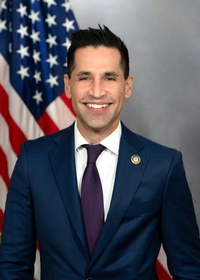
Rep. Tarik Khan
Sponsored bills
Maddy summaryThis Pennsylvania law requires fuel delivery trucks to use meters that generate printed receipts for all domestic customers receiving light fuel oils. The bill mandates that each receipt must have a unique serial number and allows customers to choose between a physical ticket or an electronic version if the delivery company has the technology. Sellers are prohibited from charging extra fees for providing receipts in any format, and they must keep all records for two years. The regulation applies specifically to the delivery of light fuel oils to individual consumers within the state.
Maddy summaryThis bill amends Pennsylvania laws to require parents receiving state assistance to actively cooperate in establishing paternity and securing child support for their children. It mandates that applicants must appear before a court to address potential fathers before receiving aid, with exceptions only if alternative methods are equally efficient. The legislation also establishes that providing names of two putative fathers who are later excluded by genetic testing will create a presumption of noncooperation, which can only be overturned with strong evidence. Finally, the bill outlines specific penalties for failing to cooperate, including the termination of medical benefits and a reduction of cash assistance by at least 25%.
Maddy summaryThis bill requires individuals applying for licenses as health care practitioners in Pennsylvania to submit fingerprints for criminal history background checks. The Pennsylvania State Police will conduct state and federal checks to identify any arrests or convictions, with results sent only to the Department of State to determine eligibility. Licensing boards may deny credentials based on these findings, and the state must establish secure procedures for handling this sensitive information. The law applies to various professions including medicine, nursing, dentistry, and pharmacy, and it takes effect 180 days after signing.
Maddy summaryThis bill amends the existing Pharmacy Audit Integrity and Transparency Act to refine how pharmacy audits and fees are handled. It clarifies that certain insurance supplements are excluded from specific terms and changes the notice period for additional fees from the time of claim adjudication to thirty days before the fees are applied. The legislation also updates definitions to refer to "generic" drugs instead of "general" ones and expands the scope of federal employee benefit protections. Additionally, it adjusts reporting requirements for pharmacy benefit managers and the state agency overseeing these audits.
Maddy summaryHB 2064 amends the Older Adults Protective Services Act to update how financial institutions handle accounts for older adults. The bill removes specific language regarding beneficiaries and adjusts numerical limits on account protections from fifteen to seven. These changes directly affect banks and other financial entities by modifying the rules they must follow when managing funds for elderly clients.
Maddy summaryThis bill amends Pennsylvania insurance regulations to clarify how dental insurers and their vendors must handle fees associated with electronic payments and credit cards. It requires these entities to inform patients that such fees may apply to their payments and to provide clear instructions on how to find the exact fee amounts. The law explicitly excludes fees charged by financial institutions or merchant servicers selected by the dentist from these notification requirements. Additionally, the bill defines specific types of payment processing entities, such as payment settlement entities and merchant acquiring entities, to ensure clarity in regulatory compliance.
Maddy summaryThis bill amends Pennsylvania vehicle registration laws to create special license plates for specific groups, including recipients of the Expeditionary Forces Medal, the Global War on Terrorism Expeditionary Medal, and the Borinqueneers Congressional Gold Medal. It also establishes new motorcycle plates for veterans, women veterans, and individuals honoring veterans, while updating the requirements for a Distracted Driving Awareness plate. To obtain these plates, eligible individuals must apply and pay an additional fee ranging from $20 to $41, with some funds designated for the Veterans' Trust Fund. The legislation applies to passenger vehicles under 14,000 pounds for the medal recipients and is restricted to motorcycles for the veteran-related plate designs.
Maddy summaryThis bill updates Pennsylvania's driver licensing laws to better support minors and homeless youth. For minors, it requires a signed certification from a parent or guardian confirming that the driver has completed 65 hours of supervised practice, including specific amounts of night and bad weather driving, before taking their license test. The legislation also allows homeless children and youth to use temporary addresses like schools or shelters when applying for licenses and exempts them from paying the associated fees. Additionally, it clarifies that the adults who sign these certifications are not legally liable for the minor's driving behavior.
Maddy summaryThis bill, known as the Contraceptive Access for All Act, requires all government health programs and private health insurance policies in the state to cover FDA-approved contraceptive drugs, devices, and products without charging the patient any out-of-pocket costs. The law specifically mandates that these contraceptives be included in coverage without requiring prior authorization, step therapy, or any form of cost-sharing such as deductibles or copayments. It applies to a wide range of standard medical insurance plans while explicitly excluding limited policies like dental-only or accident insurance. Additionally, the bill assigns duties to the Insurance Department and the Department of Human Services to oversee compliance and establishes penalties for entities that fail to meet these new coverage requirements.