

Maddy summaryThis bill amends Pennsylvania's Solid Waste Management Act to specifically regulate the handling and application of food processing residuals, such as food waste used in farming. It requires the Department of Agriculture and the State Conservation Commission to create a tiered system for managing these materials based on odor potential and to establish new standards for storage facilities and land application sites. Under the new rules, businesses must use certified haulers or brokers and maintain detailed data sheets that track the origin, composition, and transfer history of the residuals. The legislation also mandates that operators provide evidence of compliance with local zoning laws and implement specific odor mitigation measures to protect nearby communities.
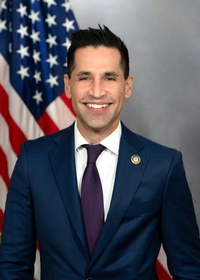
Rep. Tarik Khan
Sponsored bills
Maddy summaryThis bill updates Pennsylvania's consumer protection laws to strictly regulate automatic renewal clauses and negative option plans in consumer transactions. It requires sellers to clearly disclose renewal terms in bold, twelve-point text and mandates that consumers receive advance notice via their chosen communication method before any charges are applied. Additionally, the law prohibits charging a customer's financial account unless the seller obtains explicit, affirmative consent for the renewal, while also setting limits on the length of introductory trial periods. These changes directly affect businesses offering subscription services and consumers who sign up for recurring payments, aiming to increase transparency and prevent unauthorized charges.
Maddy summaryThis document is a set of amendments to House Bill 2594 that standardizes terminology by replacing the phrase "residual waste" with "residuals" throughout the text. The changes also update specific definitions to align with the term "food processing waste" and adjust references from "secretary" to "department." These edits do not introduce new policies or alter the bill's core functions but rather refine the language for consistency and clarity.
Maddy summaryThis bill directs the Pennsylvania Department of Education to create guidelines for schools on teaching social studies through the lens of "What Is Your Pennsylvania Story," focusing on religious freedom and diverse cultural experiences. The guidelines must include specific content about the state's religious heritage, the history of the United States since 1776, and opportunities for students to share their personal and family backgrounds. School districts and other educational entities will use these materials during the 2025-2026 and 2026-2027 school years to help students understand their unique contributions to the nation. The legislation also requires schools to notify parents about the chance to contribute to the development of these guidelines before they are implemented. The law is set to expire at the end of the 2026-2027 school year.
Maddy summaryThis Pennsylvania bill, known as the Public Transportation Trust Fund Transfer and Increase Act, changes how money is collected and distributed to support local transit systems. It requires that 6.15% of funds collected under the state's Tax Reform Code be deposited into the Public Transportation Trust Fund each month, rather than following previous rules. Additionally, the bill allows the Secretary of Transportation to provide financial assistance to local transportation organizations that exceeds the prior year's allocation by more than 20% for five fiscal years starting in 2024-2025. These changes aim to increase the flow of money to local transit groups without altering the overall budget structure.
Maddy summaryThis bill amends Pennsylvania's State Lottery Law to expand eligibility for the Pharmaceutical Assistance Contract for the Elderly Needs Enhancement Tier. It directly affects elderly residents whose income currently falls between $14,500 and $33,500 for single individuals or $17,700 and $41,500 for married couples, raising the upper income limits to $43,500 and $51,500 respectively. The legislation also clarifies that income figures reported for eligibility purposes can be rounded to the nearest whole dollar. The changes are set to take effect 60 days after the bill becomes law.
Maddy summaryThis bill requires Pennsylvania school districts to set the same starting salary for teachers who hold the same certification, grade span, and class and step for the 2025-2026 school year and all future years. By mandating uniform starting pay across districts for equivalent positions, the legislation aims to standardize compensation for new educators statewide. The law applies to all public school districts and takes effect 60 days after passage.
Maddy summaryThis bill requires the Pennsylvania Department of General Services to provide free menstrual hygiene products in at least 50% of bathrooms across all state buildings. The department must install dispensing machines and disposal receptacles while posting signs to inform the public that these items are available at no cost. The law defines menstrual hygiene products as tampons, sanitary napkins, or pads, and excludes unused or non-public buildings from this requirement. It takes effect 60 days after passage.
Maddy summaryThis bill creates a pilot program to provide extra pay to child-care workers in Pennsylvania who care for infants and toddlers under the age of four. The goal is to help these centers retain staff by making their salaries more competitive with those of pre-kindergarten teachers. The Department of Public Welfare will set the specific pay amounts, which can vary by county and depend on the worker's education level, while ensuring the extra money is used only to increase wages rather than replace existing funds. The program is scheduled to run for three school years, after which the department will report results to the General Assembly to decide if it should continue.
Maddy summaryThis bill creates a competitive grant program to help nonprofit early childhood education groups and public school districts start or expand child care centers in rural Pennsylvania counties with low population density. The funding can be used for buying land, building or renovating facilities, and paying staff salaries for two years to ensure fair wages for teachers and child development associates. To receive the money, applicants must partner with a local business that agrees to cover part of the child care fees for its employees after the grant period ends.