

Maddy summaryHB 267 amends Pennsylvania's Election Code to allow voters with disabilities preventing them from entering polling places to vote from their vehicles. It directly affects voters who are blind, disabled, or unable to physically access voting locations due to conditions like blindness, disease, or mobility issues. The bill requires two election officers from different political parties to provide ballots at the polling place entrance or curb, permits voters to mark ballots and hand them to officers for deposit, and mandates documentation of assisted voting. It also allows voters without disability records on their registration to provide evidence of their condition per Secretary of the Commonwealth guidelines. The changes aim to improve accessibility while maintaining election integrity through specific procedural safeguards.
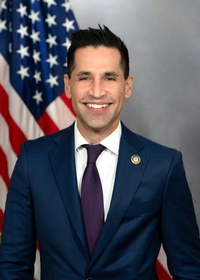
Rep. Tarik Khan
Sponsored bills
Maddy summaryThis bill amends Pennsylvania's Election Code to set annual contribution limits for political campaigns. It caps individual donations to a single candidate at $10,000 per calendar year and limits political action committee (PAC) contributions to $20,000 per candidate annually. These restrictions apply directly to donors and PACs supporting candidates for any office within Pennsylvania. The changes take effect 60 days after enactment.
Maddy summaryHB 275 establishes the Pennsylvania Affordable Homeownership Subsidy Program to help low-to-moderate-income households buy homes. It provides grants (capped at $125,000 per county applicant) for specific projects like homebuyer assistance, property acquisition, and homeownership education, targeting households earning 60%-120% of the area median income (as defined by HUD). The Department of Community and Economic Development will administer the program, set application guidelines, and submit annual reports to the General Assembly on program outcomes. The bill requires sufficient state funding to activate the program, with an effective date 180 days after enactment.
Maddy summaryHB 215 requires every public school in Pennsylvania to employ at least one certified professional librarian. The bill amends the Public School Code of 1949 to mandate that each school must have a librarian certified under Pennsylvania law (24 Pa.C.S. § 9319). This directly affects all public schools statewide by establishing a new staffing requirement for library professionals. The provision takes effect 60 days after the bill is enacted, with no exemptions specified. The change applies uniformly to all public schools, regardless of size or location.
Maddy summaryHB 281 requires health insurance policies in Pennsylvania to cover prostate cancer screenings with no out-of-pocket costs for men aged 40+ who are at high risk. High-risk individuals include those with a family history of prostate cancer, genetic factors, or physician-determined medical need. The law mandates annual coverage for screenings like PSA tests and digital rectal exams, eliminating deductibles or copays. It applies to all health insurance policies issued or renewed 180 days after enactment, with full implementation in 60 days. This directly affects insurers, healthcare providers, and Pennsylvania residents meeting the specified risk criteria.
Maddy summaryHB 272 establishes a grant program to help Pennsylvania municipalities and emergency service facilities (like fire stations, police departments, and ambulance services) install solar energy systems. The Department of Environmental Protection will administer the program, awarding competitive grants to cover eligible costs such as solar equipment, installation, permits, and site assessments. Applicants must submit a site assessment and verify contractors meet licensing, safety, and legal requirements through an affidavit. The program also requires the department to provide technical assistance and educational resources about solar energy projects.
Maddy summaryHB 210 requires businesses (such as restaurants, hotels, and retail stores) to post signs in visible restroom locations - including stalls, mirrors, and above hand dryers - with the National Human Trafficking Resource Center Hotline number (1-888-373-7888) and a statement about legal protections for trafficking victims. The signs must be at least 8.5x11 inches, feature the hotline number in bold and large font, and be available in English, Spanish, and any other language required by the Voting Rights Act in the business's county. The Department of Labor and Industry will design and provide the sign template online for businesses to print. This law takes effect 60 days after enactment.
Maddy summaryHB 207 amends Pennsylvania's Tax Reform Code to clarify the definition of "compensation" for personal income tax purposes, specifically adding an exception for certain military and emergency-related income. The bill explicitly excludes income earned by active-duty U.S. military members (including their spouses living outside Pennsylvania) and income from active state emergency duty under Pennsylvania's emergency management laws. This change directly affects Pennsylvania taxpayers who receive such income, ensuring it is not taxed as regular compensation. The amendment becomes effective 60 days after enactment.
Maddy summaryThis bill strengthens mental health support for emergency responders in Pennsylvania. It creates new confidentiality protections, prohibiting peer support staff, healthcare providers, or helplines from sharing an emergency responder's mental health information without consent (except in clear danger situations). Specifically for 911 dispatchers, it requires employers to provide free mental health evaluations for PTSD symptoms upon the dispatcher's request or a supervisor's recommendation. If symptoms are identified, the employer must cover treatment until a provider determines the dispatcher can return to full duties, with administrative duty assigned during this period.
Maddy summaryHB 169 creates a program allowing local and regional police departments in Pennsylvania to purchase used pursuit vehicles (police patrol vehicles) from the state at fixed prices. The Department of General Services must allocate up to 10% of the Pennsylvania State Police's used pursuit vehicle inventory for this program, requiring payment via organization check before purchase. Police departments must submit a form detailing desired vehicles, and the state will notify them when matching vehicles become available. The bill specifies that prices are set by the department and not subject to negotiation, with rules for administration to be developed by the department. This applies only to existing state-owned patrol vehicles, not new purchases.