

Maddy summaryThis resolution (HR 43) symbolically recognizes April 2025 as "Sexual Assault Awareness Month" in Pennsylvania, marking the 24th anniversary of the observance in the Commonwealth. It does not create new laws or policies but encourages communities to support survivors, promote prevention education, and foster safer environments online and offline. The resolution emphasizes collective action to address sexual violence, referencing national awareness efforts and Pennsylvania's historical context. It has no direct impact on specific individuals or groups, as it is a ceremonial recognition by the Pennsylvania House of Representatives.
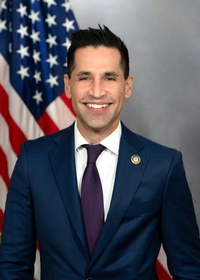
Rep. Tarik Khan
Sponsored bills
Maddy summaryThis resolution designates the week of April 6-12, 2025, as "National Library Week" in Pennsylvania. It symbolically recognizes the role of libraries, librarians, and library workers in communities across the state. The resolution highlights libraries' contributions to promoting reading, providing technology access, and supporting programs for all ages. As a ceremonial resolution, it has no binding policy changes or direct impact on legislation.
Maddy summaryHB 379 amends Pennsylvania's vehicle registration and driver licensing laws to create new exemptions for agricultural purposes. It exempts certain farm equipment (implements of husbandry, trailers, or semitrailers) from registration when operated between a farmer's home and an annual school-hosted agricultural event, limited to trips under 25 miles. The bill also exempts individuals aged 14 or older from needing a driver's license to operate such equipment on public roads during daylight hours for these specific farm-to-school trips. These changes directly affect Pennsylvania farmers and young agricultural workers traveling to educational events. The bill takes effect 60 days after enactment.
Maddy summaryHB 390 creates a $1,000 annual tax deduction for Pennsylvania health care providers who volunteer to supervise clinical training for students. It directly affects licensed physicians, nurses, physician assistants, and nurse anesthetists who provide uncompensated, volunteer-based clinical training (minimum 80 hours annually per student) to eligible students in approved programs. The bill establishes a Preceptor Certification Committee within the Department of Health to verify eligibility, process applications within 30 days, and issue certificates confirming the deduction. To claim the deduction, providers must submit this certificate with their tax return, and the deduction cannot exceed the tax owed. The policy change specifically targets volunteer clinical education support without altering tax rates or creating new tax credits.
Maddy summaryHB 389 establishes the New Nursing Faculty Grant Program to support nursing education in Pennsylvania. It provides $10,000 grants to eligible nursing faculty members at accredited medical colleges who are PA residents, employed full-time (or have a pending offer), and have no more than three years of experience. The Pennsylvania Higher Education Assistance Agency (PHEAA) will administer the program, prioritizing positions historically difficult to fill, with applications submitted by nursing program deans. Grants cover professional expenses and aim to increase enrollment capacity at nursing programs.
Maddy summaryHB 374 amends Pennsylvania's Election Code to strengthen reporting requirements for campaign finance. It requires any individual or organization (including 501(c) groups) making independent expenditures over $100 in a year to report the candidate or ballot question they support, using the same forms as political committees. Additionally, it mandates that candidates, political committees, or organizations making contributions or independent expenditures over $500 after the final pre-election report must file a report within 24 hours via fax, mail, or in-person appearance. This bill directly affects candidates, political committees, and entities making significant campaign expenditures. The changes aim to increase transparency around late contributions and independent spending.
Maddy summaryHB 388 allows Pennsylvania municipalities to repair or replace private sewer and water pipes connecting homes to public systems using public funds or employees, if the work benefits public health or infrastructure. It requires municipalities to prioritize using "American-made" materials for these repairs and to publish a public notice in local media if American-made supplies are unavailable. Property owners can then object within 30 days, providing evidence that American-made materials are available, with objections treated as formal appeals. This directly affects local governments managing infrastructure and property owners whose private pipes may be upgraded.
Maddy summaryHR 41 is a resolution directing Pennsylvania's Joint State Government Commission to study emergency child care needs and develop recommendations. The study will examine current availability (including Pennsylvania's 12 crisis nurseries), staffing challenges (like low wages averaging $12.43/hour), funding sources (including federal programs), and how other states license facilities. It requires the Commission to form an advisory committee with child care providers, parents, health/human services officials, and county representatives. The Commission must submit its report to the House within 18 months. This resolution does not create new laws but aims to inform future policy decisions.
Maddy summaryHB 335, the Child Day-Care Center Protection Act, requires new child day-care centers in Pennsylvania to obtain two certifications before licensure: an indoor contamination assessment (if the building was previously a high-hazard business like a dry cleaner or nail salon) and an environmental quality certification confirming remediation. It directly affects new day-care centers seeking licensure, particularly those operating in older buildings or sites previously used for industrial or high-hazard purposes. The bill establishes a grant program funded by the Hazardous Sites Cleanup Fund to help offset certification costs and imposes fines up to $50,000 for false statements or failure to comply. Existing licensed centers are exempt from these new certification requirements.
Maddy summaryHB 334 creates a $2,500 Pennsylvania Individual Recruitment and Retention Tax Credit for specific new professionals who move to the state after December 2024. It directly affects qualifying taxpayers certified in teaching (e.g., instructional or special education certificates), law enforcement (e.g., police academy graduates), or healthcare (e.g., registered nurses) who become Pennsylvania residents and secure employment in those fields. The credit reduces their state income tax bill for wages earned in qualifying roles, available for three consecutive years (including the first qualifying year), and requires proof of certification to the Department of Revenue. The credit expires December 31, 2030, and applies only to individuals becoming qualifying taxpayers between 2025 and 2027.