

Maddy summaryHB 449 requires Pennsylvania police officers to issue a warning or citation ordering individuals to stop specific minor unlawful conduct before making an arrest without a warrant. It applies to offenses like disorderly conduct, public drunkenness, obstructing highways, and liquor violations under Title 18. The bill mandates that officers must first warn individuals to cease the conduct, and only arrest if they refuse or fail to comply. Additionally, police departments must establish written guidelines for officers before implementing these warrantless arrests. The law takes effect 60 days after enactment.
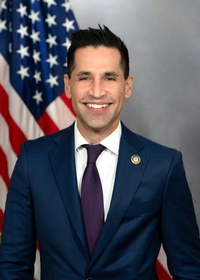
Rep. Tarik Khan
Sponsored bills
Maddy summaryHB 456, the Restroom Access Act, requires Pennsylvania retail establishments with employee restrooms to allow customers with specific medical conditions to use them during business hours under defined conditions. It directly affects customers who use ostomy devices or have inflammatory bowel diseases (like Crohn's or ulcerative colitis) and cannot access a public restroom nearby. To qualify, customers must provide written physician documentation or a nonprofit-issued ID card verifying their condition. Retail businesses violating the law face a civil penalty of up to $500, but the law does not require physical changes to restrooms. The bill takes effect immediately upon passage.
Maddy summaryHB 455 establishes Pennsylvania's "Building a Better Future Grant Program" to fund organizations providing education and workforce training to young adults aged 16-24 who are disconnected from education. The program targets organizations serving youth from low-income backgrounds with specific vulnerabilities (e.g., foster care, disability, homelessness, or school dropout) and requires grantees to offer at least two services like job training, career counseling, or high school equivalency support. The Department of Labor and Industry will administer $5 million in state funding (from the General Fund) to award grants of up to $1 million per organization, with 5% reserved for statewide technical assistance. This directly affects eligible young adults and qualifying local organizations focused on construction, healthcare, and other in-demand vocational fields.
Maddy summaryHB 443 modifies Pennsylvania's sentencing for second-degree murder convictions, including murder of an unborn child or a law enforcement officer. It reduces maximum sentences: for adults, from life imprisonment to 50 years; for offenders under 18, it sets a maximum of 40 years for those 15+ at the time of crime and 30 years for those under 15. The bill also establishes new parole timelines - 25 years for standard life sentences under this section, 20 years for those under 18 aged 15+, and 15 years for those under 15 - requiring the parole board to prioritize public safety, victim safety, and consider the offender's culpability before granting parole. Additionally, it mandates that victims be notified and given a chance to be heard before parole decisions for these cases.
Maddy summaryHB 423 establishes Pennsylvania's Future Voter Program, allowing high school students aged 16-17 to preregister to vote before turning 18. The bill requires schools to hold voter registration events during Constitution and Citizenship Day (September 17), providing applications and online registration opportunities for eligible students. Students who preregister will not be added to the voter registry until they reach age 18. The program mandates school entities to coordinate these events, with the Secretary of Education and Secretary of the Commonwealth overseeing implementation. This directly affects all high school students in Pennsylvania who are 16 or 17 years old.
Maddy summaryHB 432 establishes Pennsylvania's Maternal Care Access Program under the Department of Health to address gaps in maternal healthcare. The bill identifies counties as "maternal care access zones" using the Maternal Vulnerability Index (based on social factors like poverty, education, and healthcare access) and the Social Vulnerability Index. It requires the Department to develop regulations for improving access to obstetric care, birth centers, and providers in areas classified as "maternity care deserts" (regions lacking hospitals, birth centers, or specialized providers within 25 miles). The program directly affects underserved communities and the Department of Health, focusing on concrete policy changes to expand maternal health resources.
Maddy summaryHB 421 prohibits Pennsylvania employers from requiring employees to sign training repayment agreements as a condition of employment. The bill directly affects workers who might otherwise be forced to repay training costs if they leave a job, excluding government employers and agreements under collective bargaining. It makes such agreements void and unenforceable, with the Department of Labor and Industry empowered to investigate violations. Employers violating the law face civil penalties of up to $25,000 per violation, increasing to $25,000 per affected employee for repeat offenses. The law takes effect 60 days after enactment.
Maddy summaryHB 428 establishes the Pennsylvania Artist Fellowship Grant Program, providing $100,000 annual grants to up to 25 eligible artists in the state. The program directly affects Pennsylvania residents aged 18+ who are visual, media, film, or performing artists with regular creative practice, not enrolled in school, and who produce community-accessible work. Key provisions include the Pennsylvania Council on the Arts administering applications, disbursement, and record-keeping, with grants permitted for project costs (materials, travel, housing) but prohibited for political activities or lobbying. The bill appropriates $2.5 million for grants and $250,000 for administration from the General Fund, effective 60 days after enactment.
Maddy summaryThis resolution designates January 2025 as "School Director Recognition Month" in Pennsylvania. It honors the 4,500 locally elected school directors who volunteer to lead public school districts, set educational standards, manage budgets, and advocate for students. The resolution does not create new laws or funding; it is a symbolic gesture to acknowledge their service. The House will send a copy to the Pennsylvania School Boards Association to support the recognition effort.
Maddy summaryThis resolution designates January 23, 2025, as "Maternal Health Awareness Day" in Pennsylvania. It aims to recognize women who die from pregnancy or childbirth complications, highlighting Pennsylvania's maternal mortality rate of 82 deaths per 100,000 live births and the significantly higher rate (163 per 100,000) for Black women. The resolution does not create new laws or funding but seeks to increase public and healthcare awareness about maternal health risks. It references existing efforts like the Maternal Mortality Review Committee established under Act 24 of 2018.