

Maddy summaryThis bill establishes the Microfiber Filtration Protection Act to require all washing machines sold or installed in Pennsylvania to include a built-in or in-line filter capable of capturing microfibers. The Environmental Quality Board must create regulations mandating these filters have a mesh size of 100 micrometers or smaller and display a consumer notice about checking and disposing of captured lint. Starting in 2030, manufacturers cannot sell non-compliant machines, and by 2031, installers cannot fit them unless they meet the new standards. The Department of Environmental Protection will enforce these rules through testing, inspections, and complaints, while charging manufacturers for any testing costs related to non-compliance.
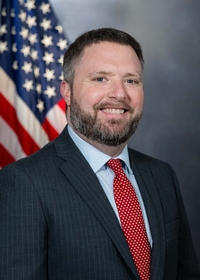
Rep. Ben Waxman
Sponsored bills
Maddy summaryHB 2500 legalizes the adult use of cannabis in Pennsylvania by establishing a regulatory framework for its possession, sale, and consumption. The bill designates the Department of Agriculture as the primary agency responsible for overseeing the industry, including licensing businesses and enforcing rules on advertising, packaging, and laboratory testing. It creates two new funds to support the industry and promote social equity, while also imposing specific sales and excise taxes on cannabis products. Additionally, the legislation consolidates existing medical cannabis provisions and transfers certain regulatory powers from the Department of Health to the Department of Agriculture.
Maddy summaryThis bill designates Allegheny River Boulevard in western Pennsylvania as an official scenic byway to recognize its scenic, historic, and recreational value. The primary mechanism of the law restricts the placement of outdoor advertising signs near the road to preserve the visual quality of the route, with specific distance limits and exceptions for official signs, real estate listings, and directional markers. Additionally, the legislation requires state travel maps to highlight this route and explain the reasons for its designation. The changes directly affect property owners along the corridor and state agencies responsible for transportation and tourism mapping.
Maddy summaryThis bill amends Pennsylvania's Local Option Small Games of Chance Act to legally establish a framework for nonbanking poker games. It directly affects eligible organizations seeking licenses, local communities voting on whether to allow these games, and state agencies responsible for oversight. The legislation creates new definitions for terms like "gross revenue" and "associated equipment," mandates specific record-keeping and security procedures, and outlines the duties of the Pennsylvania Gaming Control Board and the Department of Drug and Alcohol Programs. Additionally, the bill sets out rules for issuing chips, collecting fees, and imposing penalties for violations.
Maddy summaryThis bill updates Pennsylvania laws to strengthen the legal protection of confidential communications between journalists and their sources during judicial and administrative proceedings. It ensures that interpreters for people with limited English proficiency or hearing impairments cannot be forced to reveal what was said in these protected conversations. Additionally, the legislation clarifies the definition of a "journalist" to include freelance and non-professional reporters while maintaining an exception for cases involving imminent threats of violence. The changes apply to all types of media, including newspapers, radio, television, and magazines, and will take effect 60 days after becoming law.
Maddy summaryThis bill creates the Maternal Care Access Program within the Pennsylvania Department of Health to improve maternal health outcomes by directing resources to underserved areas. The legislation defines specific terms like "maternity care desert" and "at-risk" zones based on the availability of obstetric care, birth centers, and medical providers. It authorizes the department to distribute funds to birth centers, obstetrician-gynecologists, certified nurse midwives, and hospitals located in designated zones that lack adequate care options. Additionally, the bill establishes criteria for identifying distressed hospitals and outlines various health and social indicators used to assess maternal vulnerability.
Maddy summaryThis bill prohibits employers in Pennsylvania from punishing, disciplining, or retaliating against employees for refusing to attend meetings or listen to communications about religious or political topics. It defines "voluntary" participation as attendance that is not incentivized by benefits or threatened with negative employment consequences, ensuring employees can opt out without fear of reprisal. To enforce these protections, the law allows aggrieved workers to sue for remedies like reinstatement and back pay, while also requiring employers to post a notice explaining these rights. Additionally, the bill mandates that the Department of Labor and Industry investigate complaints and provides a framework for interested parties to report violations.
Maddy summaryThis Pennsylvania House resolution urges the U.S. Congress to pass federal legislation that would raise the asset limits for Supplemental Security Income eligibility. Currently, individuals can only hold $2,000 in resources and couples can hold $3,000 without losing benefits, a limit that has not been adjusted for inflation since 1989. The proposed federal bill seeks to increase these limits to $10,000 for individuals and $20,000 for couples to help recipients save money and maintain financial stability. The resolution specifically calls for Congress to enact this change, noting that the current strict limits often force people to spend down their assets or face benefit termination.
Maddy summaryHB 2520 amends Pennsylvania's Local Option Small Games of Chance Act to formally regulate nonbanking games, which are games of chance where the house does not act as the bank. The bill establishes a new chapter that defines key terms like "nonbanking games," "chips," and "gross revenue," while outlining specific duties for the Pennsylvania Gaming Control Board and the Department of Drug and Alcohol Programs. It creates a licensing framework for eligible organizations to operate these games and sets rules for fees, taxes, and penalties associated with the industry. Additionally, the legislation clarifies how revenue is calculated and defines the responsibilities of key employees within licensed facilities.
Maddy summaryThis bill directs the Pennsylvania Gaming Control Board to create rules that allow casino players to set their own spending limits. Specifically, it gives the board authority to establish systems where individuals can cap the amount of money they wager on slot machines or video gaming terminals within a certain time frame. It also permits players to set a maximum limit on the total amount of money they can lose during a specified period. The changes apply to all regulated gaming facilities in Pennsylvania and will become effective 60 days after the law is passed.