

Maddy summaryHB 421 prohibits Pennsylvania employers from requiring employees to sign training repayment agreements as a condition of employment. The bill directly affects workers who might otherwise be forced to repay training costs if they leave a job, excluding government employers and agreements under collective bargaining. It makes such agreements void and unenforceable, with the Department of Labor and Industry empowered to investigate violations. Employers violating the law face civil penalties of up to $25,000 per violation, increasing to $25,000 per affected employee for repeat offenses. The law takes effect 60 days after enactment.
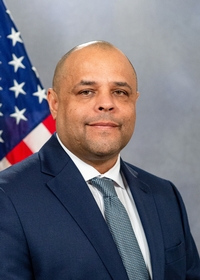
Rep. José Giral
Sponsored bills
Maddy summaryHB 428 establishes the Pennsylvania Artist Fellowship Grant Program, providing $100,000 annual grants to up to 25 eligible artists in the state. The program directly affects Pennsylvania residents aged 18+ who are visual, media, film, or performing artists with regular creative practice, not enrolled in school, and who produce community-accessible work. Key provisions include the Pennsylvania Council on the Arts administering applications, disbursement, and record-keeping, with grants permitted for project costs (materials, travel, housing) but prohibited for political activities or lobbying. The bill appropriates $2.5 million for grants and $250,000 for administration from the General Fund, effective 60 days after enactment.
Maddy summaryHB 406 adds a new offense to Pennsylvania law for "kidnapping of animals" under Title 18. It specifically targets two actions: (1) intentionally taking dogs, cats, equines, swine, or cattle for resale, laboratory use, or animal fighting (a felony of the third degree), and (2) taking dogs, cats, or equines without permission for temporary use (a misdemeanor of the third degree). The bill directly affects individuals involved in animal trafficking, commercial handling, or unauthorized temporary possession of these animals. Penalties increase for repeat offenses under both categories.
Maddy summaryThis resolution designates January 23, 2025, as "Maternal Health Awareness Day" in Pennsylvania. It aims to recognize women who die from pregnancy or childbirth complications, highlighting Pennsylvania's maternal mortality rate of 82 deaths per 100,000 live births and the significantly higher rate (163 per 100,000) for Black women. The resolution does not create new laws or funding but seeks to increase public and healthcare awareness about maternal health risks. It references existing efforts like the Maternal Mortality Review Committee established under Act 24 of 2018.
Maddy summaryHB 405 would require businesses with 200+ Pennsylvania employees to meet specific standards to receive state contracts, funding, or grants. Corporations would be ineligible if they violated federal labor laws (within 5 years), committed unfair labor practices (within 5 years), broke Pennsylvania's prevailing wage law (within 5 years), or failed to submit bylaws ensuring at least 20% of their governing board consists of employee-elected members. The bill applies only to new or renewed state contracts, funding, or grants approved after its effective date (60 days after enactment). This directly affects large corporations seeking state business by linking eligibility to labor compliance and employee representation requirements.
Maddy summaryHB 370 amends Pennsylvania's Public School Code to set new requirements for school start dates and daily schedules. It prohibits most school districts from starting the school year before the day after Labor Day (with limited exceptions for emergencies like natural disasters or major construction), and specifies that daily sessions must begin at 9 a.m. and end at 4 p.m. with required lunch breaks (30 minutes for staff and 1 hour total for students). The bill also clarifies that existing school calendars in contracts with employees remain valid until those contracts expire. This directly affects all Pennsylvania public school districts and their staffing and scheduling plans.
Maddy summaryHB 371 amends Pennsylvania's Keystone Opportunity Zone Act to add new requirements for businesses seeking tax exemptions, deductions, or credits. It directly affects businesses operating within designated Keystone zones that make capital investments exceeding $25,000 for construction, reconstruction, or facility repairs. The key provision mandates that 70% of workers on such projects must be "skilled craft laborers" (defined as those with relevant training or apprenticeship completion), and all workers must receive the state-mandated prevailing wage rate. Businesses must verify these requirements annually through the Department of Labor and Industry, enforcing existing Pennsylvania Prevailing Wage Act standards for qualifying projects.
Maddy summaryHB 390 creates a $1,000 annual tax deduction for Pennsylvania health care providers who volunteer to supervise clinical training for students. It directly affects licensed physicians, nurses, physician assistants, and nurse anesthetists who provide uncompensated, volunteer-based clinical training (minimum 80 hours annually per student) to eligible students in approved programs. The bill establishes a Preceptor Certification Committee within the Department of Health to verify eligibility, process applications within 30 days, and issue certificates confirming the deduction. To claim the deduction, providers must submit this certificate with their tax return, and the deduction cannot exceed the tax owed. The policy change specifically targets volunteer clinical education support without altering tax rates or creating new tax credits.
Maddy summaryHB 389 establishes the New Nursing Faculty Grant Program to support nursing education in Pennsylvania. It provides $10,000 grants to eligible nursing faculty members at accredited medical colleges who are PA residents, employed full-time (or have a pending offer), and have no more than three years of experience. The Pennsylvania Higher Education Assistance Agency (PHEAA) will administer the program, prioritizing positions historically difficult to fill, with applications submitted by nursing program deans. Grants cover professional expenses and aim to increase enrollment capacity at nursing programs.
Maddy summaryHR 42 is a resolution passed by the Pennsylvania House of Representatives urging Congress to exempt Puerto Rico and other noncontiguous territories (like Alaska and Hawaii) from the Jones Act. The Jones Act requires that goods shipped between U.S. ports be transported on vessels built, owned, and crewed by Americans. The resolution states this law imposes significant economic costs - $1.2 billion annually for Hawaii and $1.5 billion for Puerto Rico - by raising prices for goods and increasing the cost of living. It argues the current waiver process for emergencies, made more restrictive in 2023, hinders disaster response in these territories.