

Maddy summaryHB 533 amends Pennsylvania's Medical Marijuana Act by updating the definition of "serious medical condition" to add autism as a qualifying condition (new item 17) and creating a new category (item 17.1) allowing practitioners to deem other conditions serious. This change directly affects patients seeking medical marijuana authorization, expanding eligibility to include autism and allowing healthcare providers to recommend additional conditions. The bill does not alter program operations, taxes, or other provisions - only clarifies which conditions qualify under the law. The amendment takes effect 60 days after enactment.
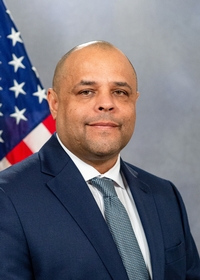
Rep. José Giral
Sponsored bills
Maddy summaryHB 542 amends Pennsylvania's Election Code to strengthen campaign finance transparency and accountability. It requires the Secretary of the Commonwealth to biennially adjust contribution limits for candidates and political committees, and adds detailed definitions clarifying what constitutes campaign expenditures, independent spending, and corporate political activity. The bill mandates that businesses disclose political contributions and expenditures, including those by "chief executive officers" of corporations, and defines "affiliate" committees to prevent circumventing contribution rules. These changes directly affect candidates, political committees, corporations, and business entities engaging in election-related spending within Pennsylvania.
Maddy summaryHB 531 establishes Pennsylvania's Older Adult Cable TV Rebate Program, providing annual rebates of up to $300 to eligible seniors (65+ with household income ≤150% of federal poverty guidelines) for basic tier cable TV service. The program requires applicants to submit proof of service, residency, and that basic cable is the only available service in their municipality. The Department of Community and Economic Development administers applications, verifies eligibility within 30 days, and disburses rebates directly to cover cable service costs. This policy specifically excludes streaming services and caps rebates at $300 per year for qualifying low-income older adults.
Maddy summaryHB 324 amends Pennsylvania's 1956 Poultry Technician Licensure Law to modernize requirements for professionals collecting poultry samples and conducting disease surveillance. It expands technicians' duties to include "regulatory sampling and testing procedures" for poultry diseases (beyond just pullorum testing), requires applicants to prove legal work authorization in the U.S. (replacing citizenship requirements), increases the license fee from $5 to $10, and allows Spanish-language training via quarantine orders. The bill directly affects poultry technicians seeking or renewing licenses to legally collect samples or conduct on-site disease monitoring. Key provisions update eligibility, fees, and the Secretary of Agriculture's authority to oversee licensing and enforce standards.
Maddy summaryHB 512 amends Pennsylvania law to set a clear maximum for veterans' temporary financial assistance. The bill specifies that payments cannot exceed $2,500 or the veteran's documented need, whichever is less. This change directly affects Pennsylvania veterans eligible for temporary financial aid under Title 51. The key provision simplifies the existing rule by removing outdated language and establishing a fixed cap, ensuring assistance aligns with actual documented need.
Maddy summaryHR 57 is a non-binding House Resolution designating June 2025 as "Gun Violence Awareness Month" in Pennsylvania. It does not create new laws or policies but formally recognizes gun violence as a public safety and health issue through symbolic acknowledgment. The resolution memorializes lives lost to gun violence in the Commonwealth, using statistics from the preamble to highlight the issue's severity. As a commemorative resolution, it has no enforcement mechanism or direct impact on residents, officials, or gun laws.
Maddy summaryHB 494 amends Pennsylvania's Human Services Code to create new rules for small personal care homes that provide daily assistance (like bathing, medication help, or meal prep) to 3 or fewer non-relatives who don’t need full long-term care. It directly affects operators and staff of these homes by requiring annual unannounced inspections, mandatory criminal background checks for all staff, and registration with the state for administrators. Key provisions include creating a state registry for homes, setting minimum care standards through new regulations, and allowing penalties for non-compliance. The bill aims to strengthen oversight while focusing on homes that serve vulnerable adults with basic care needs.
Maddy summaryThis resolution recognizes January 27, 2025, as "International Holocaust Remembrance Day" in Pennsylvania. It symbolically aligns Pennsylvania with the United Nations' 2005 designation of January 27 as a day to honor Holocaust victims, educate about genocide prevention, and condemn hate based on ethnicity or religion. The resolution has no binding effect or policy changes - it is a formal statement of recognition. It directly affects Pennsylvania by designating this date for state-level commemoration.
Maddy summaryHB 511 proposes a constitutional amendment to expand Pennsylvania's real estate tax exemption for veterans who served in a war or armed conflict, were honorably discharged, and have a disability rated at 100% by the U.S. Veterans Administration. It would exempt their primary residence from real property taxes if the State Veterans' Commission determines they need the exemption, and extend this benefit to the unmarried surviving spouse of an eligible veteran under the same conditions. This amendment requires approval by the General Assembly and a vote by Pennsylvania voters in a statewide election. The change would directly affect veterans with qualifying disabilities and their surviving spouses who own homes in Pennsylvania.
Maddy summaryHB 508 establishes the Wildlife Rehabilitation Grant Program, providing financial support to nonprofit wildlife rehabilitators in Pennsylvania based on their previous year's animal intake. The Pennsylvania Game Commission administers the program, awarding grants ranging from $2,500 (for 1-100 animals) up to $75,000 (for over 2,500 animals) to cover rehabilitation services, facility improvements, or related activities. Grants are distributed on a first-come basis until the Wildlife Rehabilitation Grant Fund is exhausted, with each rehabilitator limited to one grant per office location annually. This program directly supports organizations that care for and release injured, sick, orphaned, or displaced wildlife back into natural habitats.