

Maddy summaryHB 737 clarifies tax exemption rules for charitable institutions under Pennsylvania's General County Assessment Law. It specifies that hospitals, universities, and charitable organizations (including residential housing providers receiving federal low-income subsidies) retain tax exemption only if their property isn't used commercially and all revenue supports their charitable mission. The bill adds that subsidized housing units must have at least 95% federal funding to maintain exemption, with any surplus monitored and used solely for charitable purposes. This directly affects institutions relying on tax-exempt status for property ownership and operations.
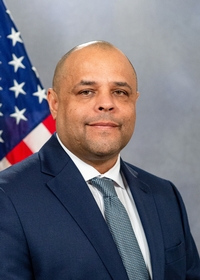
Rep. José Giral
Sponsored bills
Maddy summaryHB 731 amends Pennsylvania's Controlled Substance Act to allow courts to grant probation without a conviction for nonviolent drug offenses. This applies when a person pleads guilty or no-contest to a nonviolent drug offense and proves drug dependency through testimony from a physician or psychologist. The bill caps the total fines and court costs for such probation at $300, setting a clear financial limit. It directly affects low-level drug offenders who qualify for this treatment-focused sentencing option.
Maddy summaryHB 732 amends Pennsylvania's domestic relations law to help domestic violence victims gain independence from abusers tied to shared telephone plans. The bill requires courts to order abusers to remove victims from shared phone contracts within three days and cover any termination fees. It also mandates telecommunications providers to let victims opt out without fees or penalties when presenting valid documentation like a protection order or police report, and to provide a new phone number within 24 hours. This directly affects domestic violence victims who are financially or contractually linked to abusers through shared phone accounts. The law applies to phone plans entered into on or after its effective date.
Maddy summaryHB 715 amends Pennsylvania's Minimum Wage Act of 1968 to increase penalties for employers who pay workers below the required minimum wage. It reclassifies violations based on the number of offenses and the total unpaid wages: under $150 for a first offense is a summary offense, while over $150 for a first or second offense becomes a misdemeanor, and third or subsequent offenses are felonies. The bill also establishes that each week an employee is underpaid and each affected employee counts as a separate offense, making penalties more severe for repeated violations. Employers cannot avoid liability by having employees agree to work for less than the minimum wage.
Maddy summaryHB 718 amends Pennsylvania's Wage Payment and Collection Law to strengthen wage enforcement, directly affecting employers (including state/local governments, corporations, and contractors) and workers owed unpaid wages. It requires the Department of Labor to collect quarterly data on wage violations, fines, unpaid wages, and complaint resolution, then submit semiannual reports to lawmakers and post them publicly. The bill mandates quarterly investigations of "high-violation industries" (those with 25+ violations in two years) and updates penalties to $2,000 per violation or triple unpaid wages, whichever is greater, plus attorney fees. Employers failing to pay within 10 days of notice face these penalties, with each week of underpayment counted as a separate violation.
Maddy summaryHB 717 amends Pennsylvania's procurement law to add wage law violations as a specific reason for barring state contractors from future government contracts. It directly affects state contractors who fail to pay wages owed to workers under the 1961 Wage Payment and Collection Law. The bill adds a new subsection (531(b)(6.1)) to the debarment rules, requiring state agencies to suspend or debar contractors found in violation of wage payment laws. This change creates a direct link between wage compliance and eligibility for state contracts. The bill takes effect 60 days after enactment.
Maddy summaryHB 716 amends Pennsylvania's Wage Payment and Collection Law to require employers to provide employees with specific pay details (including rate, time of payment, and fringe benefits) at hiring and to post a summary of the law in a visible workplace location. Employers who fail to meet these notification or posting requirements face a $500 fine per violation. The bill also extends the time limit for employees to file legal claims for unpaid wages: if an employer didn't provide required notice or post the summary, the deadline becomes the later of three years after wages were due or the day the requirements were satisfied. This affects all employers in Pennsylvania subject to the Wage Payment and Collection Law.
Maddy summaryHB 719 prohibits Pennsylvania insurance companies from denying coverage, limiting benefits, or charging higher rates to applicants or policyholders solely because they use FDA-approved HIV prevention medications (PrEP for pre-exposure or PEP for post-exposure prophylaxis). The bill directly affects individuals seeking or maintaining insurance coverage who are prescribed these medications for HIV prevention. It bans specific "adverse actions" like coverage denial, reduced benefits, or discriminatory pricing based solely on PrEP or PEP use. The law takes effect 60 days after enactment and enforces violations through existing insurance fraud and unfair practice laws.
Maddy summaryHB 698 would require all food and beverage containers sold in Pennsylvania to contain no more than 0.1 parts per billion of bisphenol A (BPA), directly affecting manufacturers, sellers, and distributors of such containers. The bill prohibits containers with BPA above this level and mandates that manufacturers replace BPA with the least toxic alternative, while banning substitutions with known carcinogens or reproductive toxicants identified by the EPA. Violations would be enforced under Pennsylvania’s existing Unfair Trade Practices and Consumer Protection Law, and the law would take effect 60 days after enactment. This focuses on setting a measurable safety standard for consumer products without advocating for specific outcomes.
Maddy summaryHB 612 amends Pennsylvania's Scrap Material Theft Prevention Act to require scrap processors and recycling facilities to collect specific identification details from sellers during scrap material transactions exceeding $100 or involving catalytic converters. Key provisions include collecting driver's license copies, vehicle license plate numbers, seller signatures, and for catalytic converters, vehicle details (year/make/model/VIN), photographs of the converter, and the seller. The bill also mandates a 48-hour payment hold on catalytic converter transactions until law enforcement or a judge authorizes release, with facilities required to keep converters intact during this period. Violations carry fines starting at $5,000 for catalytic converter non-compliance and up to $2,500 for other failures, with repeat offenses classified as misdemeanors.