

Maddy summaryThis House Resolution (HR 96) designates March 8, 2025, as "International Women's Day" in Pennsylvania. It formally recognizes women's contributions across all sectors of Pennsylvania society without creating new laws or policies. The resolution encourages residents to participate in events celebrating women's achievements and leadership, including noting the record number of women serving in the state legislature. It is a symbolic gesture by the Pennsylvania House of Representatives, not a legislative change affecting specific groups or programs.
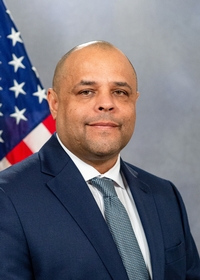
Rep. José Giral
Sponsored bills
Maddy summaryHB 792 amends Pennsylvania's Public School Code to require the State Board of Education to collect data on how schools teach Holocaust, genocide, and human rights violations. Starting after the 2025-2026 school year, the State Board must annually request schools to report on whether they offer such instruction, the curriculum used, teacher training participation, and details like grade levels and instructional hours. Every five years, the State Board must issue a report to the Governor, Education Secretary, and legislative education committee chairs, including statistics on school participation and recommendations for improvement. The bill does not mandate specific curriculum content but establishes a reporting system to track existing educational practices.
Maddy summaryHB 776 requires Pennsylvania high school students to score at least 60% on a civic knowledge assessment to graduate or earn a general equivalency diploma, starting in the 2028-2029 school year. The bill amends the Public School Code to add this graduation requirement, which applies to all students except those with an individualized education program (IEP) if their IEP specifies an exemption. The assessment measures knowledge of civic topics like government structure and citizenship. This policy directly affects all Pennsylvania public high school students seeking graduation or a general equivalency diploma.
Maddy summaryHB 790 requires Pennsylvania hospitals with emergency departments to provide abortion services when an individual has an emergency medical condition that necessitates an abortion to stabilize their health. This applies to all hospitals in the state with emergency departments, directly affecting those facilities and the patients seeking emergency care. The bill defines "emergency medical condition" to include life-threatening situations like ectopic pregnancy, preeclampsia, or complications from pregnancy loss, requiring hospitals to offer the service unless the patient or their legal representative refuses after being informed of risks and benefits. Hospitals must take reasonable steps to secure written consent for refusal to ensure compliance. The law takes effect 60 days after enactment.
Maddy summaryHB 747 increases the debt limit for Pennsylvania's Business in Our Sites Program from $300 million to $375 million under the Commonwealth Financing Authority. This change directly affects the program, which supports business development on underutilized sites across the state. The bill amends Section 1543(b)(1) of Title 64 to allow the authority to incur higher aggregate indebtedness for this specific program. The amendment takes effect 60 days after enactment.
Maddy summaryThis House Resolution designates February 28, 2025, as "HIV is Not a Crime Awareness Day" in Pennsylvania. It does not create new laws but formally recognizes the issue of HIV criminalization - where individuals with HIV face criminal charges for non-disclosure or conduct that would not be prosecuted if they did not have HIV. The resolution highlights how such laws increase stigma, disproportionately impact marginalized groups (including people of color, women, and LGBTQ+ individuals), and contradict current public health knowledge that undetectable HIV cannot be transmitted. The designation aims to raise awareness and encourage education about HIV treatment, prevention, and the need to address outdated criminal laws.
Maddy summaryHB 786 changes Pennsylvania's educational gratuity program to require only one year of Pennsylvania residency immediately before applying, down from the previous five-year requirement. The program provides financial assistance to children of disabled or deceased veterans who are between 16 and 23 years old. This amendment, effective 60 days after enactment, simplifies eligibility by reducing the residency threshold for qualifying applicants.
Maddy summaryHB 775 creates tax credits for Pennsylvania businesses hiring "phoenix employees" (workers who were out of the workforce for two years or received a 50%+ pay increase) in high-demand occupations. Companies can claim a credit equal to twice the state personal income tax rate on qualifying employees' earnings, applied against corporate, franchise, or personal income taxes. The bill limits annual credits to $150,000 in the first year, $300,000 in the second, and $450,000 thereafter, with $15 million allocated for the first year. Businesses must commit to retaining employees for three years and maintaining operations in Pennsylvania for five years to qualify. The credit directly affects employers in high-demand fields and workers reentering the workforce after extended gaps.
Maddy summaryHB 778 establishes a three-year pilot program to increase pre-kindergarten (Pre-K) teacher salaries in Pennsylvania to match those of elementary school teachers with similar qualifications. It directly affects Pre-K teachers working in programs located in high-poverty areas (school districts with ≥20% poverty or census tracts at ≤80% of the statewide median poverty level). The program requires the Department of Education to calculate salary gaps using a specific formula, provide subsidies to eligible Pre-K programs to close those gaps, and collect data for a legislative report. The bill mandates strict use of funds solely for teacher salary increases and includes requirements for reporting program outcomes to the legislature.
Maddy summaryHB 780 creates a tuition assistance program for early childhood educators in Pennsylvania. It provides grants to cover tuition costs (minus other financial aid) for individuals pursuing associate degrees or certifications in early childhood education, targeting those earning under 400% of the federal poverty level, enrolled in at least six credit hours per semester, and working 25+ hours weekly in approved early childhood programs. Recipients must agree to work in Pennsylvania early childhood education for two years after completing their program. Funding comes from a new state fund, with annual reports tracking enrollment, retention, wages, and job demand. The program aims to support workforce development in early childhood education through financial assistance tied to service commitments.