

Maddy summaryHB 818 creates a program allowing first-time homebuyers in the Commonwealth to open state-backed savings accounts for down payments and closing costs. It establishes a dedicated First-time Homebuyer Savings Account Fund and requires the Treasury Department to manage the program and allocate funds. The bill directly affects eligible first-time homebuyers by providing a new savings mechanism for housing costs. Key provisions include the fund's creation, Treasury's administrative duties, and the structure for account access.
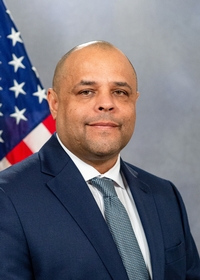
Rep. José Giral
Sponsored bills
Maddy summaryHB 500 repeals existing tax credit provisions for local resource manufacturing (petrochemicals/fertilizers) and Pennsylvania milk processing, while creating new tax credits for clean energy and advanced manufacturing sectors. It establishes tax credits for reliable energy investments, regional clean hydrogen hubs, semiconductor manufacturing, biomedical research, geothermal energy, and sustainable aviation fuel. Eligible businesses must meet specific criteria for capital investment, job creation, and project location to apply for these credits through the Department of Revenue. The bill also updates definitions and application processes for these new credits, with annual funding limits and rules for credit usage.
Maddy summaryHB 433 requires health insurance plans to cover mammograms and breast imaging services without cost-sharing (like copays or deductibles) for policyholders. It directly affects women needing preventive breast cancer screenings and the insurance companies providing health coverage. The bill amends Pennsylvania’s 1921 Insurance Company Law to mandate this coverage for mammographic examinations and breast imaging under casualty insurance policies. This policy change ensures these essential preventive services are fully covered at no additional cost to patients.
Maddy summaryHB 1488 amends Pennsylvania's Election Code to change when proposed constitutional amendments must be voted on by voters. It requires that such amendments be submitted at the first general election occurring at least three months after both legislative chambers approve the amendment, removing the option for municipal elections. This affects state lawmakers who propose constitutional amendments and voters who will cast ballots on these measures. The bill does not alter the content of amendments or voting rules, only the timing and type of election used for their submission.
Maddy summaryHB 1486 would change bail rules for defendants charged with illegal firearm offenses in Pennsylvania's largest cities (like Philadelphia and Pittsburgh). It requires defendants to pay only 10% of the full bail amount for a first offense, 50% for a second offense, and 100% for third or subsequent offenses to be released while awaiting trial. The bill applies specifically to charges under Pennsylvania's firearm laws (18 Pa.C.S. § 61) in cities of the first class. It does not alter the underlying firearm laws but modifies the bail payment structure for these cases. The bill is currently pending in committee and has not yet become law.
Maddy summaryHB 1490 creates a pilot program allowing eligible Certified Registered Nurse Practitioners (CRNPs) to practice independently in Pennsylvania's health professional shortage areas. To qualify, CRNPs must hold a current license, have no disciplinary actions in the past five years, and complete 3,600 hours of collaborative practice with a physician in primary care (family, internal medicine, gynecology, or pediatrics) within the last five years. Under the program, participating CRNPs can prescribe medications and practice without a collaborative agreement in shortage areas, but must disclose their non-physician status to patients and notify the board if they change practice settings. The program requires biennial renewal with 10 hours of additional patient safety continuing education and limits practice to primary care within designated shortage areas.
Maddy summaryHB 1471 amends Pennsylvania's Tax Reform Code to adjust how residents can claim credits for income taxes paid to other states or territories (including U.S. territories, Puerto Rico, and the District of Columbia) on income also subject to Pennsylvania tax. The bill limits the credit to the proportion of Pennsylvania tax corresponding to the income taxed by the other jurisdiction, preventing credits that exceed Pennsylvania's tax liability. It also simplifies documentation by allowing taxpayers to submit a certified statement instead of full copies of their state tax returns to verify tax paid. This change applies to taxable years beginning after December 31, 2021.
Maddy summaryHB 1487 requires county boards of elections in first-class counties to establish an additional polling place inside county prisons for individuals who register their residence at the prison. It clarifies that incarcerated people (for misdemeanor or summary offenses) in these counties may choose to register and vote at the prison or use absentee ballots, without changing voting eligibility. The bill does not alter who can vote but adds a new in-person voting option for eligible incarcerated individuals. The changes take effect 60 days after enactment.
Maddy summaryHB 1484 increases Pennsylvania jury compensation to a flat $40 per day for all days jurors serve, replacing the previous tiered rate ($9 for first three days, $25 after). It also sets a travel allowance of 17¢ per mile circular (with no allowance in the first judicial district) and allows county commissioners to choose how jurors receive payments (e.g., check, debit card), without changing the compensation amount. The bill directly affects all Pennsylvanians summoned to serve on juries statewide. It makes no changes to eligibility or jury service requirements, only to payment structure and methods.
Maddy summaryHB 789 amends Pennsylvania's Property Assessed Clean Energy Program to include electric vehicle charging infrastructure as a qualifying project for financing. It defines "electric vehicle charging infrastructure project" as equipment for charging electric vehicles and expands the program to cover such installations alongside energy efficiency, renewable energy, and water conservation projects on commercial, agricultural, and industrial properties. The bill requires local governments to notify the Department of Revenue upon project completion, providing details and property owner contact information to ensure proper tax collection for electric vehicle charging. This update aims to streamline financing access for clean energy improvements while clarifying administrative requirements for local and state agencies.