

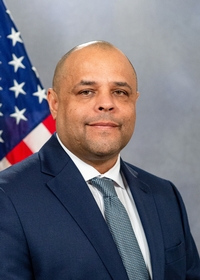
Photo of José Giral
D Pennsylvania House · District 180 On the 2026 ballot

Rep. José Giral

Compare
Total votes
3,118
all sessions
Attendance
100%
of floor votes
Near the chamber average
With party
99%
of cast votes
Near the chamber average
Bipartisan score
0%
crosses aisle rarely
Near the chamber average
Sponsored
1,537
bills & resolutions
Higher than 97% of chamber peers
Committees
5
assignments
1,537 bills and resolutions

Sponsored bills

Total
1,537
Primary
26
Co-sponsor
1,511
This page
1,537
matching current filters
Co-sponsor HB 926
Passed · Pennsylvania House · Co-sponsor
An Act providing for violence prevention committees in health facilities, for duties of committees, for workplace violence reporting requirements and for powers and duties of the Department of Labor and Industry; and imposing fines and administrative penalties.

Maddy summaryHB 926 requires healthcare facilities to establish violence prevention committees to address workplace violence. These committees must develop safety plans, and facilities must report violent incidents to the Department of Labor and Industry. The Department gains authority to enforce compliance, impose fines, and issue administrative penalties for violations. This bill directly affects hospitals, clinics, and all healthcare workplaces covered under state labor regulations.

Passed May 22, 2025 1 co-sponsor
Co-sponsor HB 1062
Passed · Pennsylvania House · Co-sponsor
An Act amending Title 53 (Municipalities Generally) of the Pennsylvania Consolidated Statutes, in neighborhood blight reclamation and revitalization, providing for State blight data collection system; and establishing the Property Maintenance Code Serious Violations Registry and the Property Maintenance Code Serious Violations Registry Account.

Maddy summaryHB 1062 creates a statewide system for tracking neighborhood blight by requiring municipalities to collect data on property maintenance violations. It establishes a Property Maintenance Code Serious Violations Registry to list properties with repeated severe maintenance issues and a dedicated funding account to support blight remediation efforts. The bill directly affects Pennsylvania municipalities, property owners, and landlords in areas designated as blighted, providing local governments with standardized data to target enforcement. Key provisions include mandatory data collection by cities/towns, a centralized registry for serious violations, and dedicated funding through the new account to aid property rehabilitation. If enacted, this would standardize blight reporting and funding across Pennsylvania communities.

Passed May 22, 2025 1 co-sponsor
Co-sponsor HB 1263
Passed · Pennsylvania House · Co-sponsor
An Act establishing the Keystone Saves Program, the Keystone Saves Program Fund, the Keystone Saves Administrative Fund and the Keystone Saves Program Advisory Board; and providing for powers and duties of the Treasury Department, for investment and fiduciary responsibilities and for program implementation.

Maddy summaryHB 1263 establishes Pennsylvania's Keystone Saves Program, creating a state-run savings initiative for low-to-moderate income residents. The bill sets up a dedicated program fund and administrative fund managed by the Treasury Department, which will handle investments while adhering to fiduciary responsibilities. An advisory board will oversee program implementation and ensure it meets the needs of participants. This program directly affects eligible Pennsylvanians by providing a structured savings option, with the Treasury Department responsible for managing funds and investments.

Passed May 22, 2025 1 co-sponsor
Co-sponsor HB 393
Passed · Pennsylvania House · Co-sponsor
An Act amending the act of May 1, 1933 (P.L.103, No.69), known as The Second Class Township Code, in taxation and finance, further providing for township and special tax levies.

Maddy summaryHB 393 amends Pennsylvania's Second Class Township Code to increase annual tax limits for fire and ambulance services. It raises the maximum fire tax rate from 3 mills to 10 mills and ambulance tax from 0.5 mills to 5 mills, allowing townships to fund equipment, training, and emergency services. Townships can use up to half the revenue for staff salaries (with board approval) and must seek voter approval if rates exceed these new limits. This directly affects second-class townships needing to finance local fire and ambulance operations under the code.

Passed May 22, 2025 1 co-sponsor
Co-sponsor HB 140
In committee · Pennsylvania House · Co-sponsor
An Act amending the act of December 17, 1968 (P.L.1224, No.387), known as the Unfair Trade Practices and Consumer Protection Law, further providing for definitions.

Maddy summaryHB 140 amends Pennsylvania's Unfair Trade Practices and Consumer Protection Law to add specific definitions related to algorithmic rent-setting software. The bill defines "unfair methods of competition" to include using software that analyzes rental data (like historical prices or occupancy rates) to recommend rent amounts, lease terms, or occupancy levels for residential or commercial properties. Landlords using such software would be directly affected, as its use could now be considered an unfair practice under the law. The definition explicitly excludes aggregated rental reports published monthly and tools used for affordable housing program compliance.

In committee May 22, 2025 1 co-sponsor
Co-sponsor HB 67
Passed · Pennsylvania House · Co-sponsor
An Act amending Title 68 (Real and Personal Property) of the Pennsylvania Consolidated Statutes, in management of the condominium, providing for outdoor solar access for drying clothes; in management of cooperatives, providing for outdoor solar access for drying clothes; and, in management of planned community, providing for outdoor solar access for drying clothes.

Maddy summaryHB 67 allows residents in Pennsylvania condominiums, cooperatives, and planned communities to hang clothes outside to dry using sunlight, removing restrictions that previously prohibited this practice. The bill amends property management rules under Title 68 to explicitly permit "outdoor solar access for drying clothes" as a resident right. This change directly affects homeowners and renters in these housing types by giving them a new option for laundry without needing special permission from management. The policy focuses solely on enabling this specific practice through updated statutes, with no other provisions or financial impacts described.

Passed May 22, 2025 1 co-sponsor
Co-sponsor HB 937
Passed · Pennsylvania House · Co-sponsor
An Act amending Title 16 (Counties) of the Pennsylvania Consolidated Statutes, in coroner, further providing for fees for reports.

Maddy summaryHB 937 amends Pennsylvania's county statutes to establish specific fee amounts that coroners may charge for death investigation reports. It directly affects county coroners and individuals or entities requiring these official reports, such as families or legal representatives. The bill sets new, fixed fee schedules for coroner reports under Title 16 of the Pennsylvania Consolidated Statutes, replacing prior unspecified or variable fee structures. This change provides clarity on billing for a routine administrative service within county government operations.

Passed May 22, 2025 1 co-sponsor
Co-sponsor HB 359
Passed · Pennsylvania House · Co-sponsor
An Act amending the act of July 11, 1990 (P.L.465, No.113), known as the Tax Increment Financing Act, further providing for definitions, for powers of authorities, for creation of tax increment districts and approval of project plans and for financing of project costs.

Maddy summaryHB 359 amends Pennsylvania's Tax Increment Financing (TIF) Act to update definitions, clarify authority powers, and streamline the process for creating tax increment districts and approving project plans. It directly affects local development authorities and project developers seeking TIF funding for community redevelopment projects. Key changes include modifying how districts are established, requiring specific project plan approvals, and detailing how project costs are financed using future tax revenue growth within the district. The bill aims to modernize the TIF framework to support economic development initiatives.

Passed May 22, 2025 1 co-sponsor
Co-sponsor HB 504
Passed · Pennsylvania House · Co-sponsor
An Act providing for community energy facilities; imposing duties on the Pennsylvania Public Utility Commission, electric distribution companies and subscriber organizations; and providing for prevailing wage and labor requirements.

Maddy summaryHB 504, the Community Energy Act, establishes a framework for third-party-owned community energy projects (like solar gardens) in Pennsylvania. It requires electric distribution companies to connect these facilities, provides bill credits to subscribers (homeowners, renters, and businesses) for energy generated, and ensures guaranteed savings by linking subscription payments to bill reductions. Key provisions include setting size limits (max 5,000 kW for most facilities), mandating that at least 50% of subscriptions come from small users or farms, and requiring fair wages for construction workers. The bill directly affects electric companies (with new connection duties), community energy organizations (as owners/operators), and subscribers (who gain access to shared renewable energy).

Passed May 22, 2025 1 co-sponsor
Co-sponsor HB 721
Passed · Pennsylvania House · Co-sponsor
An Act amending the act of October 13, 2010 (P.L.506, No.72), known as the Construction Workplace Misclassification Act, further providing for definitions, for improper classification of employees and for criminal penalties; providing for private right of action; further providing for administrative penalties, for retaliation for action prohibited, for availability of information, for use of penalty funds and for funding; and imposing penalties.

Maddy summaryHB 721 amends Pennsylvania's Construction Workplace Misclassification Act to strengthen protections for construction workers who are incorrectly classified as independent contractors instead of employees. The bill allows affected workers to file lawsuits against companies for misclassification and imposes criminal penalties for repeated violations, while also adding safeguards against employer retaliation for reporting violations. It expands administrative penalties for misclassification and requires that penalty funds be used to support enforcement efforts. This directly affects construction companies that misclassify workers and construction workers who lose benefits like overtime pay, health insurance, or workers' compensation due to improper classification.

Passed May 22, 2025 1 co-sponsor
Showing 451 to 460 of 1,537 bills
Previous 1 … 45 46 47 … 154 Next