

Maddy summaryHB 491 changes Pennsylvania law to allow both state juvenile courts and military courts to handle juvenile cases involving minors on military installations within the state. This applies directly to minors under 18 who commit offenses on bases like Fort Indiantown Gap or the Philadelphia Naval Yard. The key provision amends Title 42 of Pennsylvania law to establish concurrent jurisdiction, meaning either court system can take the case without requiring the other to defer. The bill became law on June 27, 2025, after approval by the governor. This policy change clarifies legal authority for juvenile matters on military property without altering the primary jurisdiction of military courts.
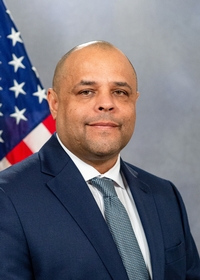
Rep. José Giral
Sponsored bills
Maddy summaryHB 355 amends Pennsylvania's criminal code to strengthen protections for minors by updating the offenses of "corruption of minors" and "unlawful contact with minor." The bill specifically targets adults who exploit or sexually exploit minors through interactions like grooming or inappropriate contact, making these acts clearer and more severe under state law. It directly affects minors (ages 12-17) and adults who engage in prohibited conduct with them, including online interactions. The law increases penalties for these offenses by clarifying prohibited behaviors and strengthening sentencing guidelines, now effective as Act No. 5 of 2025.
Maddy summaryHR 173 is a non-binding resolution urging Congress to establish a National Infrastructure Bank. It does not create new laws or funding but formally requests Congress take action to create this bank, which would provide financing for infrastructure projects. The resolution directly affects Congress itself, as it calls on the legislative body to initiate this specific action. This is a procedural measure with no immediate policy impact, as it only expresses a recommendation.
Maddy summaryHB 1564 amends the Human Services Code to change how copayments are calculated for subsidized child care programs. It directly affects low-income families who rely on state-funded child care assistance. The bill modifies the existing copayment structure but does not specify whether amounts increase, decrease, or change based on income tiers. This is a policy change to the public assistance system governing child care subsidies. (Note: The provided context does not detail the specific copayment changes, only the bill's purpose and referral history.)
Maddy summaryHB 1658 amends Pennsylvania's Recorder of Deeds Fee Law to change how counties charge for recording property documents like deeds and mortgages. It repeals the current fee schedule and establishes new fee structures for recording documents, while updating definitions related to these fees. The bill also modifies provisions for the County Records Improvement Fund and the county demolition fund, specifying how these funds are managed. This directly affects county offices that handle property records and individuals/businesses submitting documents for recording.
Maddy summaryHR 182 is a symbolic resolution recognizing June 2025 as "Scleroderma Awareness Month" and June 29, 2025, as "World Scleroderma Day" in Pennsylvania. It does not create new laws or policies but formally acknowledges scleroderma - a rare autoimmune disease affecting skin and internal organs - as part of a broader effort to raise public awareness. The resolution cites statistics about scleroderma's impact (e.g., affecting ~300,000 U.S. residents, with higher prevalence in women and African Americans) and highlights ongoing research in Pennsylvania. As a ceremonial resolution, it has no direct effect on healthcare access, funding, or legislation.
Maddy summaryHB 1610 amends Pennsylvania's corporate tax rules to change how businesses with multiple related entities (unitary businesses) calculate their state tax liability. Starting in 2026, these businesses will determine Pennsylvania tax based on their total sales within the state relative to their nationwide sales, using a new "water's-edge" apportionment method. The bill specifically revises definitions and tax calculation rules for corporations, including adjustments to how income from intercompany transactions is treated and how nonbusiness income is allocated. This primarily affects large corporations operating across state lines as unified business groups. The changes aim to align Pennsylvania's tax calculation with federal reporting requirements for such entities.
Maddy summaryThis bill modifies Pennsylvania's Human Services Code to change how medical providers are reimbursed for specific services provided to public assistance recipients. It updates reimbursement rules for certain medical items and services while replacing outdated regulations that conflicted with these changes. The primary effect is on healthcare providers who bill state assistance programs, streamlining the process for claiming payments. The bill does not create new benefits but adjusts existing reimbursement procedures under public assistance programs.
Maddy summaryThis resolution designates June 8, 2025, as "Lieutenant Colonel George Hardy Day" in Pennsylvania to honor his military service and community leadership. It specifically recognizes Lieutenant Colonel George Hardy, a Tuskegee Airmen veteran who flew 21 combat missions in WWII, later served in the Korean and Vietnam Wars, and received the Distinguished Flying Cross and Congressional Gold Medal. The resolution commemorates his 100th birthday and his post-military work mentoring pilots and supporting community organizations. As a ceremonial resolution, it has no policy impact beyond this symbolic recognition.
Maddy summaryHB 1347 establishes a framework for creating tourism improvement districts (TIDs) in local areas. These districts can collect special fees from participating businesses to fund tourism promotion, infrastructure, and marketing projects. The bill requires each TID to form a management association to oversee funds and operations, with mandatory annual financial audits. This directly affects local governments, tourism businesses within designated districts, and residents who may see changes to tourism-related services and facilities.