

Maddy summaryThis bill expands the authority of Pennsylvania's intermediate units to acquire and lease property for school facilities and establishes a funding mechanism for these capital projects. It creates a program that allows nonpublic schools to receive grants for safety and security enhancements, which can be used for violence prevention, mental health initiatives, and hiring security personnel. Additionally, the legislation sets a minimum funding level for these targeted grants and clarifies that intermediate units can only use a small percentage of the funds for administrative costs.
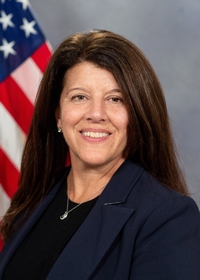
Rep. Lisa Borowski
Sponsored bills
Maddy summaryThis bill updates Pennsylvania's laws regarding abandoned and unclaimed property to improve how the state finds original owners. It requires the Treasury Department to work with state agencies like the Department of Revenue and the Department of State to share data and verify owner information at least once a year. These changes aim to make the process of locating owners more efficient by formalizing cooperation between different government departments. The legislation also includes provisions for handling income earned after property is paid out and establishes penalties for non-compliance.
Maddy summaryThis bill updates Pennsylvania laws to clarify how medical records can be obtained and the fees associated with them. It directly affects patients, their attorneys, and healthcare providers by setting specific prices for copying and retrieving medical charts. Under the new rules, patients and their representatives can access their own records without needing a subpoena, while other parties must pay a set fee for search, retrieval, and copying services. The act also establishes different rates for paper copies versus electronic records and requires these fees to be adjusted annually based on inflation.
Maddy summaryThis Pennsylvania bill establishes a new program to manage the collection and recycling of portable batteries, directly affecting manufacturers and retailers who sell these products in the state. It requires producers to create Battery Stewardship Plans that outline how they will collect used batteries, fund recycling efforts, and educate the public on proper disposal methods. The legislation defines specific battery types that must be included in the program, such as small rechargeable and primary batteries, while excluding larger batteries used in electric vehicles or solar power systems. Additionally, the bill mandates that the Department of Environmental Protection oversee the program, enforce performance standards, and impose penalties on those who fail to comply with the new rules.
Maddy summaryThis bill amends Pennsylvania's domestic relations laws to redefine marriage as a civil contract between two individuals, removing the previous legal requirement that it be between one man and one woman. It directly affects couples by eliminating state barriers to same-sex marriage and repeals the specific provision that declared such unions void within the Commonwealth. The legislation also updates the statutory definition of marriage to reflect this inclusive language while removing the section that stated it was public policy to restrict marriage to opposite-sex couples.
Maddy summaryThis bill amends the Administrative Code to update definitions and powers for Pennsylvania's Energy Development Authority. It clarifies what counts as a "project" and "cost" for energy initiatives, specifically including expenses for energy audits, environmental surveys, and infrastructure resilience. The legislation also changes how the Authority's board is structured, reducing the number of governor-appointed members from nine to five and adjusting the voting requirements for board decisions. These changes aim to streamline the Authority's governance while expanding its scope to support various energy-related activities.
Maddy summaryThis bill updates Pennsylvania's historic preservation tax credit program by increasing the annual funding limit from $5 million to $20 million. It allows the Department of Community and Economic Development to award these tax credits on a first-come, first-served basis if the full amount is not claimed during the initial application window. The changes apply to fiscal years starting after June 30, 2025, and take effect immediately, providing more financial incentives for property owners and developers to restore historic buildings.
Maddy summaryThis Pennsylvania bill creates a new Alzheimer's, Dementia and Related Disorders Office within the Department of Aging to coordinate state efforts for people affected by these conditions. The office will oversee existing programs, identify service gaps, manage grants, and update the state's strategic plan every five years based on expert advice. To support this work, the law also establishes a large advisory committee made up of government officials, healthcare providers, researchers, and individuals with personal experience caring for those with dementia. This committee will guide the office's activities, review progress, and ensure that the state's approach remains current and effective.
Maddy summaryThis bill amends Pennsylvania's Election Code to regulate political spending by corporations, specifically targeting those with significant foreign ownership or influence. It defines a "foreign-influenced corporation" as one where a single foreign investor owns at least 1% of equity, multiple foreign investors collectively own 5% or more, or a foreign entity participates in political decision-making. Under the new rules, these specific corporations are prohibited from making any contributions or expenditures to support or oppose candidates, ballot measures, or political parties. To ensure compliance, any corporation making a political contribution must certify within seven days that it does not meet the foreign-influenced criteria, with penalties including fines up to $10,000 for individuals who violate these restrictions. The law explicitly excludes domestic corporations from these restrictions and does not limit news media reporting or editorial content.
Maddy summaryThis bill establishes an independent Office of Child Advocate within Pennsylvania's Human Services Code to protect the interests of children. The Governor will appoint a Child Advocate who must have at least six years of relevant experience and a bachelor's degree, and the office will operate independently of the department regarding decision-making. The Advocate and their staff are required to complete specific trainings on topics like trauma-informed care and crisis intervention, and they are designated as mandated reporters for suspected child abuse. Additionally, the bill defines the scope of child health, safety, and well-being programs, which include preventing abuse, providing foster care, and offering early intervention services.