

Maddy summaryThis bill expands the scope of practice for pharmacists in Pennsylvania by allowing them to administer injectable medications, biologicals, and immunizations to patients aged three and older. It establishes new requirements for training, parental consent for minors, and reporting procedures while also permitting pharmacists to delegate these tasks to specific healthcare professionals and qualified pharmacy technicians under strict supervision. Additionally, the legislation grants pharmacies with existing federal waivers the ability to perform certain laboratory tests for common illnesses like COVID-19 and the flu without adhering to some state clinical laboratory regulations.
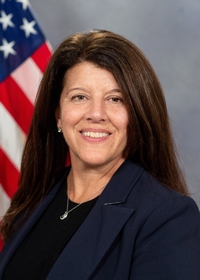
Rep. Lisa Borowski
Sponsored bills
Maddy summaryThis bill amends Pennsylvania's Liquor Code to prohibit liquor license holders from displaying alcoholic beverages next to nonalcoholic drinks that share similar brand names, logos, or packaging. To prevent consumer confusion, the law requires businesses to post clear and distinct signage identifying which products are alcoholic and which are not. The measure directly affects all individuals licensed to sell alcohol in the state by establishing this specific display restriction. It also defines "nonalcoholic beverages" as any product marketed or sold as anything other than an alcoholic beverage. The changes are set to take effect 60 days after the bill is enacted.
Maddy summaryThis Pennsylvania bill prohibits the intentional addition of perfluoroalkyl and polyfluoroalkyl substances, commonly known as PFAS, to a wide range of consumer products including cookware, cosmetics, food packaging, and artificial turf. While the law generally bans these chemicals, it allows for their use in specific items if the Department of Environmental Protection determines that no safer alternative exists and the chemical is critical for the product's function. The Department of Environmental Protection is tasked with enforcing these restrictions, managing a public database of PFAS information, and imposing penalties for violations.
Maddy summaryHB 2353 establishes civil liability for entities that use artificial intelligence or other automated systems to create deceptive campaign advertisements featuring current or former candidates. The bill defines "covered persons" as firms, political committees, foreign governments, and individuals acting on their behalf, while also clarifying that generative AI and synthetic content like deepfakes fall under these regulations. To avoid liability, covered persons must provide clear and conspicuous disclosures stating that an advertisement contains manipulated or generated content, with specific formatting requirements for text, video, and audio formats. If a covered person fails to provide such a disclosure and is found liable, the law requires the immediate removal of the advertisement and imposes financial penalties based on the jurisdiction where the candidate filed with election officials.
Maddy summaryThis bill updates Pennsylvania's Second Class City Firemen Relief Law to clarify membership rules and improve benefits for surviving spouses and children. It requires new members to sign an agreement forfeiting fund rights upon leaving the fire department and mandates that active members contribute six percent of their wages plus a one-dollar monthly fee, while retirees pay one dollar monthly. The legislation establishes specific death benefits, including a lump sum for all dues paid and monthly survivor payments for widows who die on duty, which continue for up to five hundred weeks or until remarriage. Additionally, it outlines how pensions are distributed to dependent children or parents if there is no surviving spouse, ensuring that total family benefits do not exceed fifty percent of the deceased member's salary.
Maddy summaryThis bill amends the Pennsylvania Pesticide Control Act to clarify that the state's pesticide regulations take precedence over local laws and ordinances. It allows the state secretary to delegate administrative duties to designated employees and establishes that municipalities cannot regulate pesticide registration, sale, or use unless those rules conflict with state law. However, the legislation creates a specific exception permitting cities with a population density of at least 300 people per square mile to ban commercial pesticide applications on private property in designated restricted areas. To assist local governments, the Department of Community and Economic Development is tasked with creating a sample ordinance within 120 days to guide municipalities exercising this new authority.
Maddy summaryThis bill amends Pennsylvania's Tax Reform Code to update the legal definitions of "compensation" and "domestic abuse" for personal income tax purposes. It clarifies that compensation includes various forms of payment like salaries, bonuses, and specific deferred income, while explicitly excluding items such as retirement benefits, unemployment aid, and reimbursements for actual expenses. The legislation also provides a new definition for "domestic abuse" that covers physical, psychological, sexual, emotional, and economic harm, including efforts to control or isolate a victim. These updated definitions will allow individuals who have experienced domestic abuse to access certain tax provisions, such as early withdrawal from retirement accounts, without facing standard penalties. The changes take effect 60 days after the bill is enacted.
Maddy summaryThis bill establishes the Microfiber Filtration Protection Act to require all washing machines sold or installed in Pennsylvania to include a built-in or in-line filter capable of capturing microfibers. The Environmental Quality Board must create regulations mandating these filters have a mesh size of 100 micrometers or smaller and display a consumer notice about checking and disposing of captured lint. Starting in 2030, manufacturers cannot sell non-compliant machines, and by 2031, installers cannot fit them unless they meet the new standards. The Department of Environmental Protection will enforce these rules through testing, inspections, and complaints, while charging manufacturers for any testing costs related to non-compliance.
Maddy summaryThis bill allows teachers in Pennsylvania who have voluntarily placed their teaching certificates on inactive status for at least seven years to take college courses for free or at a 50% discount. The State Board of Education will create and update a list of approved colleges offering these specific tuition-reduced credits every three years. To fund this program, the state will reimburse colleges annually for the waived tuition costs, with reports on enrollment numbers submitted to the General Assembly each June.
Maddy summaryThis bill requires Pennsylvania public schools to teach about the Holocaust, genocide, and human rights violations starting in the 2025-2026 school year. The instruction must total at least seven hours annually and be included within existing social studies and language arts classes. Additionally, the State Board of Education will study how schools are implementing this curriculum and create regulations to ensure compliance if most schools are not currently meeting the requirements.