

Maddy summaryHB 404 amends Pennsylvania's Insurance Company Law to extend health insurance coverage for children under family policies. It requires policies to cover dependent children up to age 26 (previously 19) and prohibits insurers from denying or restricting coverage based on a child's financial dependency, residency, marital status, school enrollment, or employment. The bill also allows group health plans to extend coverage for adult children up to age 29 if they meet specific conditions, such as not being married, having no dependents, and residing in Pennsylvania or attending school full-time. This affects all health insurance policies sold in Pennsylvania that provide dependent child coverage.
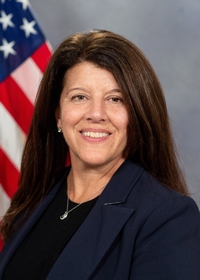
Rep. Lisa Borowski
Sponsored bills
Maddy summaryHB 1028 establishes a grant program to help small businesses affected by long-term public utility road construction projects. It provides financial assistance to qualified businesses (for-profit entities with 10 or fewer employees located in designated "construction mitigation zones" impacted by projects lasting over 90 days) to offset revenue declines caused by traffic disruptions, reduced access, or parking issues. Businesses must apply with proof of significant revenue loss, and grants are capped at actual documented losses or $15,000 per year. The Department of Community and Economic Development administers the program, prioritizes applications based on revenue decline severity and project duration, and requires annual public reporting of recipients and project details.
Maddy summaryHB 1036 adds a new exemption in Pennsylvania vehicle registration fees for active volunteer first responders. It allows volunteer emergency medical, fire, and rescue service members to pay a $10 processing fee instead of the full registration fee for vehicles they own and primarily drive while responding to emergencies. The exemption applies only to one passenger car or light truck per person and requires the volunteer to be the vehicle's owner and principal driver. This change directly affects volunteer emergency service organizations and their members who use personal vehicles for official emergency responses.
Maddy summaryThis bill proposes a constitutional amendment allowing counties (of first and second class) to create special property tax exemptions for longtime owner-occupants in neighborhoods where home values have risen significantly due to renovations or new construction nearby. It would let local governments establish uniform tax rules for these homeowners without increasing overall property tax rates to fund the exemptions. The amendment requires approval by the General Assembly and then a vote by Pennsylvania voters before taking effect.
Maddy summaryThis resolution (HR 138) orders Pennsylvania’s Joint State Government Commission to study civic education in the state and develop cost-effective recommendations to improve it. It directly affects Pennsylvania students and schools by requiring an analysis of current civics assessments (under Act 35 of 2018), comparisons with high-performing states, and strategies to strengthen civic education across three pillars: knowledge, skills, and action. The study must include evaluations of existing assessment methods, successful models from other states, and approaches to boost student engagement, with a report due within 18 months. The resolution does not change laws but aims to inform future policy based on evidence.
Maddy summaryThis resolution designates March 17, 2025, as "Bayard Rustin Day" in Pennsylvania. It honors Bayard Rustin, a key organizer of the 1963 March on Washington for Jobs and Freedom and a prominent civil rights leader who advocated for nonviolent activism, racial equality, and LGBTQ+ rights. The resolution does not create new laws or policies; it is a ceremonial designation to recognize Rustin's historical contributions. It directly affects Pennsylvania residents through official recognition of this date in state government communications and public events.
Maddy summaryHB 971 prohibits vehicles from stopping, standing, or parking in designated bicycle lanes, with an exception for temporarily stopping to avoid emergency vehicles. This rule directly affects drivers who might park or stop in bicycle lanes, such as in urban areas or near bike paths. The bill amends Pennsylvania's vehicle code (Title 75) by adding this specific prohibition to the existing "rules of the road" section. The amendment takes effect 60 days after enactment.
Maddy summaryHB 620 increases the recycling fee for waste processing facilities in Pennsylvania from $2 to $5 per ton. The bill directly affects operators of municipal waste landfills and resource recovery facilities, requiring them to pay this fee on all solid waste processed at their facilities or disposed of at landfills (excluding certain residues). The key provision amends Section 701(a) of the 1988 Municipal Waste Planning Act to set the new fee amount. The change takes effect 60 days after enactment.
Maddy summaryHB 966 amends Pennsylvania's Insurance Company Law of 1921 to strengthen consumer protections in health insurance. It requires insurance companies to pay penalties if over 50% of their denied health claims (excluding administrative denials) are later overturned through internal or external review processes. Penalties start at $50,000 for the first overturned claim and increase to $250,000 per claim for subsequent violations. Collected penalties must fund consumer protection activities, in addition to any other existing penalties. This directly affects health insurers operating in Pennsylvania.
Maddy summaryHB 362 amends Pennsylvania's 1929 Administrative Code to authorize the Energy Development Authority to administer federal funds from the Inflation Reduction Act of 2022 for the Solar for All Program. It directs the Authority to distribute funds for residential solar installations, storage, and upgrades to qualifying households across all Pennsylvania counties, prioritizing rural, suburban, and urban communities. The bill specifically prohibits using funds for solar panels or parts made with forced labor (defined as work performed under threat of penalty without voluntary consent) and requires the Public Utility Commission to protect non-participating ratepayers from cross-subsidization. This creates a clear administrative framework for implementing the federal program while adding labor and ratepayer safeguards.