

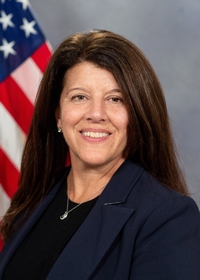
Photo of Lisa Borowski
D Pennsylvania House · District 168 On the 2026 ballot

Rep. Lisa Borowski

Contact Email Phone
Compare
Total votes
3,689
all sessions
Attendance
100%
of floor votes
Near the chamber average
With party
99%
of cast votes
Near the chamber average
Bipartisan score
0%
crosses aisle rarely
Near the chamber average
Sponsored
1,045
bills & resolutions
Higher than 87% of chamber peers
Committees
6
assignments
1,045 bills and resolutions

Sponsored bills

Total
1,045
Primary
38
Co-sponsor
1,007
This page
1,045
matching current filters
Co-sponsor HB 561
Passed · Pennsylvania House · Co-sponsor
An Act amending Title 61 (Prisons and Parole) of the Pennsylvania Consolidated Statutes, in Nonnarcotic Medication Assisted Substance Abuse Treatment Grant Pilot Program, further providing for definitions, repealing provisions relating to establishment of pilot program, providing for establishment and further providing for county participation requirements, for use of grant funding, for powers and duties of department, for report to General Assembly and for construction; imposing duties on the Pennsylvania Commission on Crime and Delinquency; and making an editorial change.

Maddy summaryThis bill updates Pennsylvania's pilot program for non-narcotic medication-assisted treatment (MAT) in prisons and parole settings. It removes outdated rules about the program's establishment, clarifies requirements for county participation, and specifies how grant funds can be used for treatment services. The Pennsylvania Commission on Crime and Delinquency gains new duties to oversee the program, and the bill includes administrative updates to the state statutes governing it. The changes directly affect counties administering the pilot program and individuals in prison or parole under the MAT initiative.

Passed May 22, 2025 1 co-sponsor
Co-sponsor HB 79
Passed · Pennsylvania House · Co-sponsor
An Act establishing requirements for hospital-based financial assistance; providing for hospital-based financial assistance forms, for information about hospital-based financial assistance programs and for reporting of hospital-based financial assistance policies; and imposing duties on the Department of Health.

Maddy summaryHB 79 requires hospitals to establish clear financial assistance programs for patients who cannot afford care, including standardized forms and easily accessible information about eligibility and coverage. It mandates that hospitals publicly share details about their financial aid policies and report their program rules to the Department of Health. These requirements directly affect hospitals operating in the state and patients seeking financial help with medical bills. The bill aims to standardize and increase transparency in hospital financial aid offerings.

Passed May 22, 2025 1 co-sponsor
Co-sponsor HB 926
Passed · Pennsylvania House · Co-sponsor
An Act providing for violence prevention committees in health facilities, for duties of committees, for workplace violence reporting requirements and for powers and duties of the Department of Labor and Industry; and imposing fines and administrative penalties.

Maddy summaryHB 926 requires healthcare facilities to establish violence prevention committees to address workplace violence. These committees must develop safety plans, and facilities must report violent incidents to the Department of Labor and Industry. The Department gains authority to enforce compliance, impose fines, and issue administrative penalties for violations. This bill directly affects hospitals, clinics, and all healthcare workplaces covered under state labor regulations.

Passed May 22, 2025 1 co-sponsor
Co-sponsor HB 1263
Passed · Pennsylvania House · Co-sponsor
An Act establishing the Keystone Saves Program, the Keystone Saves Program Fund, the Keystone Saves Administrative Fund and the Keystone Saves Program Advisory Board; and providing for powers and duties of the Treasury Department, for investment and fiduciary responsibilities and for program implementation.

Maddy summaryHB 1263 establishes Pennsylvania's Keystone Saves Program, creating a state-run savings initiative for low-to-moderate income residents. The bill sets up a dedicated program fund and administrative fund managed by the Treasury Department, which will handle investments while adhering to fiduciary responsibilities. An advisory board will oversee program implementation and ensure it meets the needs of participants. This program directly affects eligible Pennsylvanians by providing a structured savings option, with the Treasury Department responsible for managing funds and investments.

Passed May 22, 2025 1 co-sponsor
Co-sponsor HB 393
Passed · Pennsylvania House · Co-sponsor
An Act amending the act of May 1, 1933 (P.L.103, No.69), known as The Second Class Township Code, in taxation and finance, further providing for township and special tax levies.

Maddy summaryHB 393 amends Pennsylvania's Second Class Township Code to increase annual tax limits for fire and ambulance services. It raises the maximum fire tax rate from 3 mills to 10 mills and ambulance tax from 0.5 mills to 5 mills, allowing townships to fund equipment, training, and emergency services. Townships can use up to half the revenue for staff salaries (with board approval) and must seek voter approval if rates exceed these new limits. This directly affects second-class townships needing to finance local fire and ambulance operations under the code.

Passed May 22, 2025 1 co-sponsor
Primary HB 67
Passed · Pennsylvania House · Lead sponsor
An Act amending Title 68 (Real and Personal Property) of the Pennsylvania Consolidated Statutes, in management of the condominium, providing for outdoor solar access for drying clothes; in management of cooperatives, providing for outdoor solar access for drying clothes; and, in management of planned community, providing for outdoor solar access for drying clothes.

Maddy summaryHB 67 allows residents in Pennsylvania condominiums, cooperatives, and planned communities to hang clothes outside to dry using sunlight, removing restrictions that previously prohibited this practice. The bill amends property management rules under Title 68 to explicitly permit "outdoor solar access for drying clothes" as a resident right. This change directly affects homeowners and renters in these housing types by giving them a new option for laundry without needing special permission from management. The policy focuses solely on enabling this specific practice through updated statutes, with no other provisions or financial impacts described.

Passed May 22, 2025 0 co-sponsors
Co-sponsor HB 504
Passed · Pennsylvania House · Co-sponsor
An Act providing for community energy facilities; imposing duties on the Pennsylvania Public Utility Commission, electric distribution companies and subscriber organizations; and providing for prevailing wage and labor requirements.

Maddy summaryHB 504, the Community Energy Act, establishes a framework for third-party-owned community energy projects (like solar gardens) in Pennsylvania. It requires electric distribution companies to connect these facilities, provides bill credits to subscribers (homeowners, renters, and businesses) for energy generated, and ensures guaranteed savings by linking subscription payments to bill reductions. Key provisions include setting size limits (max 5,000 kW for most facilities), mandating that at least 50% of subscriptions come from small users or farms, and requiring fair wages for construction workers. The bill directly affects electric companies (with new connection duties), community energy organizations (as owners/operators), and subscribers (who gain access to shared renewable energy).

Passed May 22, 2025 1 co-sponsor
Co-sponsor HB 500
Passed · Pennsylvania House · Co-sponsor
An Act amending the act of March 4, 1971 (P.L.6, No.2), known as the Tax Reform Code of 1971, in Pennsylvania Economic Development for a Growing Economy (PA EDGE) Tax Credits, repealing provisions relating to local resource manufacturing, providing for Reliable Energy Investment Tax Credit, repealing provisions relating to Pennsylvania milk processing and providing for Pennsylvania milk processing; in regional clean hydrogen hubs, further providing for definitions, for eligibility, for application and approval of tax credit, for use of tax credits and for applicability; in semiconductor manufacturing and biomedical manufacturing and research, further providing for definitions and for application and approval of tax credit and providing for geothermal energy and for sustainable aviation fuel; and, in application of Prevailing Wage Act, further providing for definitions.

Maddy summaryHB 500 repeals existing tax credit provisions for local resource manufacturing (petrochemicals/fertilizers) and Pennsylvania milk processing, while creating new tax credits for clean energy and advanced manufacturing sectors. It establishes tax credits for reliable energy investments, regional clean hydrogen hubs, semiconductor manufacturing, biomedical research, geothermal energy, and sustainable aviation fuel. Eligible businesses must meet specific criteria for capital investment, job creation, and project location to apply for these credits through the Department of Revenue. The bill also updates definitions and application processes for these new credits, with annual funding limits and rules for credit usage.

Passed May 22, 2025 1 co-sponsor
Co-sponsor HB 433
Passed · Pennsylvania House · Co-sponsor
An Act amending the act of May 17, 1921 (P.L.682, No.284), known as The Insurance Company Law of 1921, in casualty insurance, further providing for coverage for mammographic examinations and breast imaging.

Maddy summaryHB 433 requires health insurance plans to cover mammograms and breast imaging services without cost-sharing (like copays or deductibles) for policyholders. It directly affects women needing preventive breast cancer screenings and the insurance companies providing health coverage. The bill amends Pennsylvania’s 1921 Insurance Company Law to mandate this coverage for mammographic examinations and breast imaging under casualty insurance policies. This policy change ensures these essential preventive services are fully covered at no additional cost to patients.

Passed May 22, 2025 1 co-sponsor
Co-sponsor HB 1490
In committee · Pennsylvania House · Co-sponsor
An Act amending the act of May 22, 1951 (P.L.317, No.69), known as The Professional Nursing Law, providing for Certified Registered Nurse Practitioner Pilot Program.

Maddy summaryHB 1490 creates a pilot program allowing eligible Certified Registered Nurse Practitioners (CRNPs) to practice independently in Pennsylvania's health professional shortage areas. To qualify, CRNPs must hold a current license, have no disciplinary actions in the past five years, and complete 3,600 hours of collaborative practice with a physician in primary care (family, internal medicine, gynecology, or pediatrics) within the last five years. Under the program, participating CRNPs can prescribe medications and practice without a collaborative agreement in shortage areas, but must disclose their non-physician status to patients and notify the board if they change practice settings. The program requires biennial renewal with 10 hours of additional patient safety continuing education and limits practice to primary care within designated shortage areas.

In committee May 21, 2025 1 co-sponsor
Showing 361 to 370 of 1,045 bills
Previous 1 … 36 37 38 … 105 Next