

Maddy summaryHouse Resolution 513 directs the Legislative Budget and Finance Committee to study how outdated hospital regulations, which have not been updated in nearly 40 years, financially affect hospitals across Pennsylvania. The study will examine the number of overlapping rules, the administrative costs hospitals incur to comply, and the resources required to manage complex oversight structures. To assist with this review, the committee will form an advisory group that includes representatives from state agencies and hospitals of various types, including rural, urban, and suburban facilities. The committee is required to submit a report with its findings and recommendations within 12 months to relevant legislative leaders.
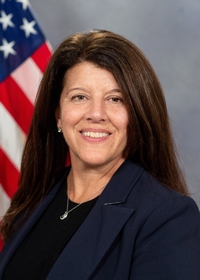
Rep. Lisa Borowski
Sponsored bills
Maddy summaryThis Pennsylvania House Resolution designates the week of May 10 through 19, 2026, as "Go Public Gardens Days" to encourage residents to visit public gardens. The measure directly affects botanical gardens, zoos, historical homes, parks, and other horticultural organizations across the state. By officially recognizing this period, the resolution aims to highlight the economic and community value of these spaces without mandating any specific actions or spending. The text describes public gardens as important destinations for recreation, education, and conservation that support thousands of jobs and millions of visitors annually.
Maddy summaryHB 2246 would require large data centers in Pennsylvania to report water usage and undergo environmental reviews before construction. It mandates pre-application notification to the Department of Environmental Protection (DEP), including detailed water use estimates, source assessments, and proof that withdrawals won’t harm other water users or water quality. The bill adds new permit conditions under the Clean Streams Law, requiring data centers to implement water conservation measures like closed-loop systems and water recycling. These provisions apply specifically to "covered data centers" (large facilities with significant water needs) and aim to protect local water resources while enabling data center development.
Maddy summaryHB 2176 would require Pennsylvania public and nonpublic schools to integrate social media literacy into their curriculum. The bill mandates that state academic standards include specific lessons on social media's mental, psychological, and physical impacts on students, its effects on learning, safe online behavior (including identifying cyberbullying and predatory activity), and personal device security. The Department of Education must develop educational materials and provide professional development for teachers on these topics. This bill directly affects all Pennsylvania schools, including public school districts, charter schools, and nonpublic schools, by adding concrete requirements to student learning standards.
Maddy summaryHB 41 amends Pennsylvania's Public School Code to establish a process for determining whether interscholastic athletic playoffs and championships should be separated for public schools (boundary schools) versus charter, parochial, or private schools (nonboundary schools). It requires the Pennsylvania Interscholastic Athletic Association (PIAA) to hold public meetings in each district, accept written testimony and public comments, and document all proceedings before making a decision. The bill mandates that the PIAA board must publicly discuss all relevant testimony, fiscal impacts, and sport-specific considerations before voting on the change or deciding no change is needed. The association must then provide a written decision with justification to the oversight committee within five days of the meeting. This bill affects all Pennsylvania schools participating in PIAA athletics by defining how decisions about playoff structures will be made.
Maddy summaryHB 72 amends Pennsylvania's 1951 Landlord and Tenant Act to create new protections for tenants facing domestic violence, sexual violence, or stalking. It defines "eligible tenants" as those who are victims themselves or have an immediate family/household member (living with them or within 1,000 feet) who is a victim of these specific violent acts. The bill requires landlords to provide safety options like changing locks or relocating tenants without penalty upon verification from an "attesting third party" (such as a police officer or victim advocate). This directly affects renters in these situations by ensuring they aren't unfairly evicted or penalized for seeking safety due to violence.
Maddy summaryThis bill requires health insurance policies and government programs in Pennsylvania to cover behavioral health services for children involved in the juvenile justice system. It mandates that insurers provide funding for screenings, assessments, and treatments related to mental health conditions and substance use disorders during specific legal proceedings, such as mandatory intake conferences and informal adjustments. The legislation also establishes clear definitions for terms like "behavioral health provider" and "screening" to ensure consistent application of these coverage requirements. By integrating mental health support into the juvenile justice process, the bill aims to address the needs of youth facing delinquency charges while maintaining a neutral focus on policy implementation.
Maddy summaryThis House Resolution honors the memory of five law enforcement officers who died in the line of duty in 2025. It specifically names Patrolman Andrew Duarte and Police Officers Mark Baker, Cody Becker, Isaiah Emenheiser, and Andy Chan, listing their departments and dates of death. The measure directs the Pennsylvania House of Representatives to express sympathy to the families and friends of these fallen officers. As a commemorative resolution, it does not create new laws or change existing policies.
Maddy summaryThis bill proposes allowing Pennsylvania to pay for special personal care services provided by a family member to a recipient of Medical Assistance. To make this possible, the state would need to request permission from the federal Centers for Medicare and Medicaid Services to cover these costs. The law specifies that the state cannot begin paying for these services until it receives approval from the federal government. The changes would take effect 180 days after the bill is signed into law.
Maddy summaryThis bill updates Pennsylvania laws to clarify how state grants are distributed to veterans' service officer programs. It requires designated organizations to submit detailed annual reports on their activities, budgets, and financial audits to state officials and legislative committees. The legislation also establishes rules for calculating grant amounts based on submitted spending plans and past performance, ensuring funds are prorated if the total budget is insufficient. These changes are designed to improve transparency and accountability for how veterans' service groups use public funding.