

Maddy summaryThis resolution (HR 138) orders Pennsylvania’s Joint State Government Commission to study civic education in the state and develop cost-effective recommendations to improve it. It directly affects Pennsylvania students and schools by requiring an analysis of current civics assessments (under Act 35 of 2018), comparisons with high-performing states, and strategies to strengthen civic education across three pillars: knowledge, skills, and action. The study must include evaluations of existing assessment methods, successful models from other states, and approaches to boost student engagement, with a report due within 18 months. The resolution does not change laws but aims to inform future policy based on evidence.
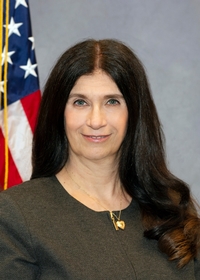
Rep. Kristine Howard
Sponsored bills
Maddy summaryHB 964, the Victims of Violence Safe Employment Act, provides eligible Pennsylvania employees with up to 160 hours of protected leave when they or a defined family member experience a "qualifying act" of violence - including domestic violence, sexual violence, stalking, or abuse of a vulnerable adult. Employers cannot retaliate against employees for taking this leave, and employees can sue if they face adverse actions like termination or demotion for using it. The bill defines "family member" broadly to include domestic partners, caregivers, and others with significant emotional ties, and "qualifying acts" cover both criminal and non-criminal violent conduct. It requires employers to allow the leave without penalty, with penalties for violations including fines and legal liability.
Maddy summaryHB 966 amends Pennsylvania's Insurance Company Law of 1921 to strengthen consumer protections in health insurance. It requires insurance companies to pay penalties if over 50% of their denied health claims (excluding administrative denials) are later overturned through internal or external review processes. Penalties start at $50,000 for the first overturned claim and increase to $250,000 per claim for subsequent violations. Collected penalties must fund consumer protection activities, in addition to any other existing penalties. This directly affects health insurers operating in Pennsylvania.
Maddy summaryHB 948 amends Pennsylvania's vehicle code to create specific rules for parking at electric vehicle (EV) charging stations. It prohibits non-electric vehicles from parking in spaces designated exclusively for EV charging unless the vehicle is actively charging. Violators face fines of $50-$200 (or $150 max without posted signage), and illegally parked vehicles may be towed after a sign indicates towing is permitted. This directly affects drivers who park in EV charging spots without using the charger. The law takes effect 60 days after enactment.
Maddy summaryThis resolution designates the week of May 18-24, 2025, as "Emergency Medical Services Week" in Pennsylvania. It formally recognizes emergency medical services (EMS) providers - including paramedics, first responders, dispatchers, and volunteers - for their 24/7 lifesaving work. The resolution has no policy or funding changes; it is purely a ceremonial acknowledgment of EMS teams' contributions to public health and safety. It directly affects Pennsylvania EMS personnel by honoring their service during this designated week.
Maddy summaryThis resolution designates April 29, 2025, as "22nd Amendment Day" in Pennsylvania. It commemorates Pennsylvania's ratification of the 22nd Amendment to the U.S. Constitution on April 29, 1947, which established presidential term limits. The resolution has no legal effect and serves only as a ceremonial observance. It does not alter any laws or impact any individuals or groups.
Maddy summaryThis Pennsylvania House resolution formally recognizes March 17, 2025, as "St. Patrick's Day" within the state. It acknowledges Irish Americans' military contributions during the Revolutionary War, citing historical records showing they comprised 40-50% of the Continental Army by 1778. The resolution has no legal effect or policy changes - it is purely ceremonial, celebrating cultural heritage. It directly affects Pennsylvanians of Irish descent (over 15% of the state's population) through this official recognition. The resolution does not alter any laws or provide funding.
Maddy summaryHB 939 amends Pennsylvania's Child Labor Act to include minors working as content creators (such as social media influencers, vloggers, and streamers) under the same protections as those in performing arts. The bill requires employers to establish a trust account holding at least 15% of a minor's earnings (above $2,500) for their benefit, managed by a fiduciary, with the parent or guardian setting up the account before employment. This applies when a minor's content creation is "substantial," defined as being the principal subject of the content or creating content for 10+ days in a 30-day period. The law directly affects minors in digital content creation and their employers, ensuring earnings are partially safeguarded for their future.
Maddy summaryHB 942 amends Pennsylvania's Game Commission law to change how full-time enforcement officers are paid. It requires that all full-time officers whose duty is to enforce game laws be classified for compensation "in the same manner as members of the Pennsylvania State Police." This change directly affects Game Commission enforcement officers by aligning their pay structure with State Police standards. The bill applies to compensation earned on or after its effective date, 60 days after enactment. (1-2 sentences as it's a procedural pay classification change.)
Maddy summaryHB 936 modifies Pennsylvania's child care subsidy program by reducing copayments for parents who work in the child care field. It requires that families where a parent or caretaker is employed as a child-care worker or direct support professional (in either family child-care homes or licensed centers) pay no more than 15% of their annual income for subsidized care, regardless of their income level. This change applies to all qualifying child care settings defined in the bill, including family child-care homes (serving 4-6 unrelated children) and centers (serving 7+ children). The policy aims to lower financial barriers for child care workers seeking subsidized care for their own children.