

Maddy summaryThis bill establishes the Municipal and Emergency Responder Solar Grant Program to provide financial assistance for solar energy projects at government facilities and emergency service locations such as fire stations and police departments. The Department of Environmental Protection will administer the program on a competitive basis, offering grants to cover costs like equipment purchase, installation, and energy storage. To receive funding, applicants must submit a detailed proposal that includes a site assessment and an affidavit confirming that all construction contractors meet specific licensing, insurance, and safety training requirements. The Department is also tasked with developing application guidelines, providing technical assistance, and creating educational materials to help eligible entities navigate the process.
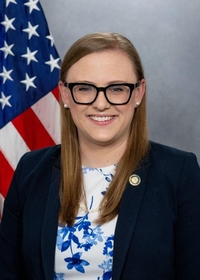
Rep. Jenn O'Mara
Sponsored bills
Maddy summaryThis bill expands the scope of practice for pharmacists in Pennsylvania by allowing them to administer injectable medications, biologicals, and immunizations to patients aged three and older. It establishes new requirements for training, parental consent for minors, and reporting procedures while also permitting pharmacists to delegate these tasks to specific healthcare professionals and qualified pharmacy technicians under strict supervision. Additionally, the legislation grants pharmacies with existing federal waivers the ability to perform certain laboratory tests for common illnesses like COVID-19 and the flu without adhering to some state clinical laboratory regulations.
Maddy summaryThis Pennsylvania bill prohibits the intentional addition of perfluoroalkyl and polyfluoroalkyl substances, commonly known as PFAS, to a wide range of consumer products including cookware, cosmetics, food packaging, and artificial turf. While the law generally bans these chemicals, it allows for their use in specific items if the Department of Environmental Protection determines that no safer alternative exists and the chemical is critical for the product's function. The Department of Environmental Protection is tasked with enforcing these restrictions, managing a public database of PFAS information, and imposing penalties for violations.
Maddy summaryThis bill amends the Pennsylvania Pesticide Control Act to clarify that the state's pesticide regulations take precedence over local laws and ordinances. It allows the state secretary to delegate administrative duties to designated employees and establishes that municipalities cannot regulate pesticide registration, sale, or use unless those rules conflict with state law. However, the legislation creates a specific exception permitting cities with a population density of at least 300 people per square mile to ban commercial pesticide applications on private property in designated restricted areas. To assist local governments, the Department of Community and Economic Development is tasked with creating a sample ordinance within 120 days to guide municipalities exercising this new authority.
Maddy summaryThis bill expands Pennsylvania's existing Freedom to Breastfeed Act by requiring all state-owned buildings to provide dedicated nursing rooms for employees and the public. Under the new rules, the Department of General Services must ensure these rooms meet specific standards, including a minimum size of 80 square feet, a lockable door, privacy features, and amenities like a sink, electrical outlet, and refrigerator where possible. The department is also tasked with creating a publicly available online list of these room locations and posting signage to guide visitors to them. These changes apply to any building under the control of the Department of General Services or administered by other executive agencies. The legislation will take effect one year after it is passed.
Maddy summaryThis bill designates Allegheny River Boulevard in western Pennsylvania as an official scenic byway to recognize its scenic, historic, and recreational value. The primary mechanism of the law restricts the placement of outdoor advertising signs near the road to preserve the visual quality of the route, with specific distance limits and exceptions for official signs, real estate listings, and directional markers. Additionally, the legislation requires state travel maps to highlight this route and explain the reasons for its designation. The changes directly affect property owners along the corridor and state agencies responsible for transportation and tourism mapping.
Maddy summaryThis bill creates the Maternal Care Access Program within the Pennsylvania Department of Health to improve maternal health outcomes by directing resources to underserved areas. The legislation defines specific terms like "maternity care desert" and "at-risk" zones based on the availability of obstetric care, birth centers, and medical providers. It authorizes the department to distribute funds to birth centers, obstetrician-gynecologists, certified nurse midwives, and hospitals located in designated zones that lack adequate care options. Additionally, the bill establishes criteria for identifying distressed hospitals and outlines various health and social indicators used to assess maternal vulnerability.
Maddy summaryThis bill amends Pennsylvania's Health Care Facilities Act to change licensing requirements specifically for abortion facilities. It removes the mandate that these facilities must have transfer agreements with nearby hospitals and eliminates the requirement for physicians and medical staff working there to hold admitting privileges at a hospital. Additionally, the legislation repeals an existing state regulation related to these licensing standards. These changes directly impact how abortion clinics are regulated and the operational requirements for their medical staff.
Maddy summaryThis bill amends Pennsylvania's Human Services Code to update definitions related to child care and establish a new copayment system for families receiving subsidized child care. It clarifies terms such as "child care," "child-care center," and "family child-care home" to specify who is covered and under what conditions. Under the new rules, parents or caretakers must pay a portion of the child care cost based on their family's annual income, with a cap of fifteen percent. The legislation also provides special provisions for families where the parent or caretaker works as a child-care employee or a direct support professional, ensuring they remain eligible for subsidies regardless of income level while still requiring a capped copayment.
Maddy summaryThis bill creates a new state program that allows Pennsylvania municipalities to establish special zoning districts designed to encourage higher-density housing near transit hubs and existing commercial areas. To qualify for financial incentives, towns must adopt specific zoning rules that permit mixed-use developments and affordable housing while meeting minimum requirements for open space and infrastructure. The legislation establishes a dedicated fund to provide one-time payments to municipalities for each new housing unit built within these approved districts, aiming to increase attainable housing stock. Local governments directly affected by this law would need to submit detailed plans outlining their housing goals and development strategies to the Department of Community and Economic Development for approval.