

Maddy summaryHB 942 amends Pennsylvania's Game Commission law to change how full-time enforcement officers are paid. It requires that all full-time officers whose duty is to enforce game laws be classified for compensation "in the same manner as members of the Pennsylvania State Police." This change directly affects Game Commission enforcement officers by aligning their pay structure with State Police standards. The bill applies to compensation earned on or after its effective date, 60 days after enactment. (1-2 sentences as it's a procedural pay classification change.)
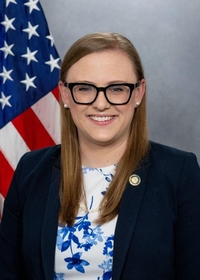
Rep. Jenn O'Mara
Sponsored bills
Maddy summaryHB 950 amends Pennsylvania's 1921 Insurance Company Law to regulate long-term care insurance premiums. It prohibits insurers from increasing premiums based on the policyholder's age or how long they've held the policy, and caps annual renewal increases at 15% of the prior year's premium. The state insurance commissioner must disapprove increases deemed excessive, unjustified, or unfairly discriminatory, or if they exceed the 15% annual cap. Insurers may request a higher increase (over 15%) only if they demonstrate unexpected high usage of policy benefits, with commissioner approval. This directly affects long-term care policyholders and insurers operating in Pennsylvania.
Maddy summaryHB 922 requires health insurance plans in Pennsylvania to cover fertility preservation services, such as freezing eggs, sperm, or embryos, without cost-sharing (like deductibles or copays). This applies to individuals under 45 at risk of infertility due to medical treatments (e.g., cancer therapy), including covered spouses and dependents. The bill mandates coverage for specific services like storage, consultations, embryo transfers, and related diagnostics, while prohibiting preexisting condition exclusions or arbitrary limits on coverage. It also requires storage coverage for five years (or until age 18 for minors) and aligns with medical guidelines from the American Society for Reproductive Medicine.
Maddy summaryHB 111 prohibits life insurance companies in Pennsylvania from denying coverage, limiting benefits, or charging higher rates to applicants or policyholders solely because they have been prescribed an opioid overdose reversal agent (like naloxone). The bill directly affects individuals who use these medications, including those with opioid use disorder or at risk of overdose. It defines "adverse action" to include these discriminatory practices and makes such actions violations of existing laws against unfair insurance practices. The law takes effect 60 days after enactment.
Maddy summaryHB 899 requires Pennsylvania employers to provide workers with paid sick leave for their own health needs or to care for family members. Employees earn one hour of paid sick time for every 30 hours worked, with a minimum annual accrual of 40 hours. The law prohibits employers from retaliating against workers who use this leave and mandates clear posting of rights. It covers most private-sector employees (excluding federal workers) and applies to all employers with 15+ employees in Pennsylvania, effective upon enactment.
Maddy summaryHB 894 establishes the Veterans Entering the Sustainability Sector Program (VETSS) to help veterans enter jobs in renewable energy and environmental sectors. The bill creates a Veterans Entering the Sustainability Sector Fund to provide grants to eligible employers - businesses focused on renewable energy (like solar, wind, or bioenergy) that hire veterans who completed approved apprenticeship training in fields such as electrician work, solar installation, or environmental maintenance. The Department of Community and Economic Development will administer the program, overseeing training development and grant applications. This directly affects veterans seeking sustainability-sector careers and employers in renewable energy who hire them, with the goal of addressing environmental concerns like climate change through workforce development.
Maddy summaryThis resolution designates March 18, 2025, as "National Transit Worker Appreciation Day" in Pennsylvania. It recognizes the work of approximately 16,800 public transit employees (including bus/train operators, drivers, and maintenance staff) who support over 237 million annual trips for Pennsylvania residents. The resolution does not create new laws or funding but encourages the public to thank transit workers for their role in connecting communities to jobs, healthcare, and education. It specifically highlights concerns about safety risks transit workers face, including recent incidents of violence. The resolution is symbolic and non-binding, limited to Pennsylvania's House of Representatives.
Maddy summaryHB 878 amends Pennsylvania's DUI laws to clarify that using medical marijuana legally under the Medical Marijuana Act is not a defense for driving under the influence, except for commercial drivers. It directly affects medical marijuana patients who drive non-commercial vehicles by allowing their legal medical use to be raised as a defense in DUI cases. The bill adds "medical marijuana" to statutory definitions and modifies Section 3802(h) to explicitly state this use is a defense, while Section 3810 confirms authorized medical use isn't a defense unless specified in the new exception. This change does not alter DUI laws for alcohol or other controlled substances, only clarifies the medical marijuana exception. The bill takes effect 60 days after enactment.
Maddy summaryHB 844 creates Pennsylvania's Housing Construction Loan Program and a dedicated Housing Construction Loan Fund under the Pennsylvania Housing Finance Agency. The program provides loans to eligible builders (those operating in Pennsylvania for at least three years) for constructing new homes sold to low- and moderate-income households, and to those households for financing such homes. Key provisions limit loans to 80% of a county’s median home price, cap terms at 15 years, and require all sales to remain affordable to target households. Funds for the program come from state appropriations, grants, and loan repayments, managed through the State Treasury.
Maddy summaryHB 831 establishes a 24-month moratorium on transferring hospital ownership to for-profit entities in Pennsylvania. It directly affects hospitals and health systems seeking to change ownership structures, pausing approvals for such transactions. The bill also requires the Joint State Government Commission to study for-profit hospital ownership patterns, including causes for their rise, cost/benefit comparisons with non-profits, and policy recommendations. The Commission must issue a report to state leaders within 18 months of the law's effective date. The moratorium and study requirements expire 24 months after the bill takes effect.