

Maddy summaryThis bill creates a new fee in Pennsylvania courts to help fund support services for children who are victims of specific sexual offenses and crimes against minors. When a person is convicted, pleads guilty, or enters a diversion program for these crimes, they must pay a fee ranging from $250 to $1,000 depending on the severity of the offense. The collected money goes into a state fund that the Pennsylvania Commission on Crime and Delinquency uses to provide grants to children's advocacy centers. Courts are required to allow defendants who cannot afford the fee to pay it in installments, and the bill ensures that any restitution owed to victims is paid before this fee is collected.
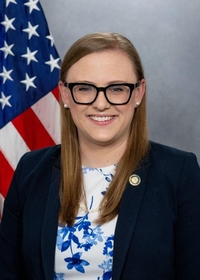
Rep. Jenn O'Mara
Sponsored bills
Maddy summaryHB 1346 amends Pennsylvania's Insurance Company Law to mandate coverage for menopause treatments in health insurance policies. This bill requires health insurance policies offered or renewed in the Commonwealth to provide coverage for both hormonal and non-hormonal treatments for menopausal symptoms. The required coverage includes FDA-approved drugs, devices, behavioral therapy, and treatments for menopause induced by a hysterectomy. This ensures individuals in Pennsylvania experiencing menopause or related symptoms have access to covered treatments, subject to the standard terms and conditions of their health insurance policy.
Maddy summaryHB 1460, the Health System Protection Act, requires health care entities (like hospitals and clinics) and certain investors (such as private equity firms) to obtain pre-approval from Pennsylvania's Department of Health and Attorney General before completing major transactions. This applies to sales of assets worth $10 million or more, ownership changes, or large financial distributions that could affect competition, costs, or access to care. The law prohibits transactions deemed "against the public interest," such as those reducing competition, raising prices, or limiting services in rural or low-income areas. Health care entities must either file a notification with a waiting period or get written approval before proceeding.
Maddy summaryHB 2184 amends Pennsylvania's public utilities law to define "public interest" and require the Public Utility Commission (PUC) to consider eight specific factors when making utility decisions. These factors include residential rate affordability, energy strategy (renewables, distributed generation, energy efficiency), grid modernization, environmental protection, economic growth (jobs, tax revenue), reliability, and environmental justice. The bill updates existing provisions about "just and reasonable" rates (Section 1301), mandatory 60-day notice for rate changes (Section 1308), and complaint-based rate investigations (Section 1309). It directly affects all utility companies operating in Pennsylvania and the PUC, which must now document how decisions align with these public interest factors. The bill takes effect 60 days after enactment.
Maddy summaryHB 550, the BPA-free Container Products for Infants Act, prohibits the manufacture, sale, or distribution of infant food and beverage containers containing bisphenol A (BPA) above 0.1 parts per billion. It requires manufacturers to use the least toxic alternative when replacing BPA and bans substitutions with EPA-identified carcinogens or reproductive toxicants. The law applies to all containers intended for infants under one year old and will take effect 60 days after enactment. Violations would be enforced under Pennsylvania's Unfair Trade Practices and Consumer Protection Law, subjecting offenders to civil penalties and private lawsuits.
Maddy summaryHB 507, the Baby Food Protection Act, requires Pennsylvania's Department of Health to test all baby food batches for toxic heavy metals like lead, arsenic, cadmium, and mercury. It sets strict limits: baby food cannot exceed 10 parts per billion (ppb) of arsenic, 5 ppb for lead or cadmium, or 2 ppb for mercury. All tested baby food must display labels showing the exact metal levels found in the batch. The bill also directs the Department to adopt lower federal limits if set by the FDA and expires if federal law matches its requirements.
Maddy summaryHB 1135 prohibits the use of paraquat, a specific chemical pesticide, within Pennsylvania. It defines paraquat by its chemical identifier (CAS number 4685-14-7) and includes related salts, making it unlawful for farmers, agricultural businesses, or any pesticide users to apply it in the state. The bill amends Pennsylvania's 1973 Pesticide Control Act to add this prohibition, effective one year after enactment, and overrides any conflicting existing regulations. This directly affects pesticide users and applicators operating in Pennsylvania.
Maddy summaryThis bill establishes a regulatory framework for the sale of kratom products in Pennsylvania, requiring businesses to register with the Department of Health and prohibiting the sale of synthetic kratom varieties. It mandates that retailers verify customers are at least 21 years old using electronic ID scanners and strictly forbids sharing this data, while also enforcing specific labeling and child-resistant packaging requirements. Additionally, the legislation imposes a tax on natural kratom products and outlines penalties for violations, aiming to standardize oversight and protect public health.
Maddy summaryHB 95 amends Pennsylvania's Unfair Trade Practices and Consumer Protection Law to require clear disclosure when AI-generated content (like text, images, or videos) is created, distributed, or published. It directly affects businesses, creators, and platforms using AI tools to produce content for consumers in Pennsylvania. The bill adds new definitions, including that "artificial intelligence" means technology creating new content via predictive algorithms, and specifies that disclosures must be "clear and conspicuous" - meaning they must be visible upfront, easy to understand, and match the content's medium (e.g., visible text, audible audio). This change updates existing consumer protection rules to address AI-generated content transparency.
Maddy summaryHB 2013 amends Pennsylvania's Board of Vehicles Act to require that vehicle manufacturers and distributors have continuously offered electric vehicles for at least 12 months before owning, operating, or controlling up to five electric vehicle dealerships. This rule applies specifically to dealerships that trade solely in electric vehicles and are not part of an existing franchise arrangement with a manufacturer. The bill does not change existing franchise requirements but adds a new condition for expanding electric vehicle dealership ownership. The amendment takes effect 60 days after the bill becomes law.