

Maddy summaryThis resolution (HR 33) designates April 2025 as "Limb Loss Awareness Month" in Pennsylvania. It does not create new laws or funding but formally recognizes the challenges faced by people with limb loss, including emotional, physical, and financial impacts. The resolution encourages Pennsylvanians to acknowledge this month, celebrate individuals living with limb loss, thank caregivers, and honor military amputees. It directly affects the public by promoting awareness of a condition impacting over 2 million Americans, as noted in the resolution's supporting facts.
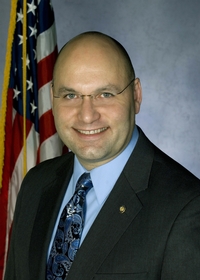
Rep. Rob Matzie
Sponsored bills
Maddy summaryThis resolution designates May 18-24, 2025, as "Emergency Medical Services Week" in Pennsylvania. It symbolically recognizes the critical role of EMS providers - including paramedics, first responders, and emergency dispatchers - in delivering lifesaving care and improving patient outcomes. The resolution does not create new laws or funding; it solely serves as a formal acknowledgment of EMS professionals' contributions.
Maddy summaryHB 183 amends Pennsylvania's Workers' Compensation Act to increase the maximum compensation period for serious permanent disfigurement of the head, neck, or face from 275 weeks to 400 weeks. It specifically updates Section 306(c)(22) to clarify that disfigurement benefits are paid separately from disability benefits, allowing injured workers to receive both simultaneously. The change applies to injuries sustained on or after the bill's effective date (60 days from enactment), regardless of when the original injury occurred. This directly affects workers who sustain qualifying permanent disfigurement in workplace injuries.
Maddy summaryHB 1155 establishes a legal framework for community solar programs in Pennsylvania, allowing multiple subscribers (including renters and low-income households) to share ownership of solar facilities and receive bill credits for the electricity generated. The bill requires electric distribution companies to implement these programs, mandates prevailing wage standards for solar installation workers, and sets protections to ensure subscribers receive guaranteed savings. It directly affects utility companies, community solar organizations, and subscribers - particularly those who cannot install rooftop solar due to housing constraints or income limits. Key provisions include preventing single subscribers from owning over 50% of a facility, requiring at least 50% of capacity to serve small subscriptions (25 kW or less), and ensuring ratepayer costs are managed responsibly.
Maddy summaryThis is a House Resolution (not a bill), urging Pennsylvania State University (Penn State) leadership to be transparent about any potential closure of its 12 Commonwealth campuses. It asks the university president to publicly share criteria for closures, demonstrate alignment with Penn State’s land-grant mission, and detail plans to maintain educational access for affected students and communities. The resolution emphasizes that campus closures would disproportionately impact rural and underserved areas, reduce local economic activity, and undermine public trust. It does not create new laws or funding but formally requests Penn State to engage communities and provide clear, open communication before making closure decisions.
Maddy summaryHB 1152 requires insurance companies to directly reimburse non-network emergency medical services (EMS) agencies for 911 emergency calls within 45 days at 350% of the Medicare ambulance rate for the same service in the same area. EMS agencies must register with the state annually to qualify for direct payments, and insurers cannot demand contracts to facilitate this reimbursement. The insurer's payment covers the full service cost (excluding the patient's copay, coinsurance, or deductible), so EMS agencies cannot bill patients for the remaining amount. This law applies only to non-network EMS providers offering 911 emergency medical services, unless preempted by federal law.
Maddy summaryThis House Resolution designates March 18, 2025, as "Natural Gas Utility Worker Appreciation Day" in Pennsylvania. It formally recognizes natural gas utility workers for their role in maintaining infrastructure that provides energy to homes and businesses, including their work during the pandemic and in hazardous conditions. The resolution is purely ceremonial with no new laws or funding, serving only to honor these workers. It aligns with the existing national observance of "National Natural Gas Utility Workers' Day."
Maddy summaryThis is a ceremonial resolution, not a law with policy changes. It officially recognizes March 9-15, 2025, as "Multiple Sclerosis Awareness Week" in Pennsylvania. The resolution highlights the impact of multiple sclerosis (affecting over 24,000 Pennsylvanians) and acknowledges the work of the National Multiple Sclerosis Society. It has no binding effect or funding provisions - it simply encourages public awareness and support for the cause.
Maddy summaryHB 894 establishes the Veterans Entering the Sustainability Sector Program (VETSS) to help veterans enter jobs in renewable energy and environmental sectors. The bill creates a Veterans Entering the Sustainability Sector Fund to provide grants to eligible employers - businesses focused on renewable energy (like solar, wind, or bioenergy) that hire veterans who completed approved apprenticeship training in fields such as electrician work, solar installation, or environmental maintenance. The Department of Community and Economic Development will administer the program, overseeing training development and grant applications. This directly affects veterans seeking sustainability-sector careers and employers in renewable energy who hire them, with the goal of addressing environmental concerns like climate change through workforce development.
Maddy summaryHB 675 bans the sale or distribution of firefighting personal protective equipment (PPE) containing intentionally added PFAS chemicals in Pennsylvania starting January 1, 2028, directly affecting manufacturers, sellers, and distributors of such gear. The law includes an exception if the State Fire Commissioner determines PFAS use is unavoidable and issues official guidance. Violations carry civil penalties of up to $5,000 for first offenses and $10,000 for repeat offenses, with fines split equally between the Fire Company Grant Program and Emergency Medical Services Grant Program. This bill aims to reduce exposure to harmful PFAS chemicals while maintaining safety standards for firefighters.